Raw Stock Scouring
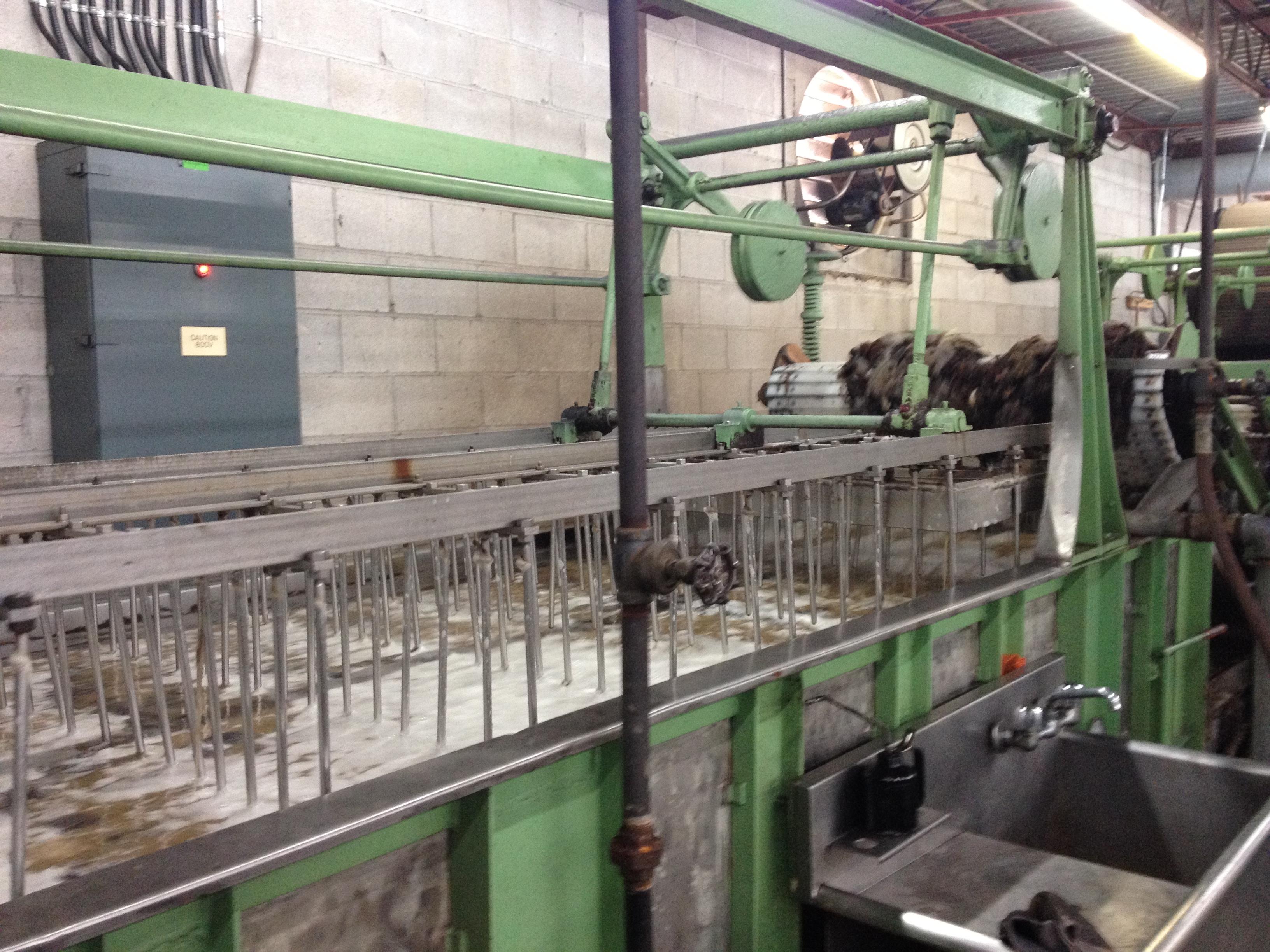
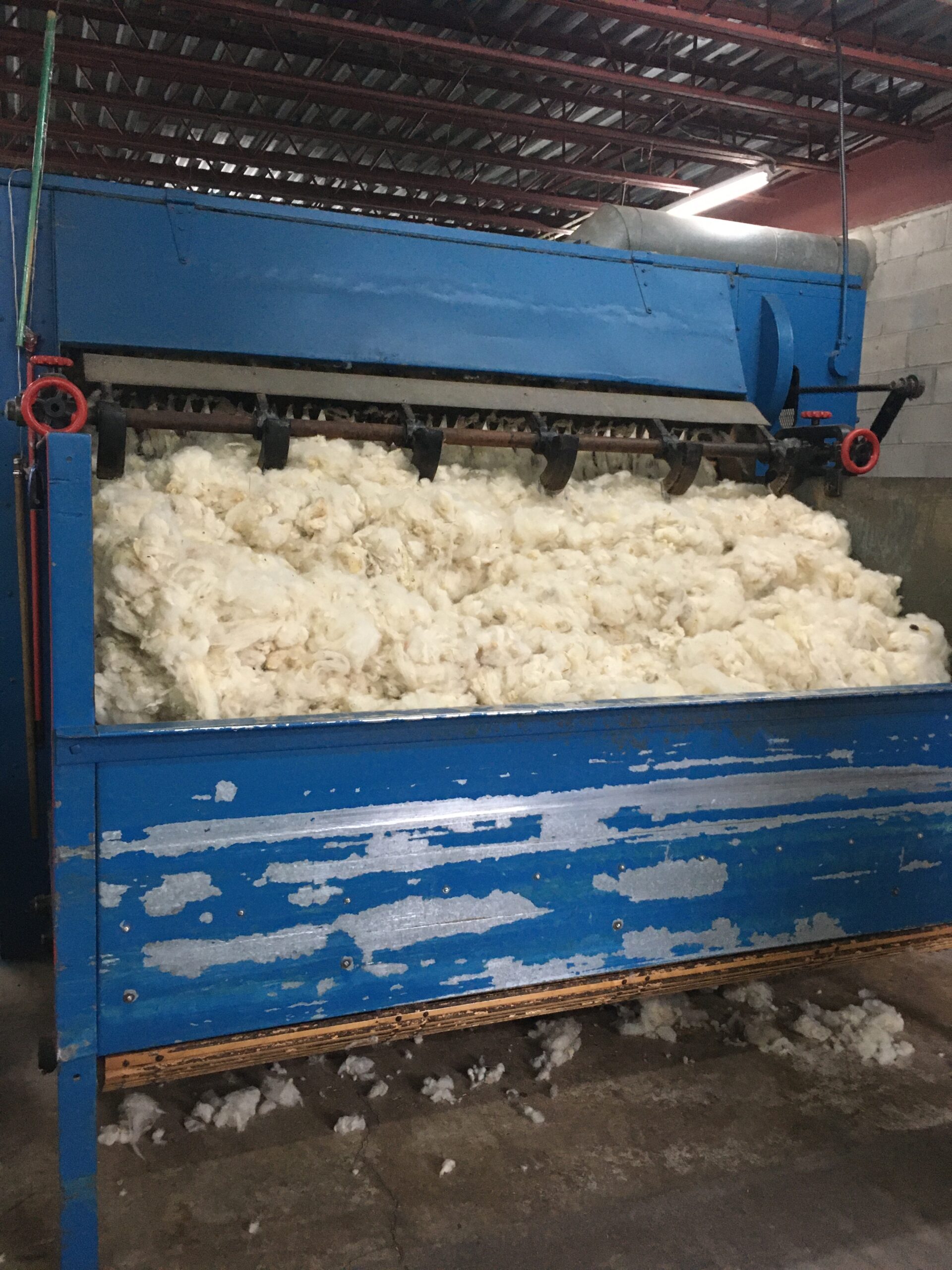
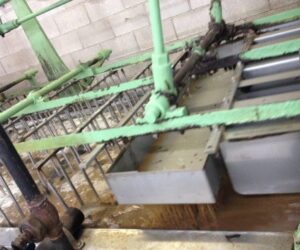
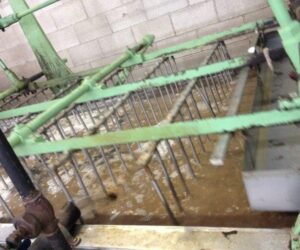
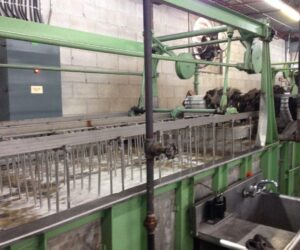
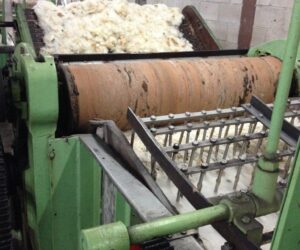
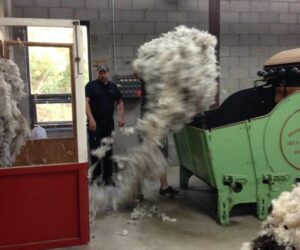
This is the beginning of our manufacturing process. We first must wash the wool. This will remove the oils, dirt, and manure.
We cannot wash out vegetable matter, but have to machine it out later.
All grease wool must be scoured, so we can dye it or machine it.
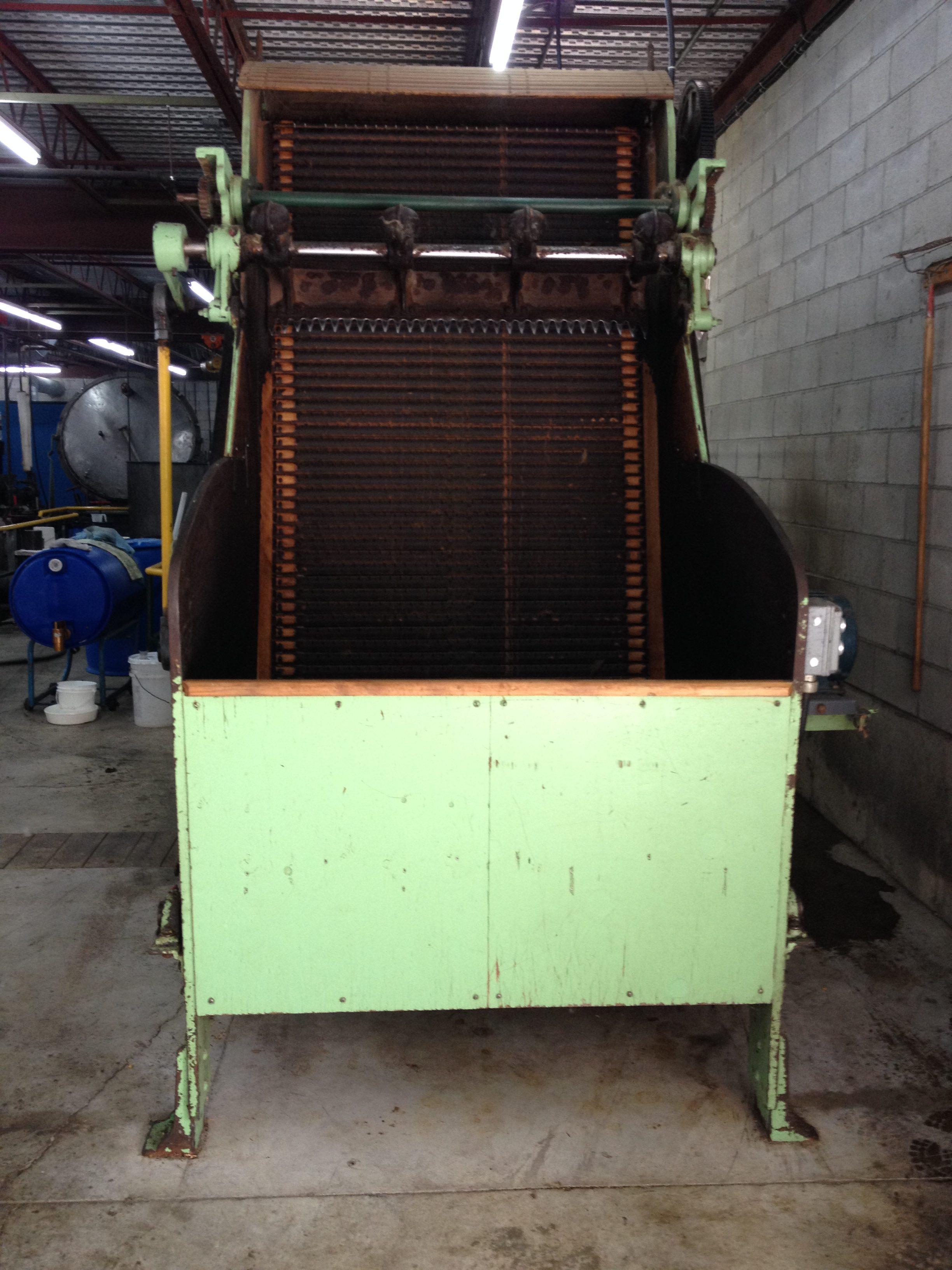
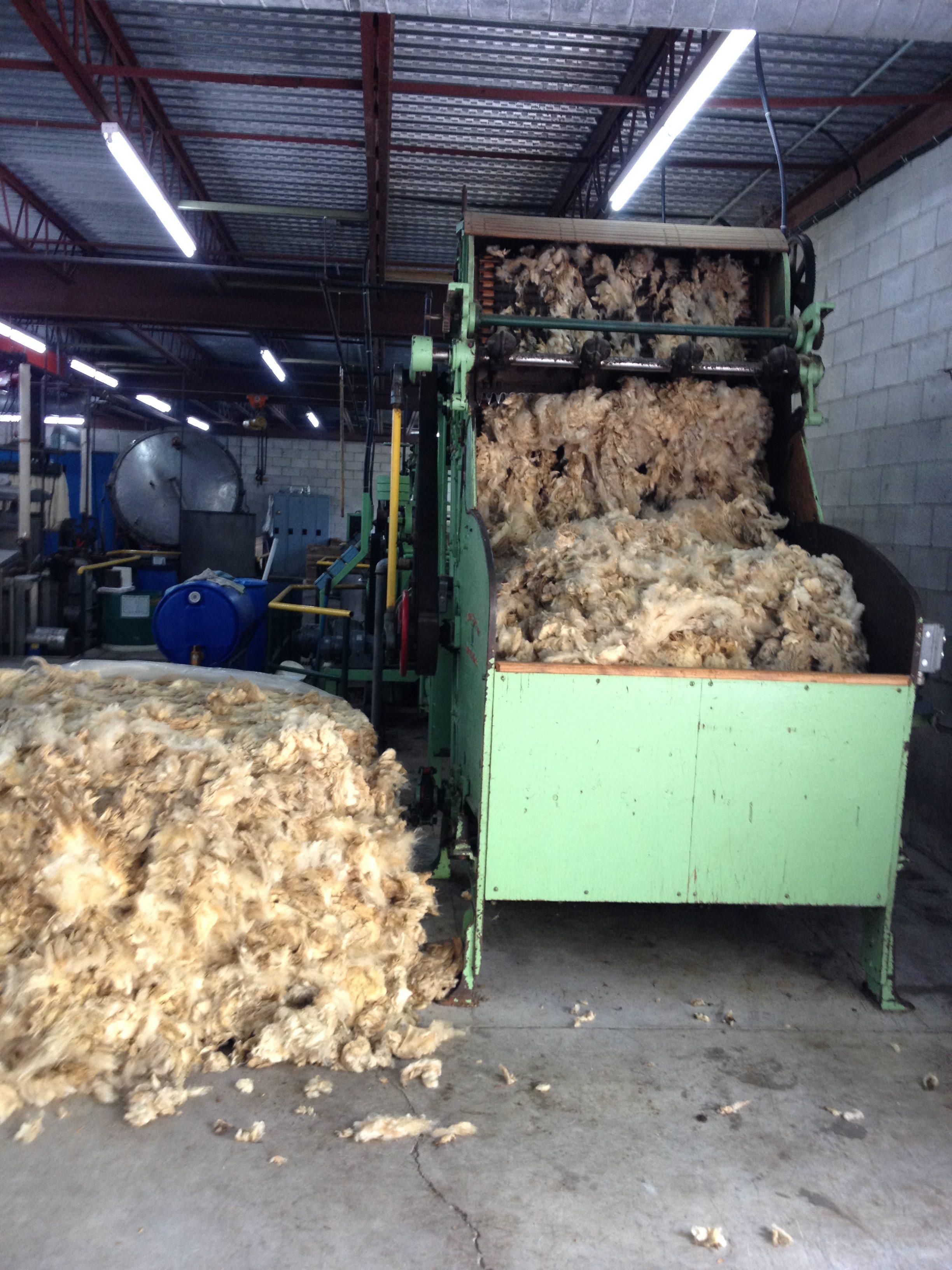
- Raw wool goes into the hopper, which transitions the wool into the washer
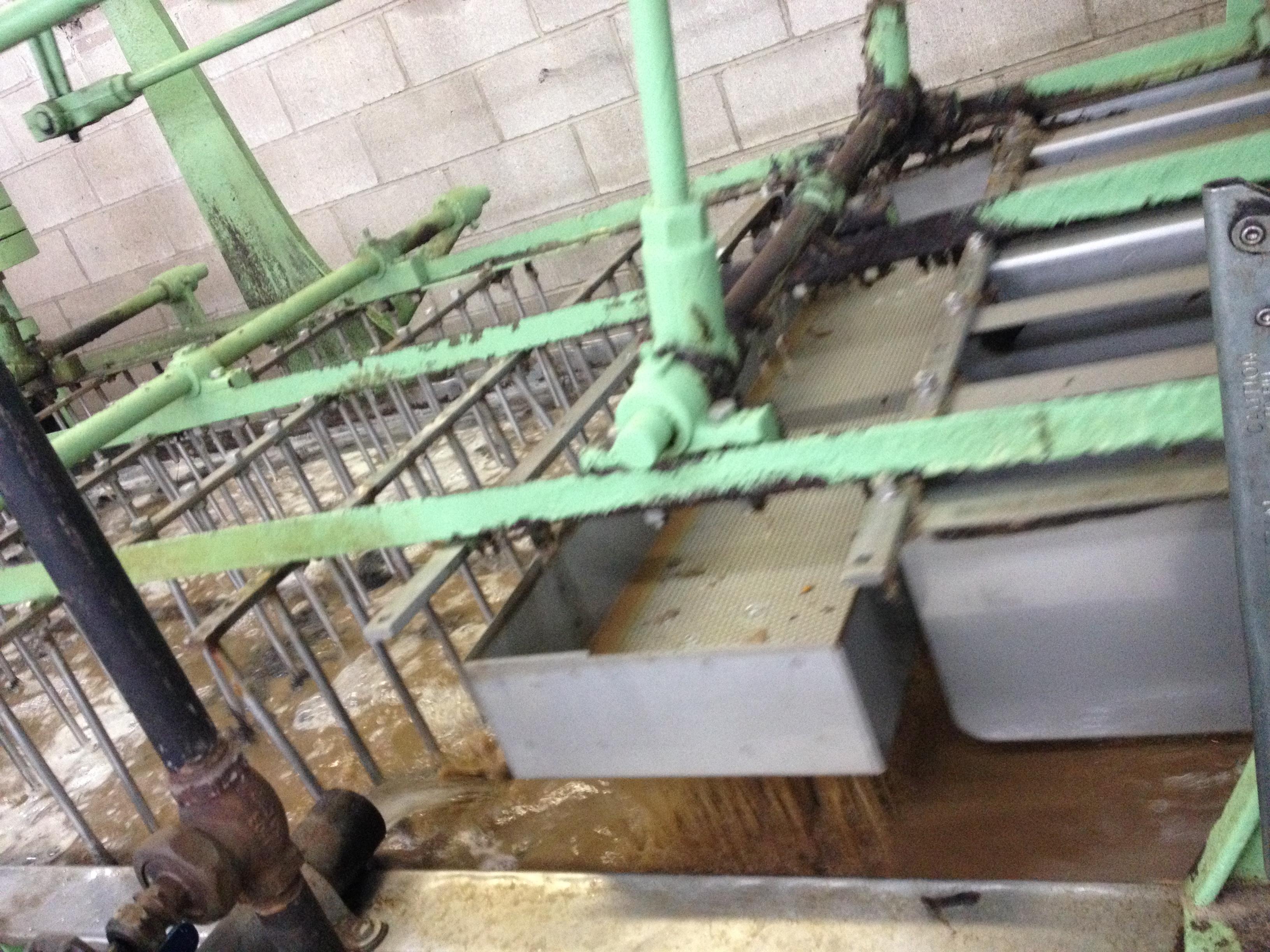
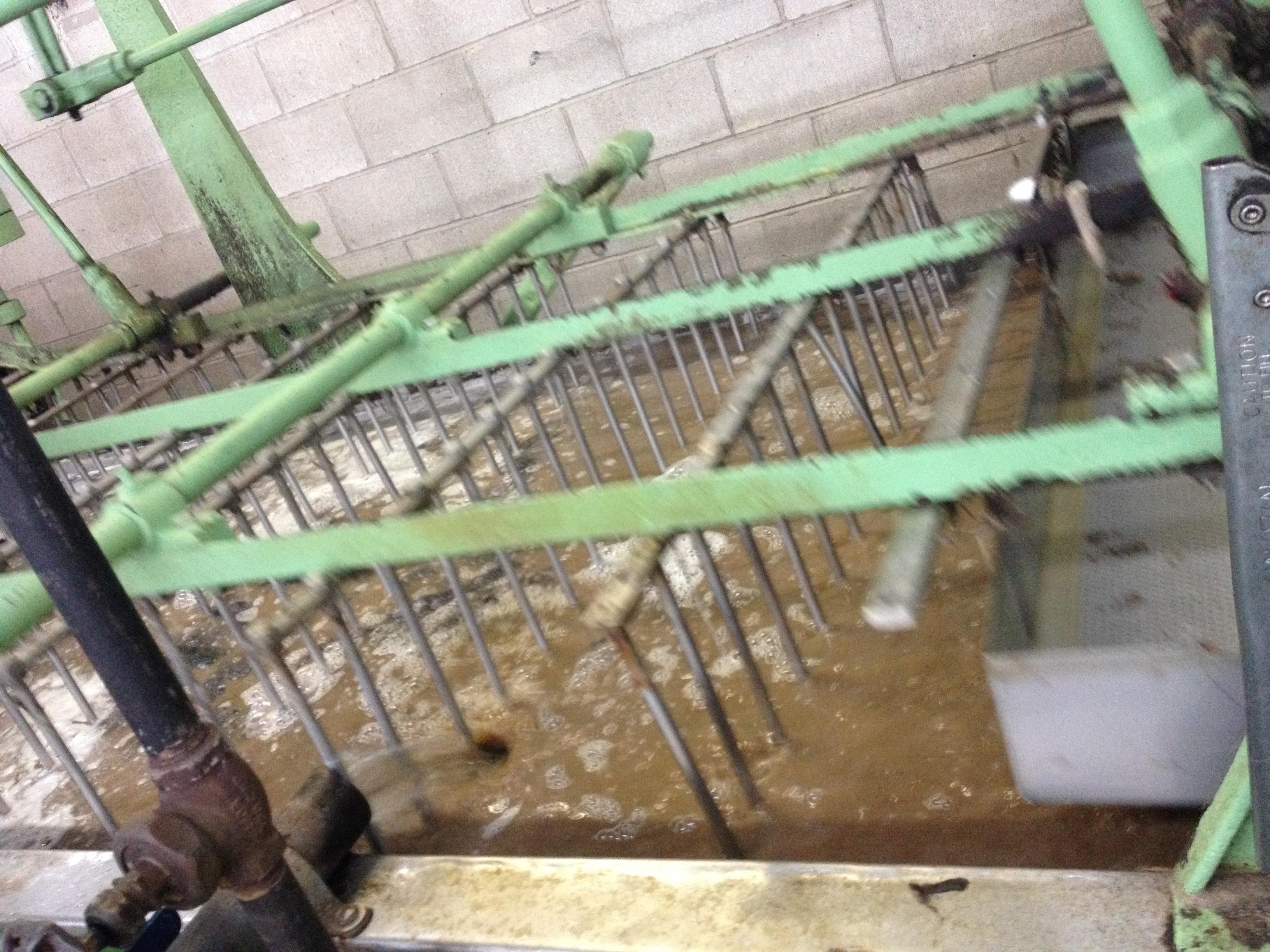
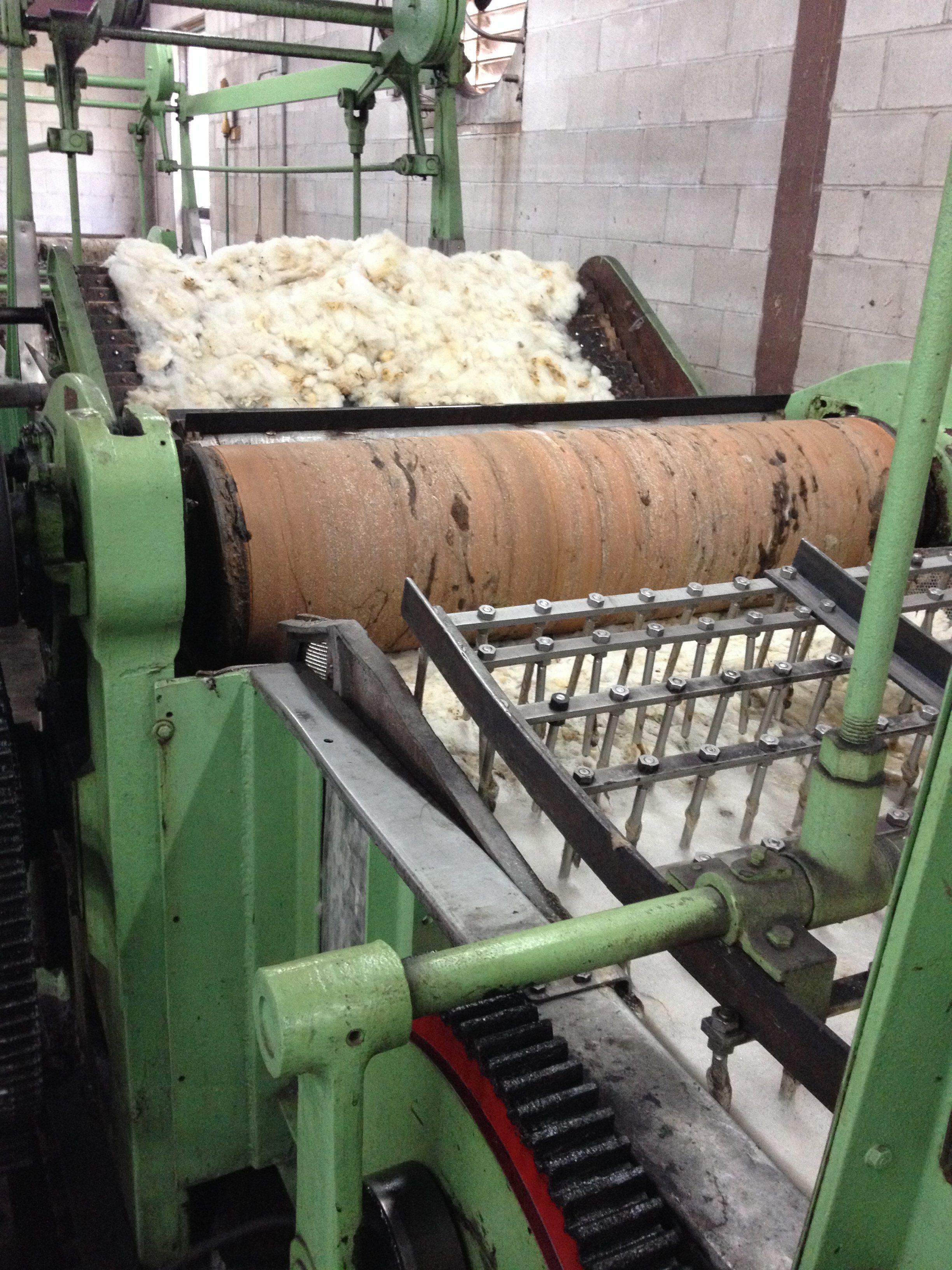
- Then through the washing process
- At the end of the washer is where the water is squeezed out of the wool
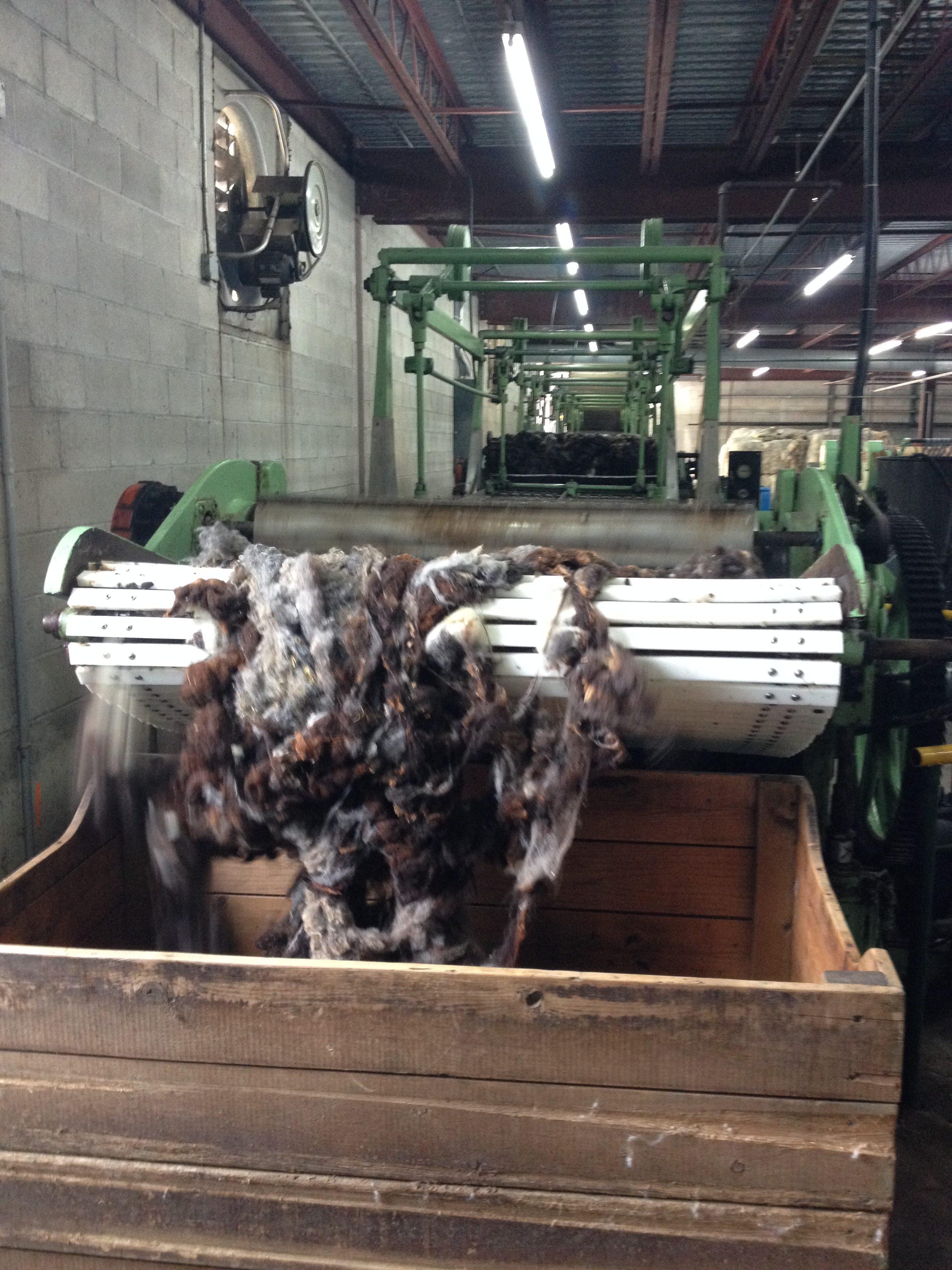
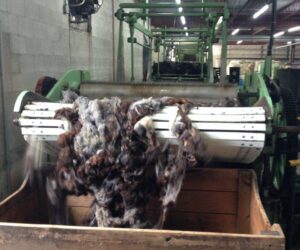
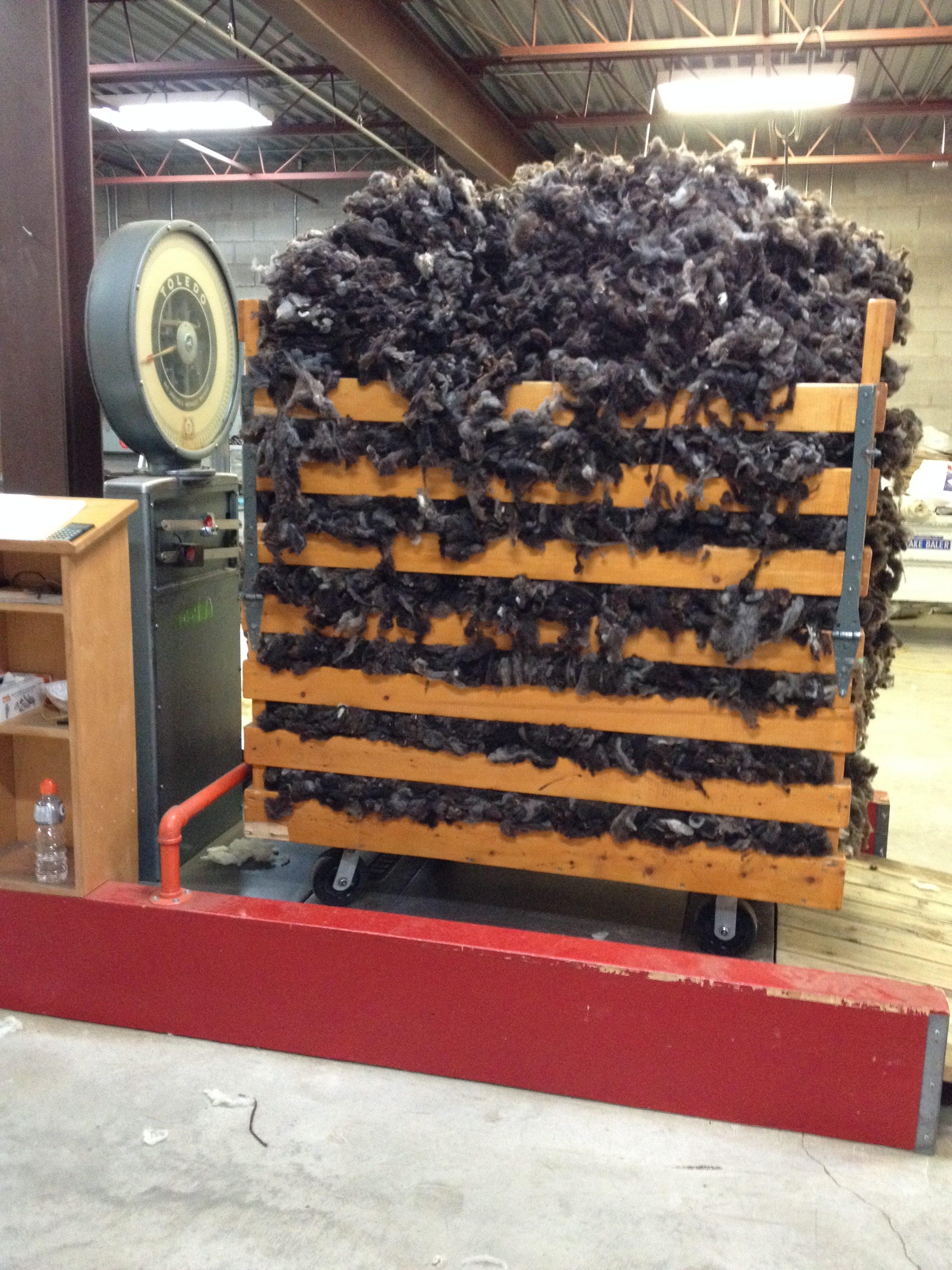
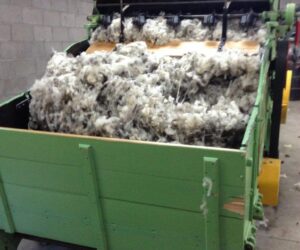
- After the water has been squeezed out, the wool drops into a wooden cart
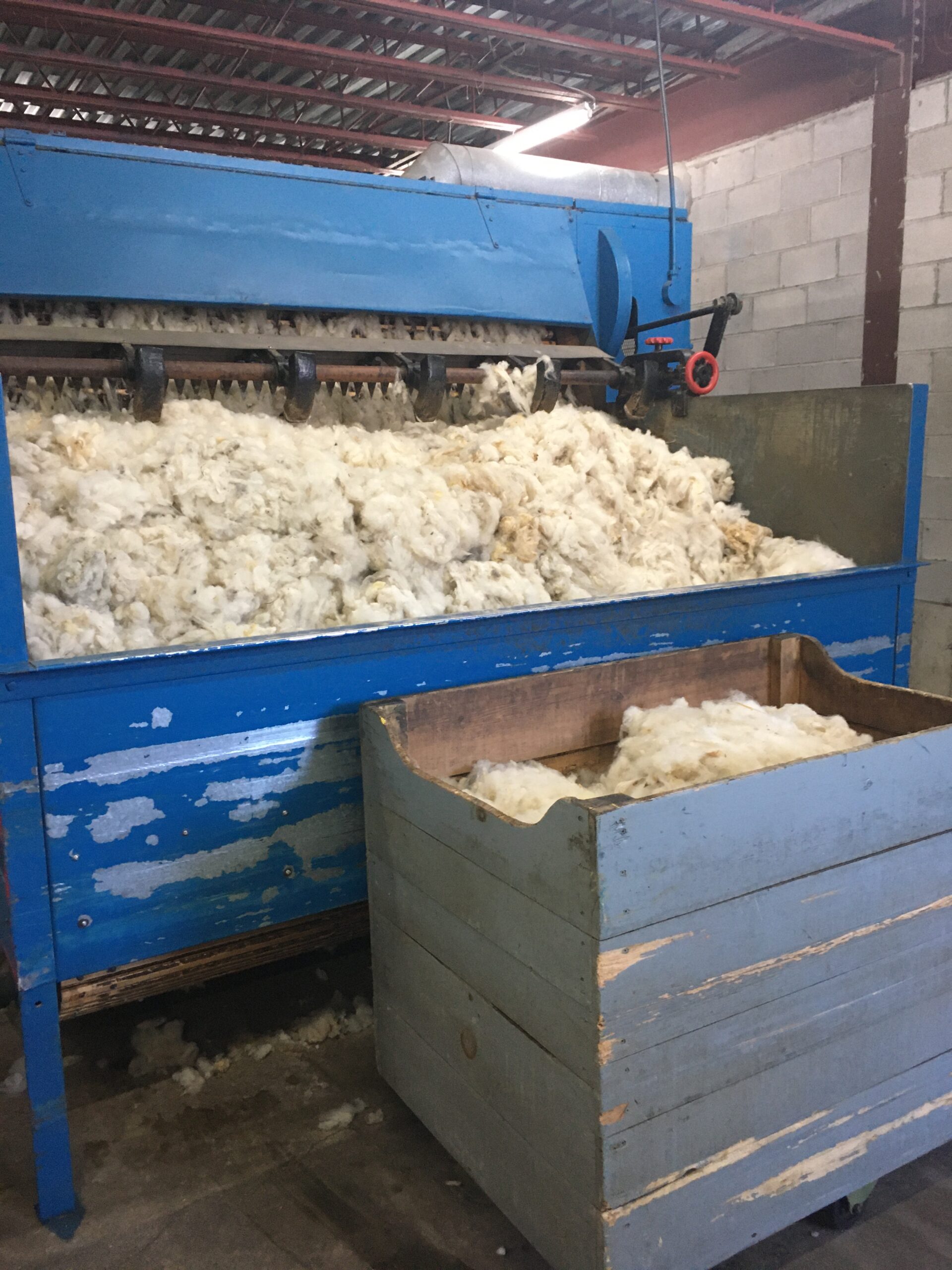
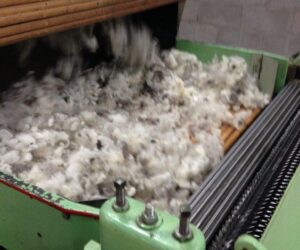
- Wool is then transferred from the wooden cart into the wool dryer
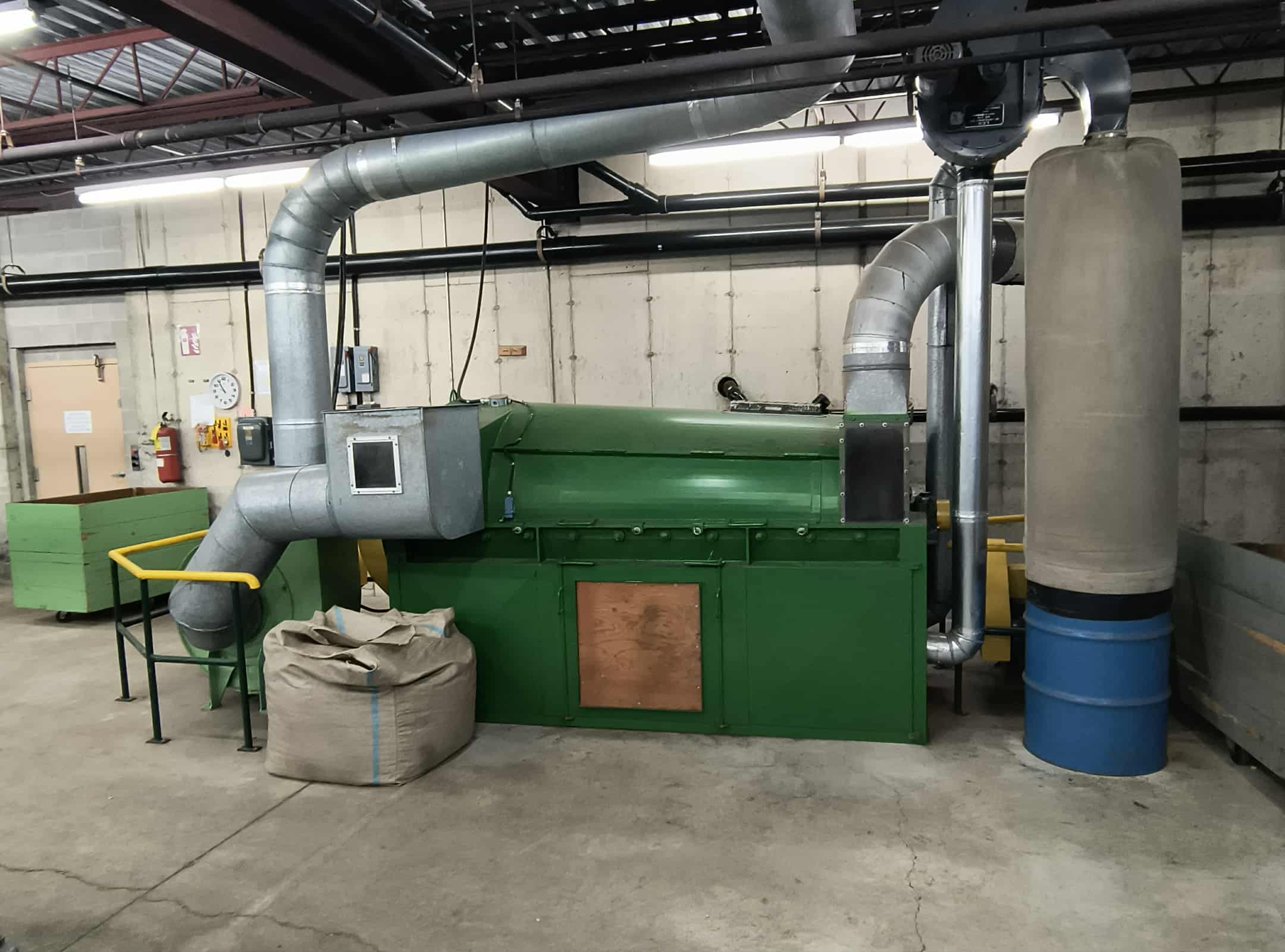
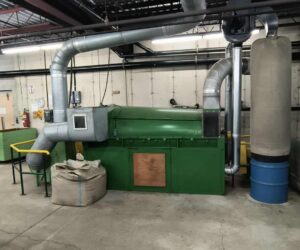
- After the wool has made it to the end of the dryer ,the wool is then blown through the duster, which helps to remove vegetable matter that has been left behind from the washing process. Then the wool is blown upstairs through ductwork, into a bin in the picker room
Blending & Picking
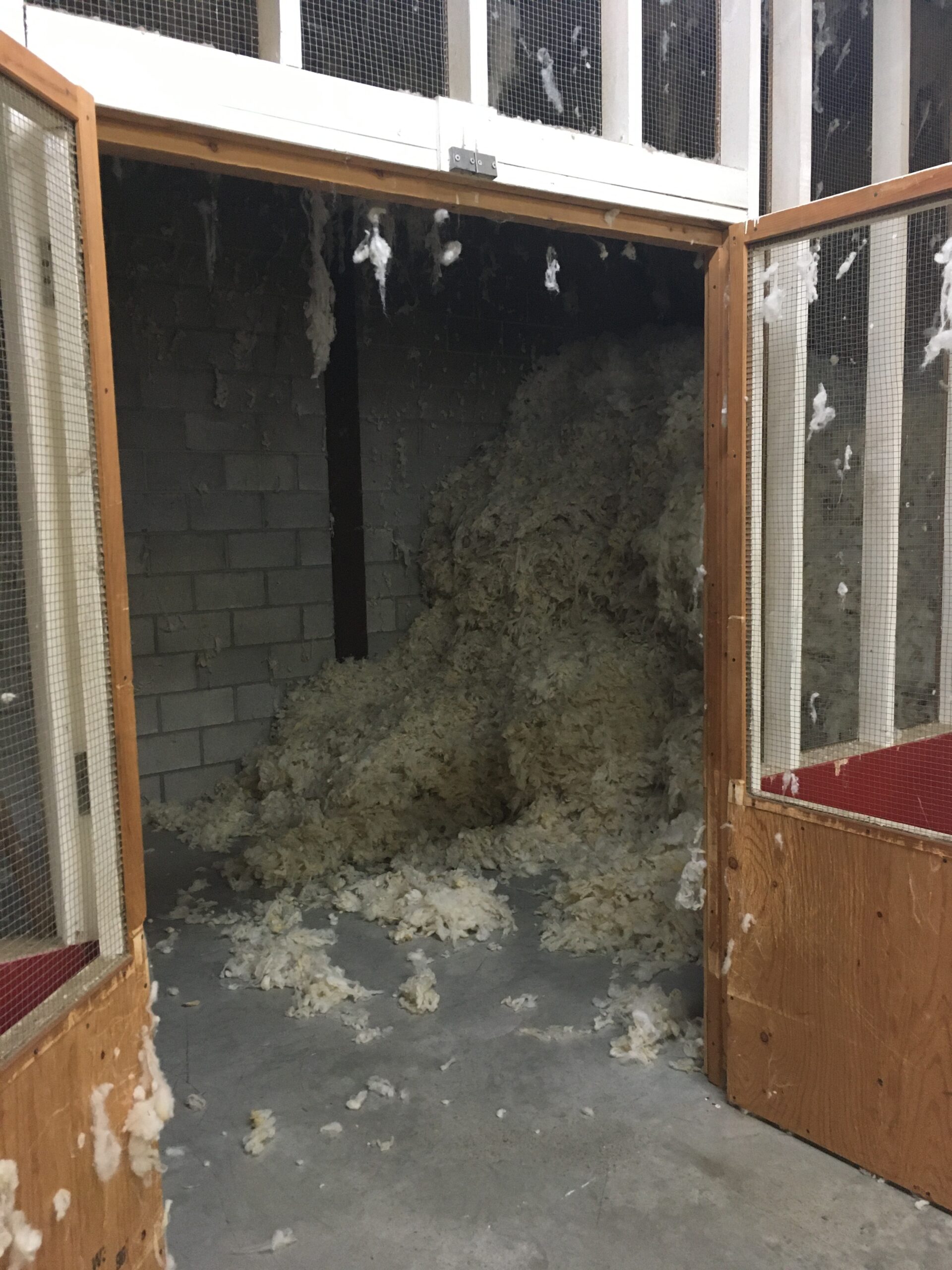
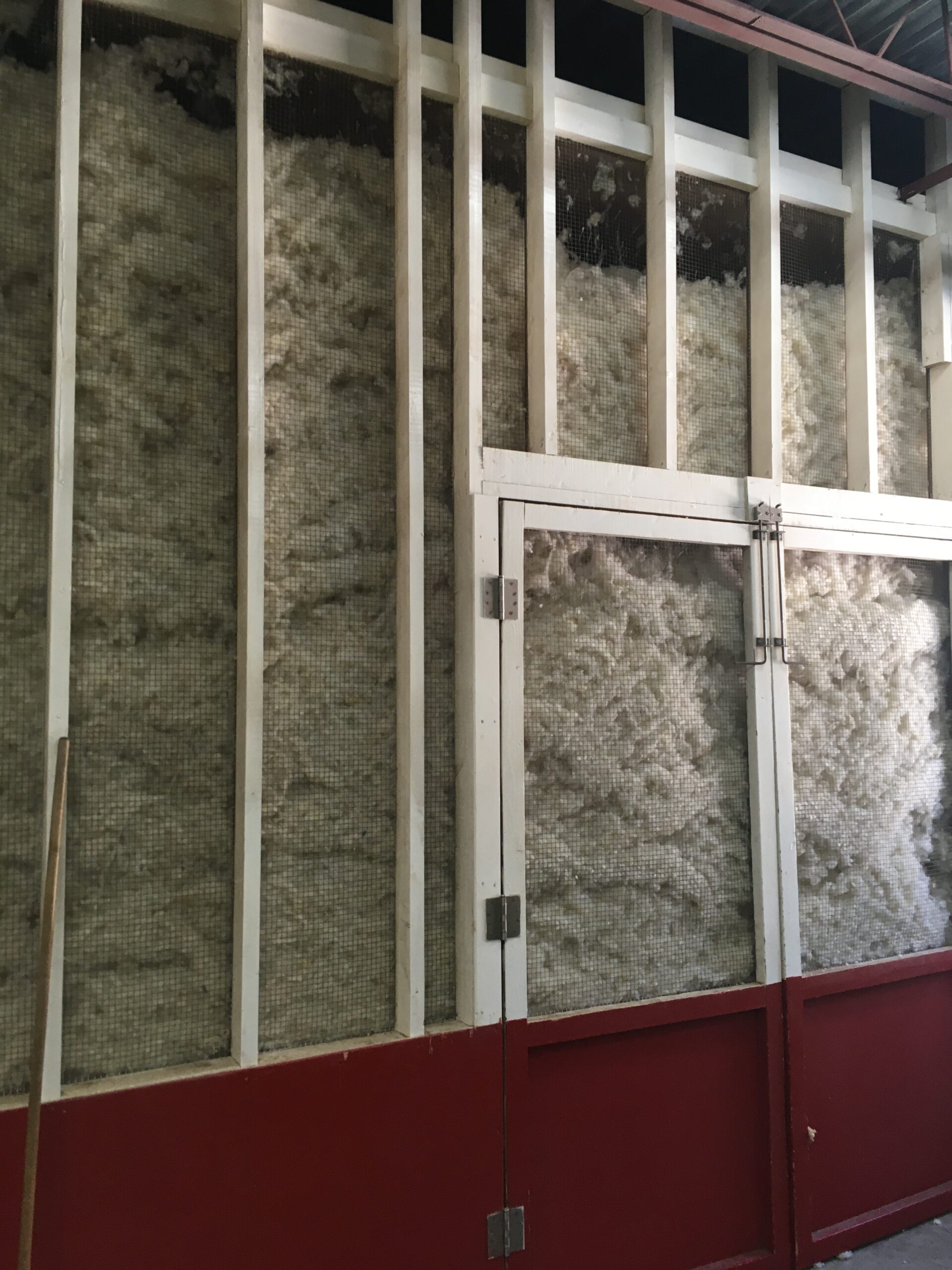
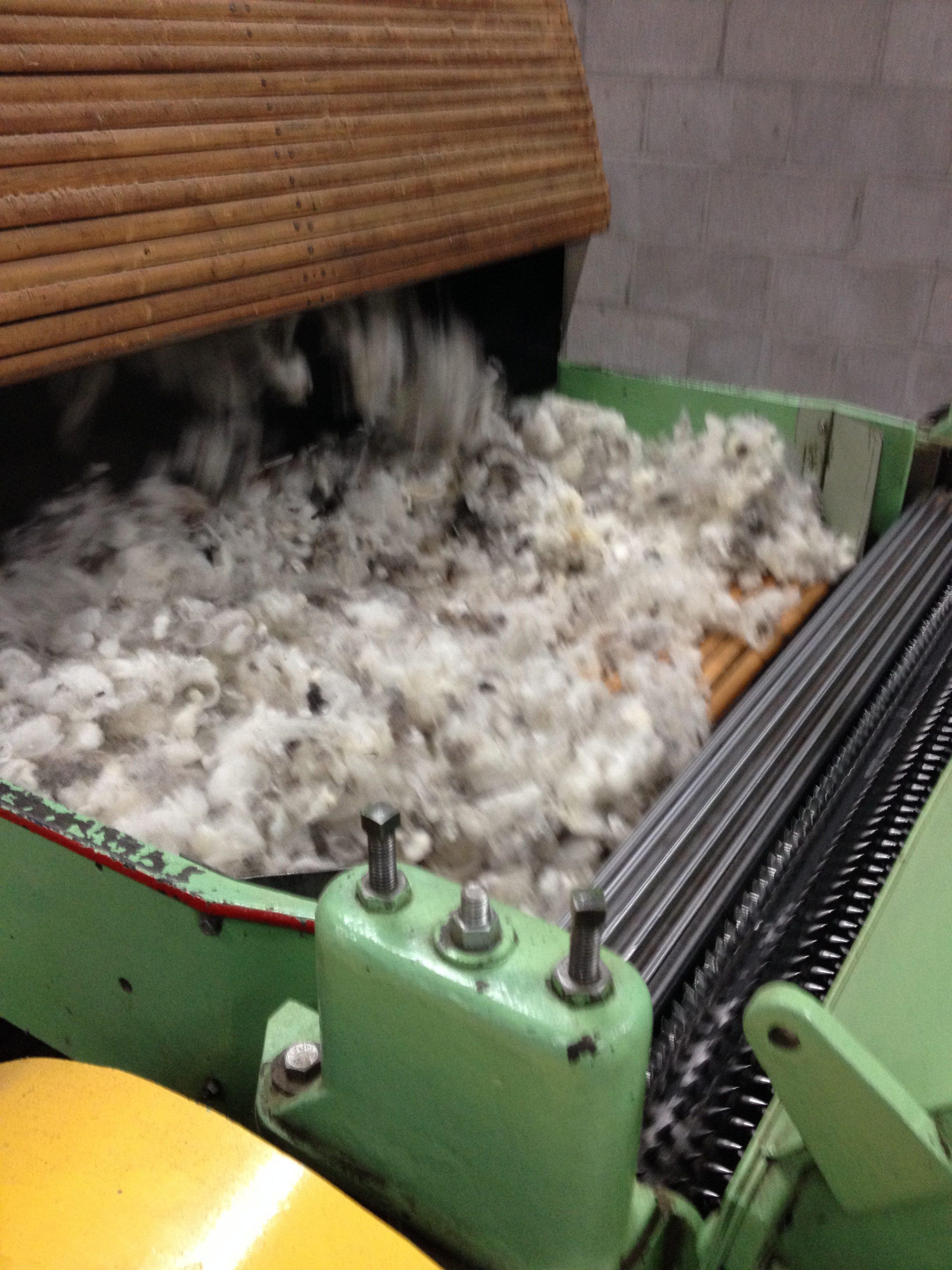
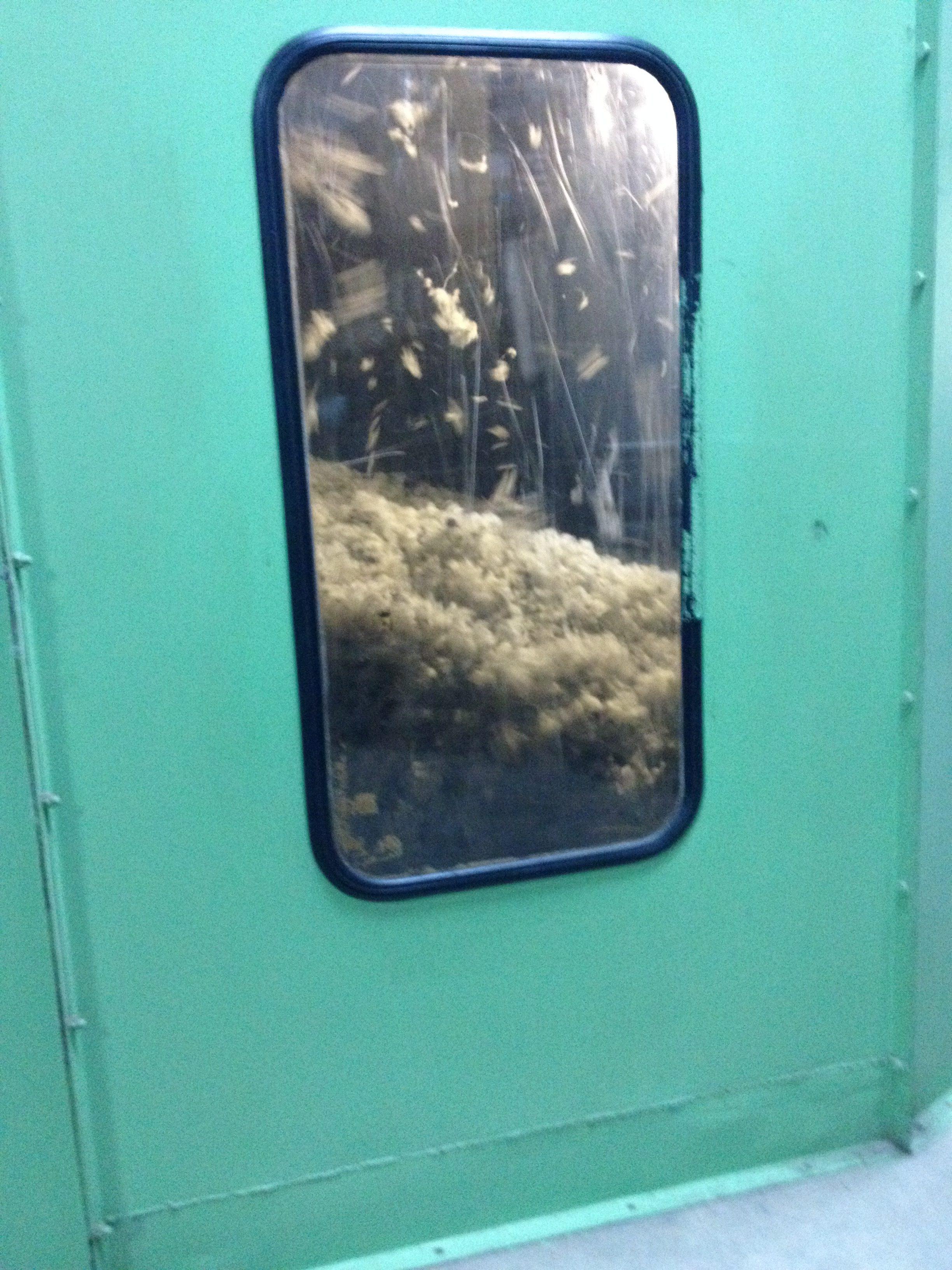
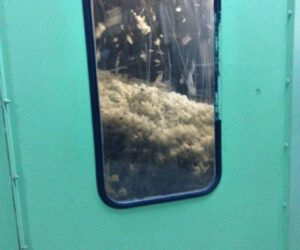
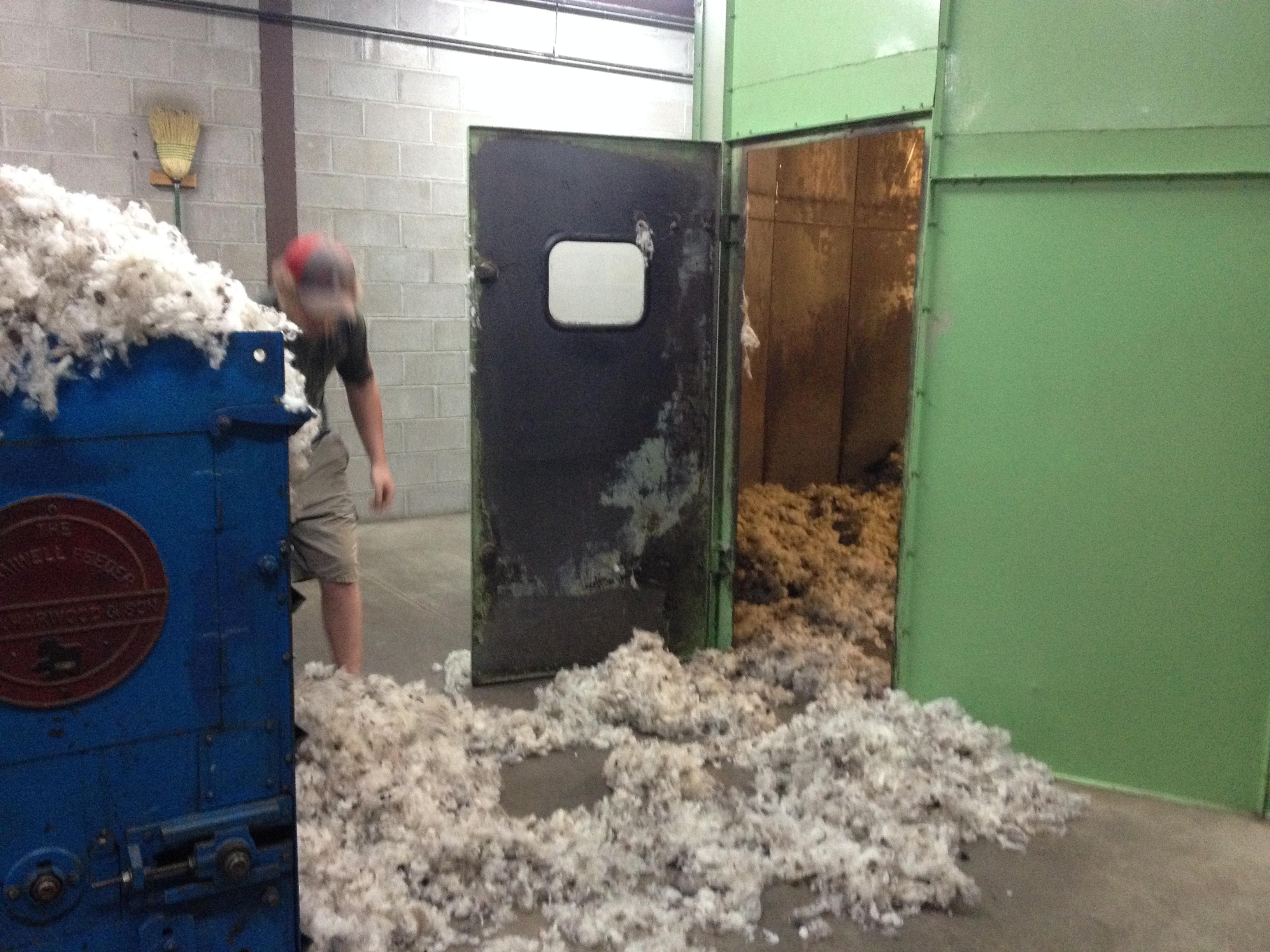
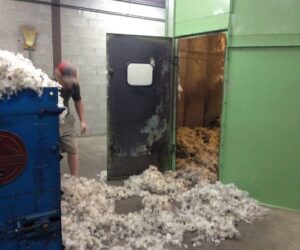
From the duster, wool is blown upstairs through the ductwork into the correct bin in the picker room. Then it is weighed to be put into a recipe for one of our many blended shades or pickered as a straight color to be blown through the ductwork to the house (holding area – green door with window), where it will go into the carding machine.
Pictured to the Right:
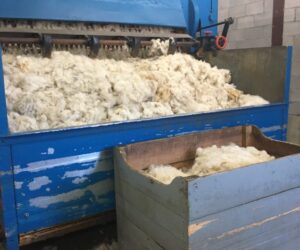
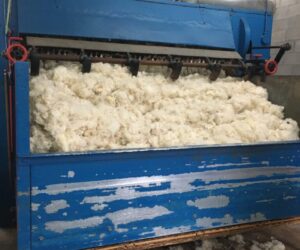
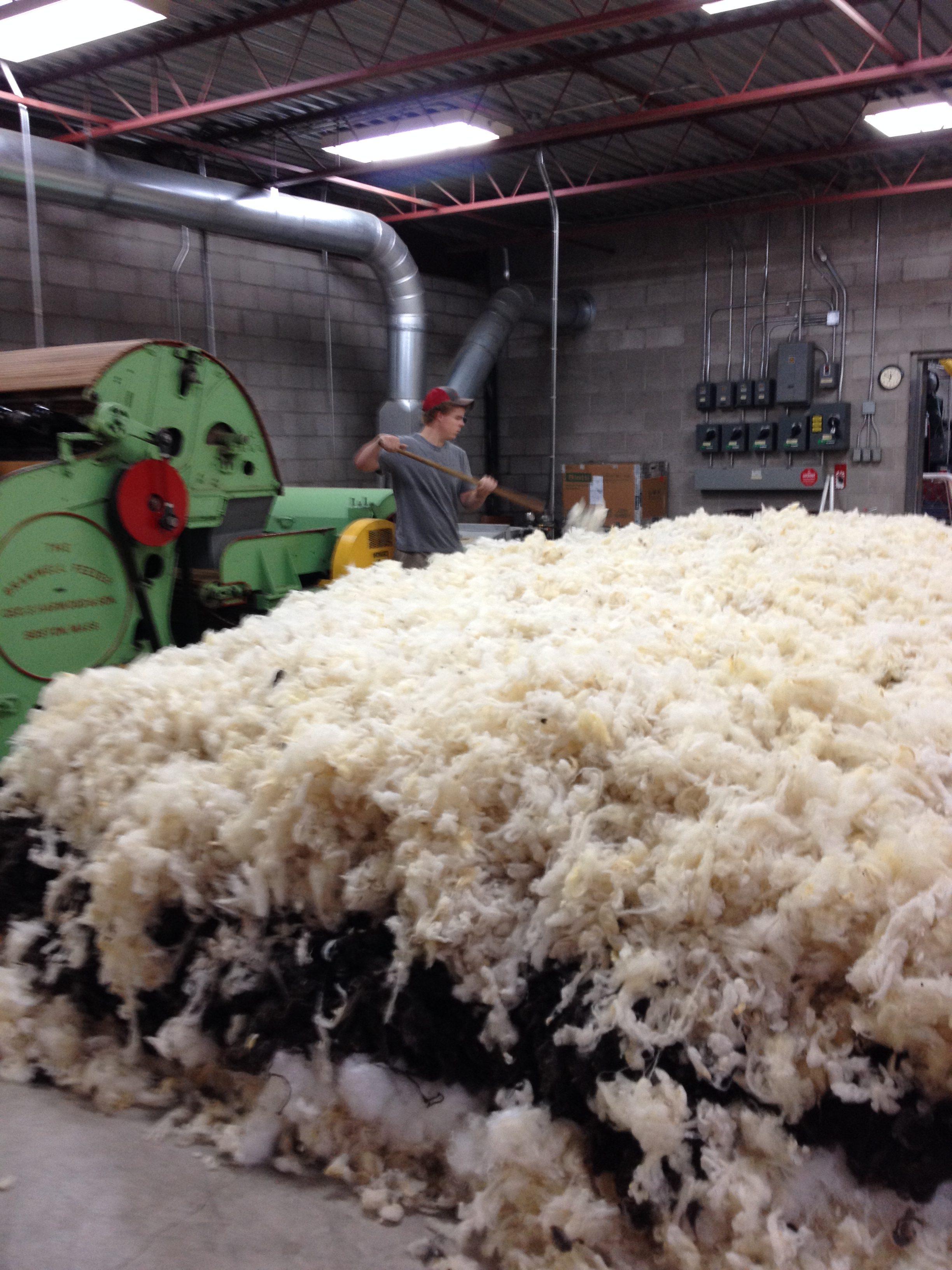
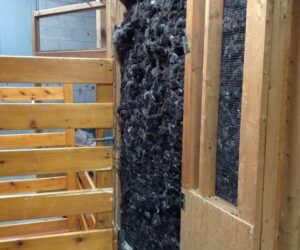
- A bin full of clean dried wool, waiting to be sent through the picker
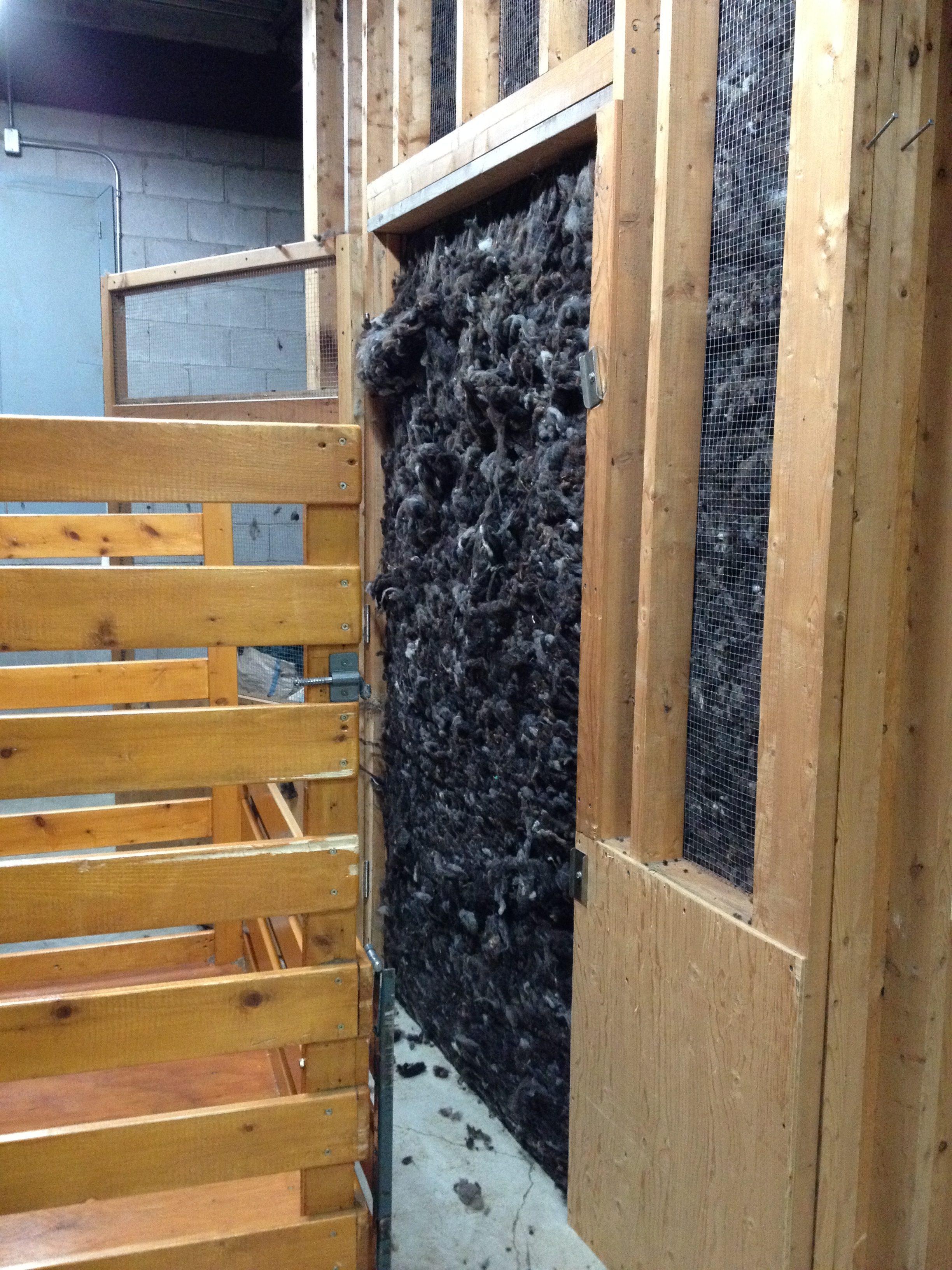
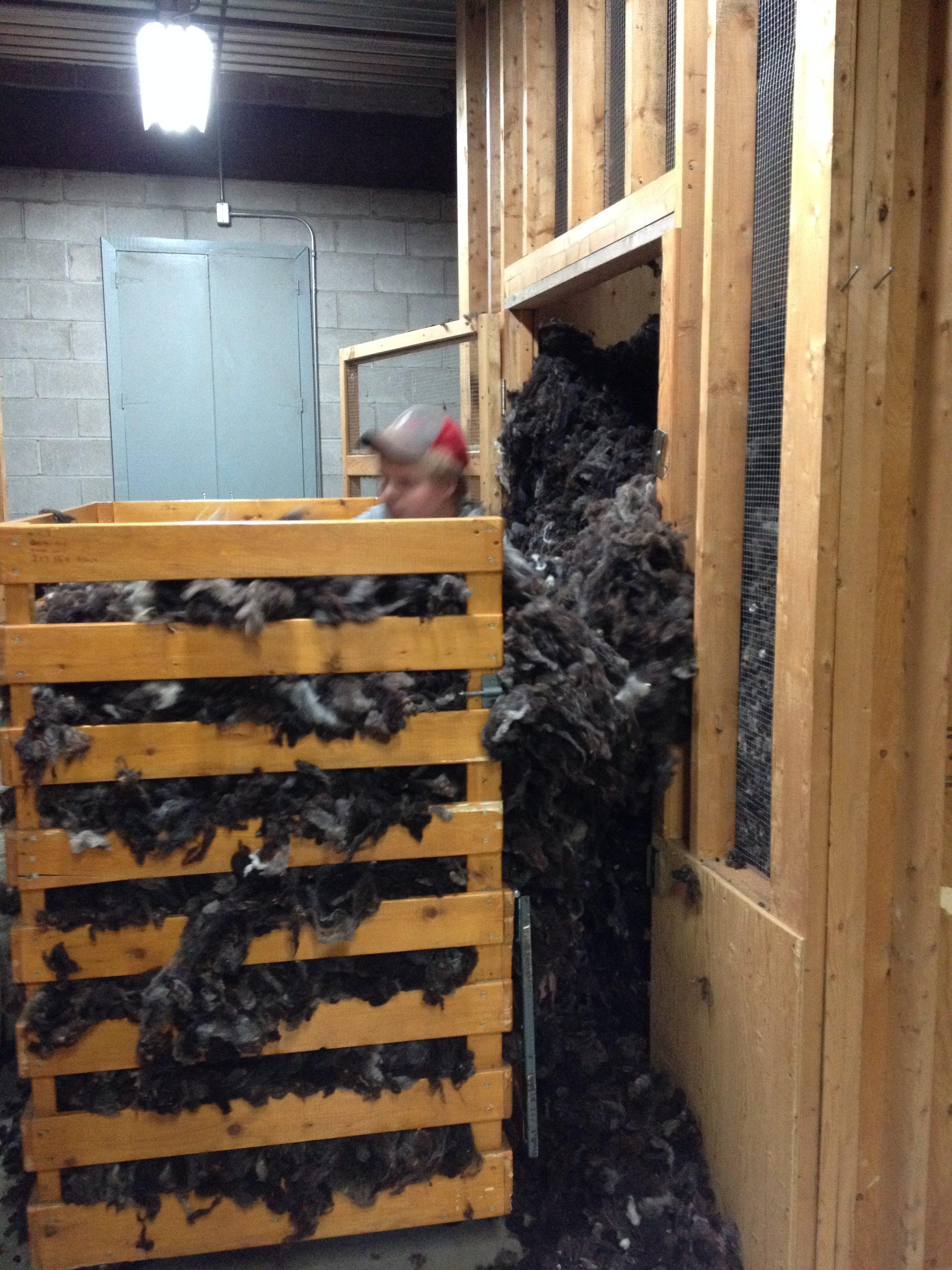
- Each colour of wool needed for a recipe has to be picked and weighed
- ready for pickering
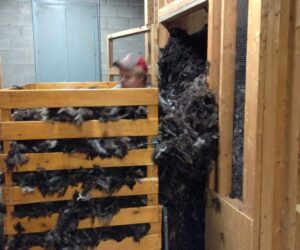
- Filling a cart full of wool to be weighed
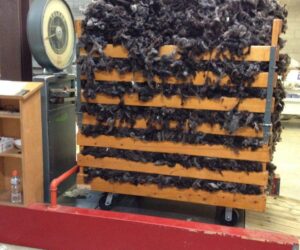
- Weighing up the wool to be spread out on the floor for a specific recipe to manufacture one of our blended colours.
- With picker in back ground, the recipe for one of our blended nylon shades is ready to be put through the picker
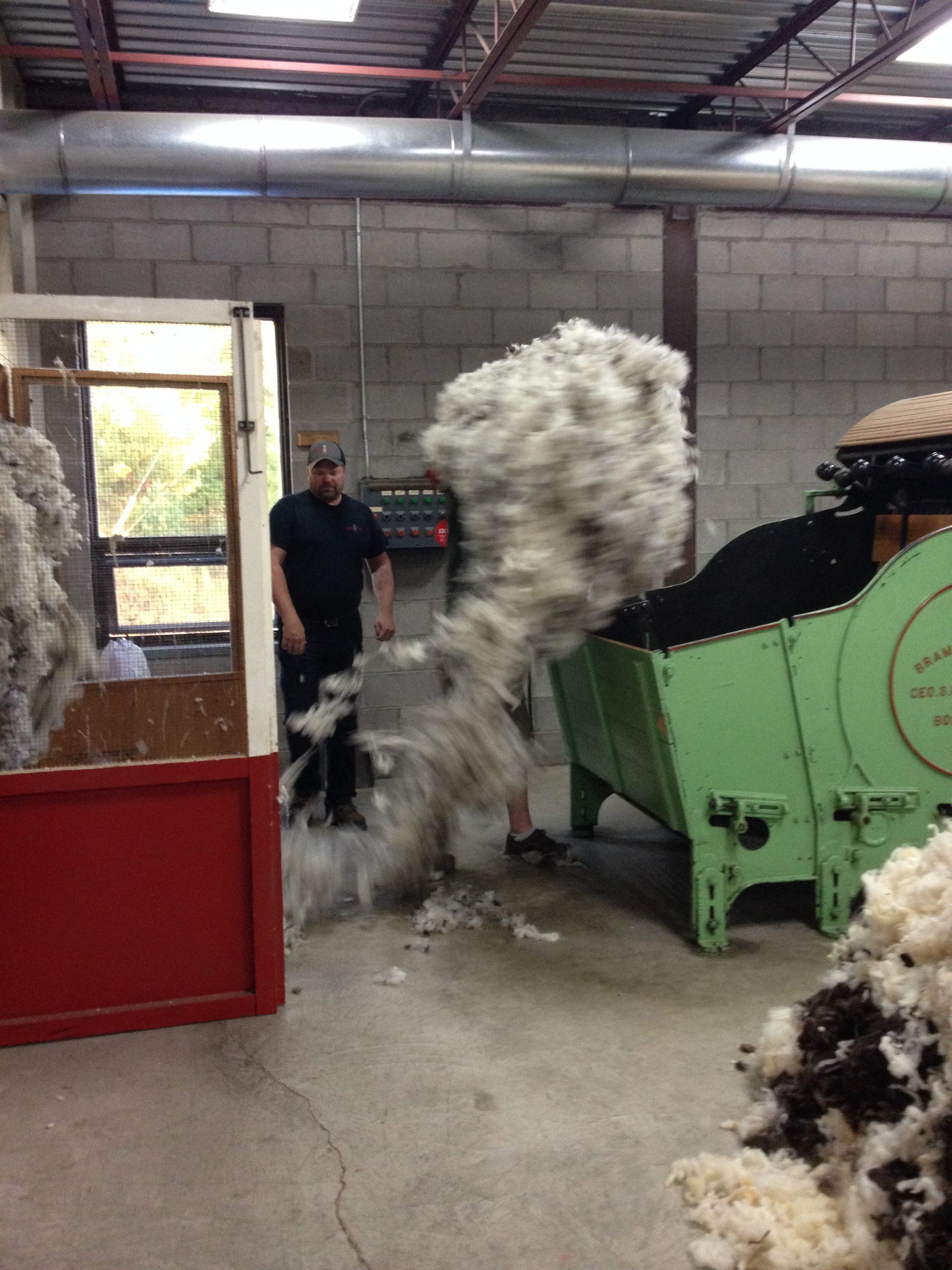
- Wool being put into the picker’s hopper
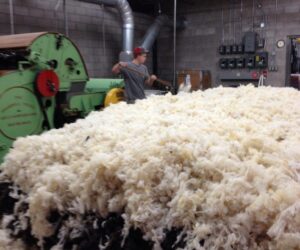
- Blending the shades through the picker
- From here the wool is blown through ductwork into a holding room, to be ready to be put through the carding machine
Carding
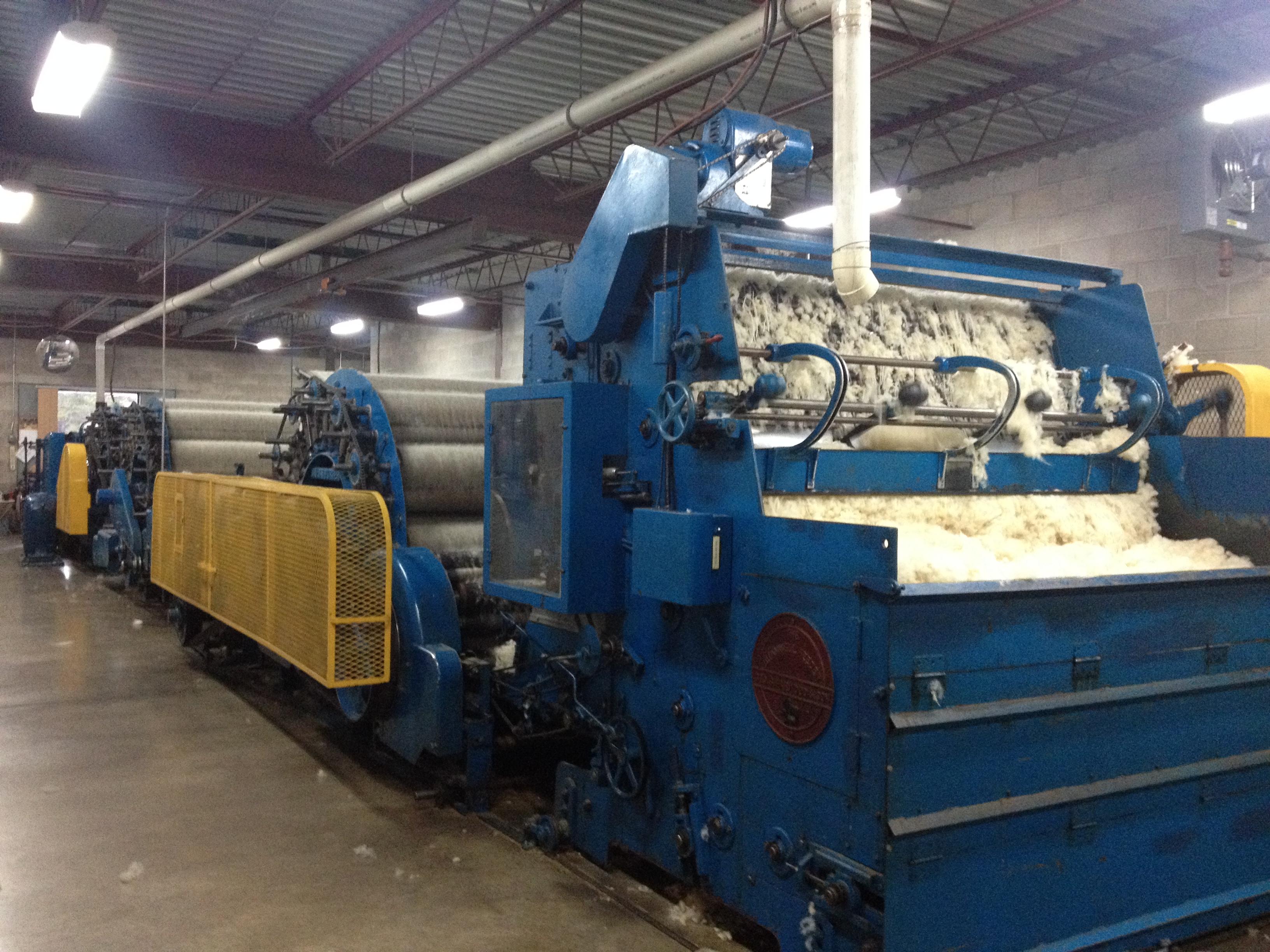
The carder is the most important machine in any textile operation.
It performs three very important steps:
- Straightens the fiber
- Blends the colours together
- Removes more of the vegetable matter
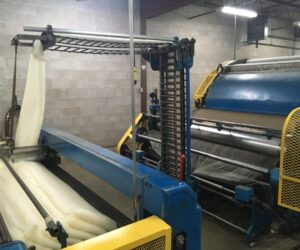
Pictured here are:
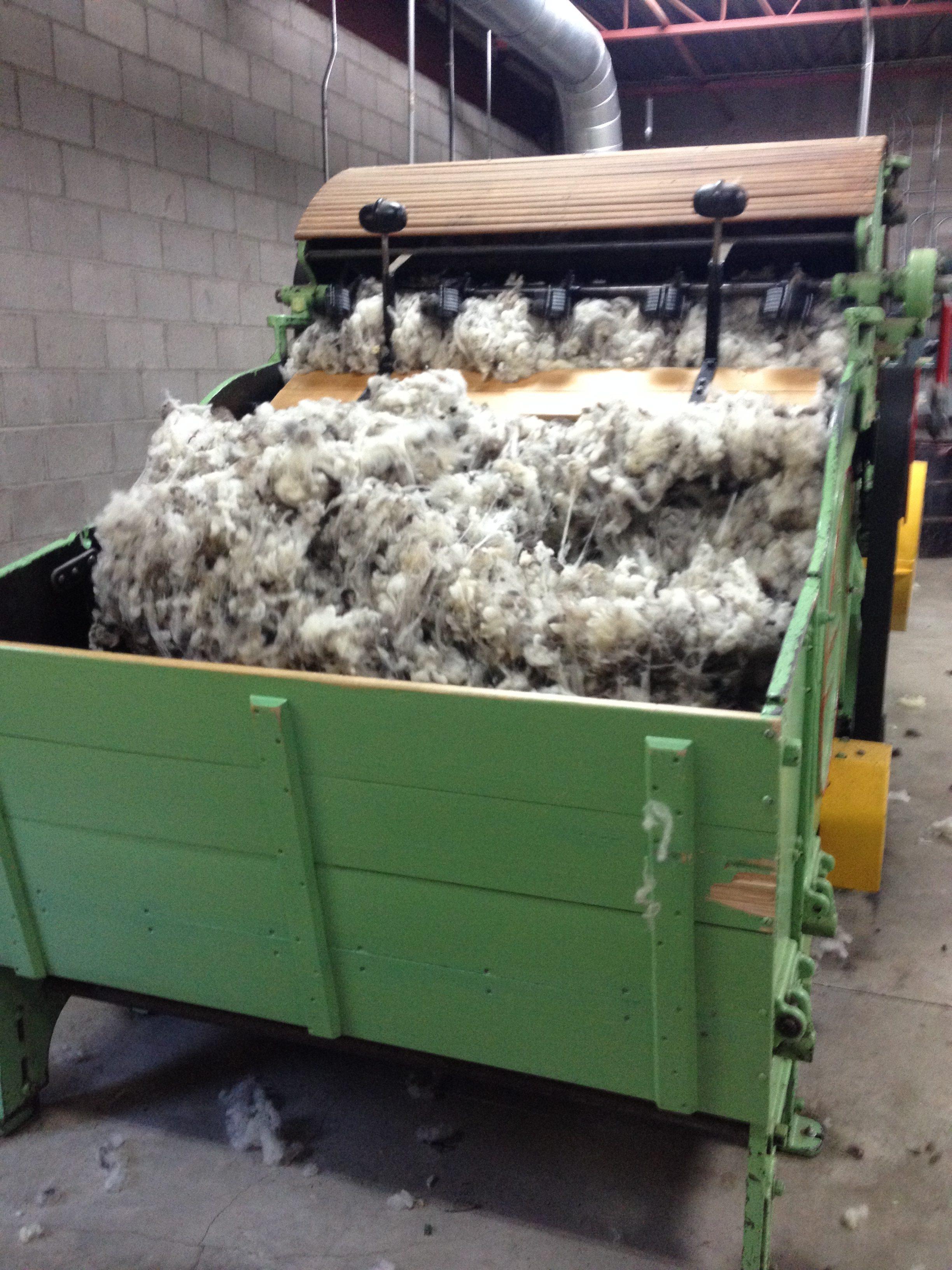
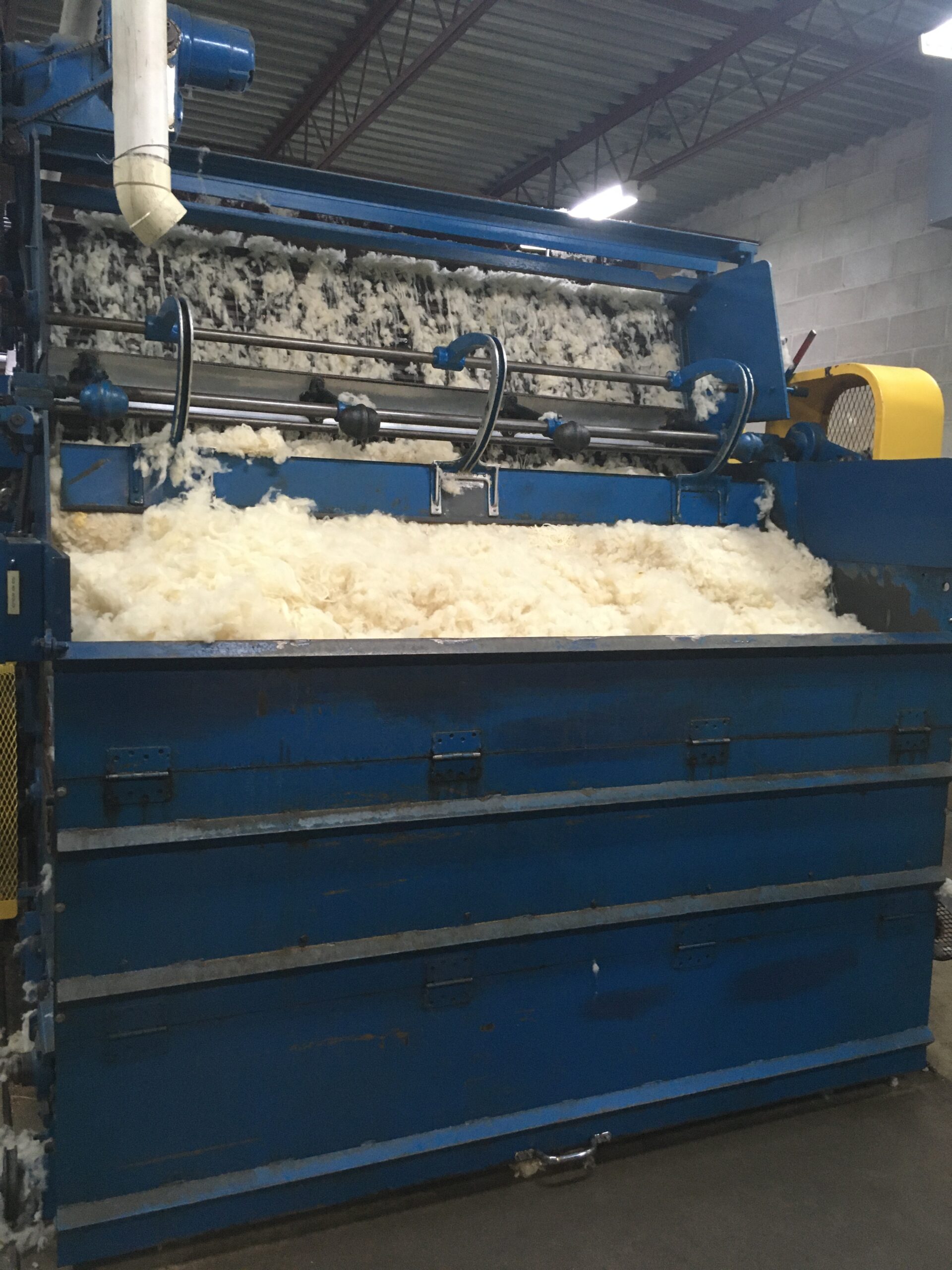
- Loading the hopper of the carding machine with wool from the house
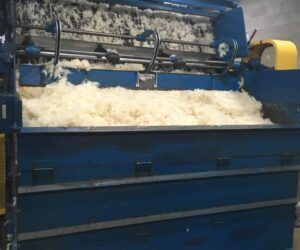
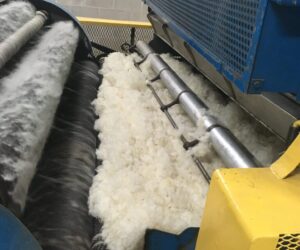
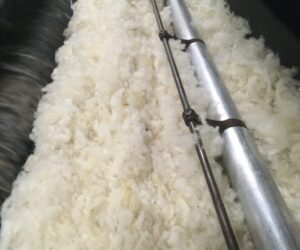
- Hopper full of wool, which will be fed up and over into a weigh pan that dumps the wool onto the beginning of the card
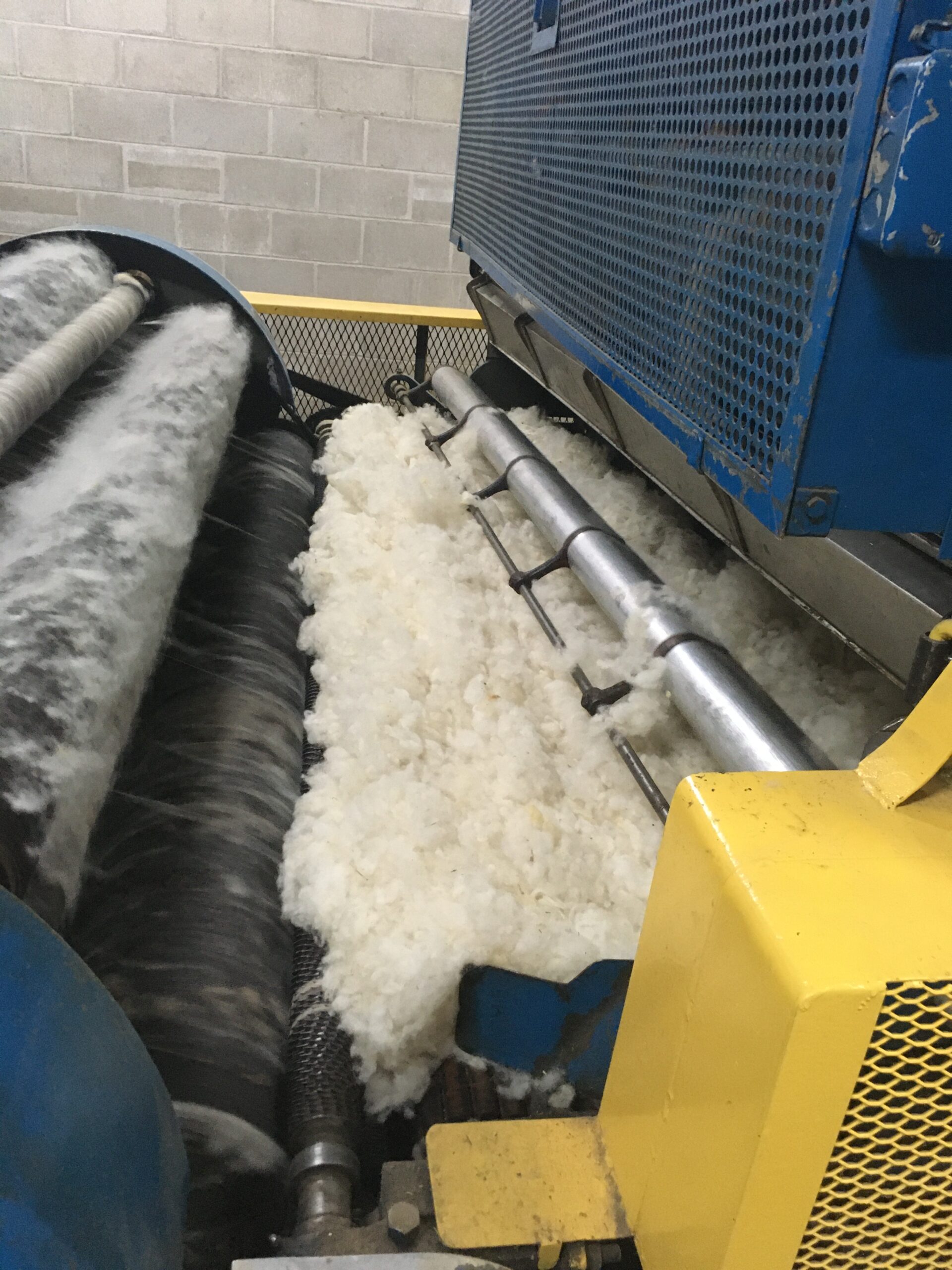
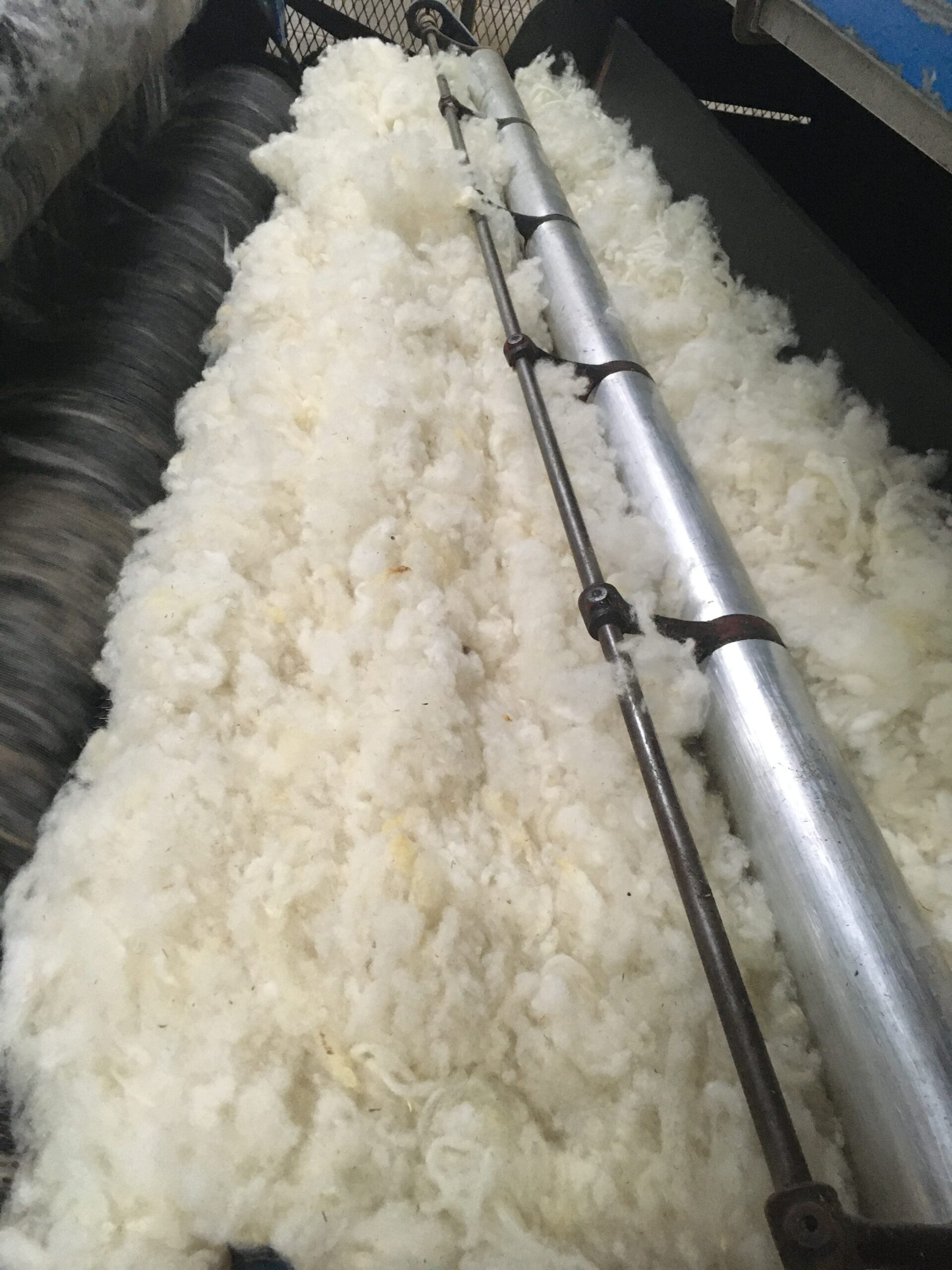
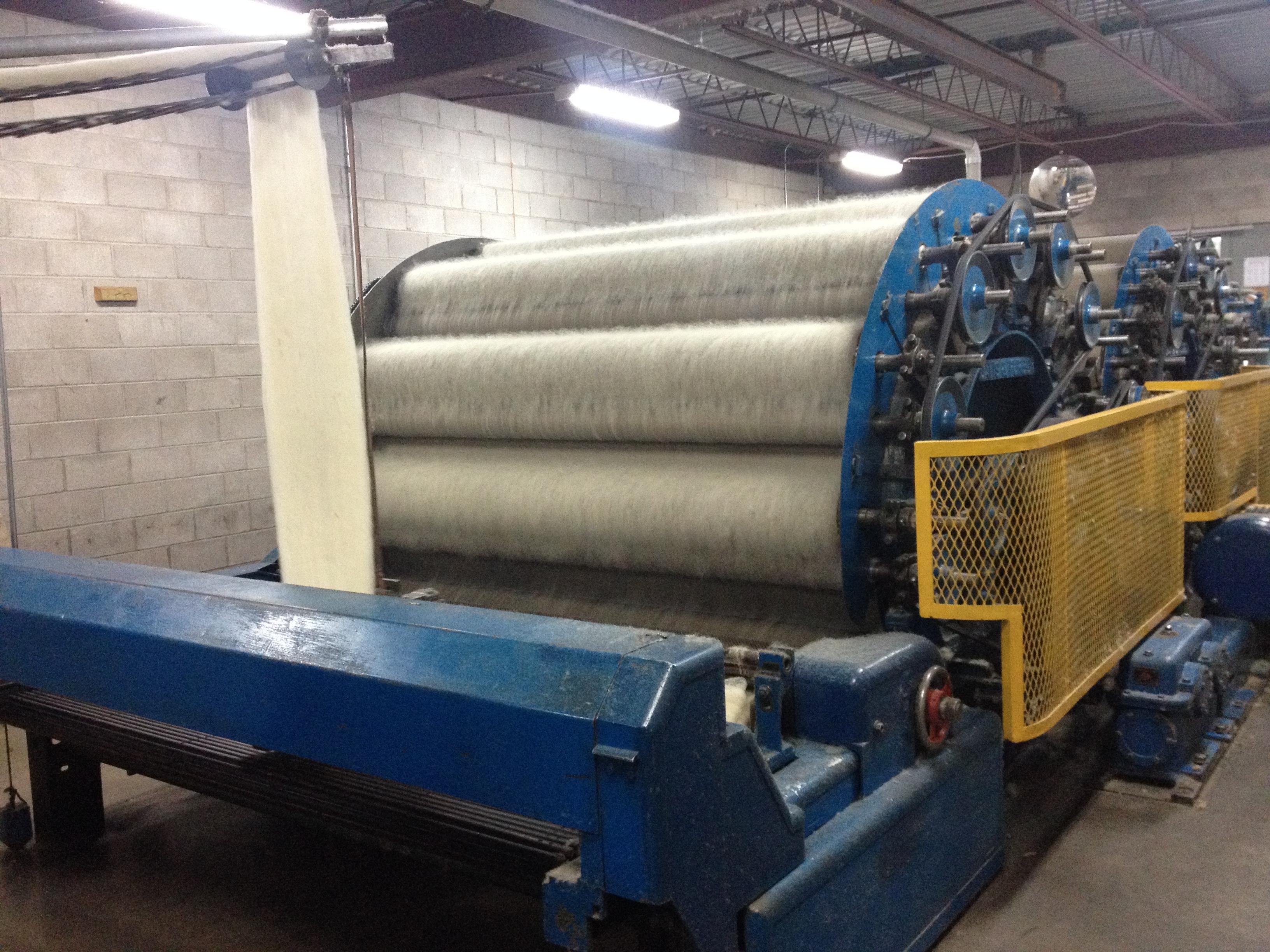
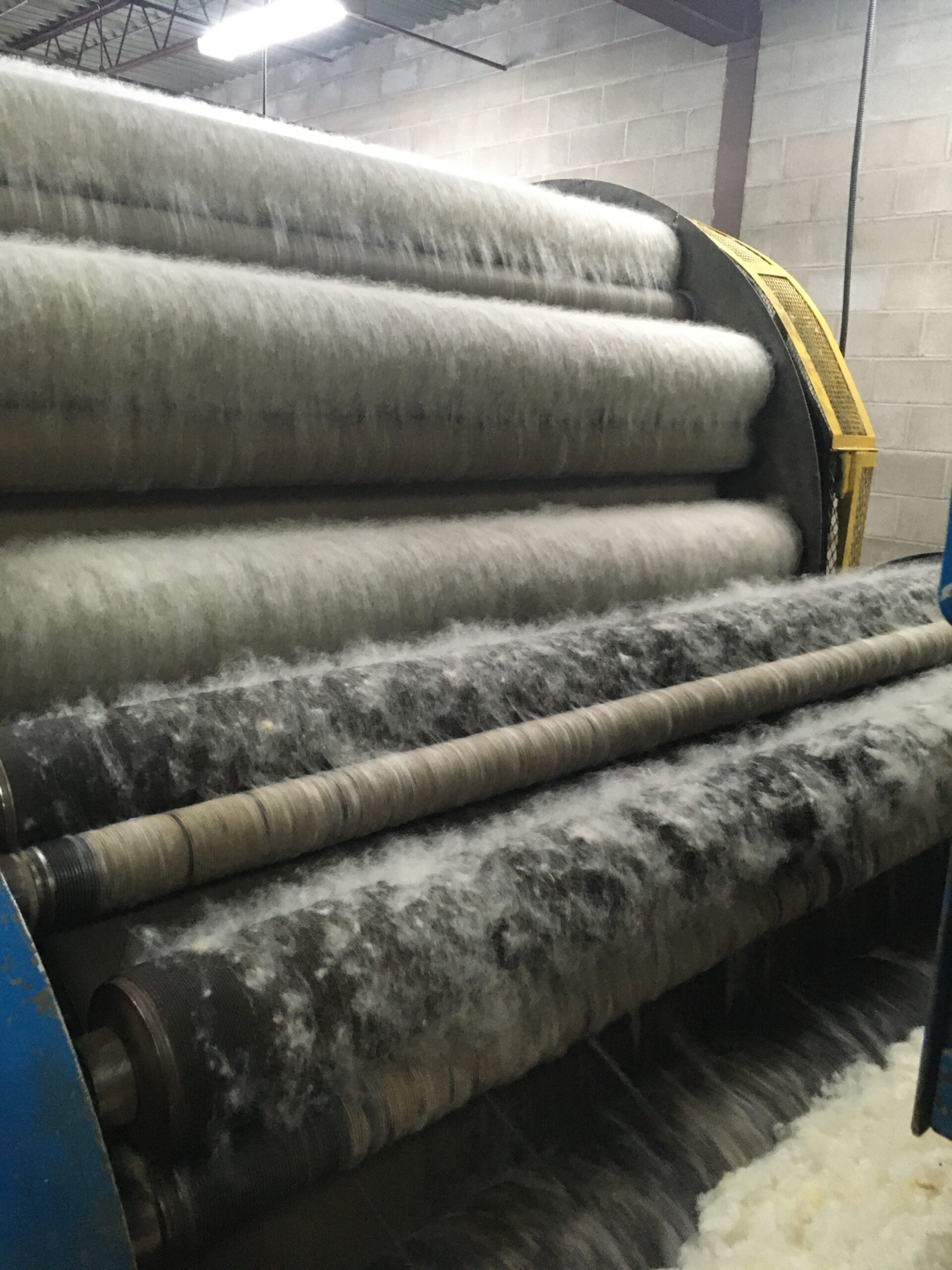
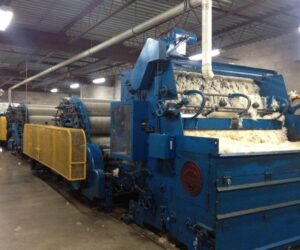
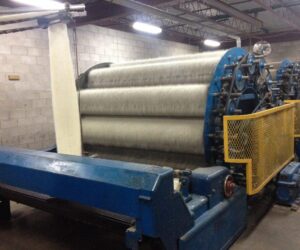
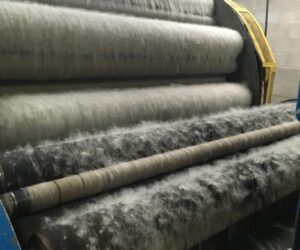
- Here the wool goes through a series of rollers of card clothing (rollers covered in tiny wires) to remove clumps and start to line up the fibres
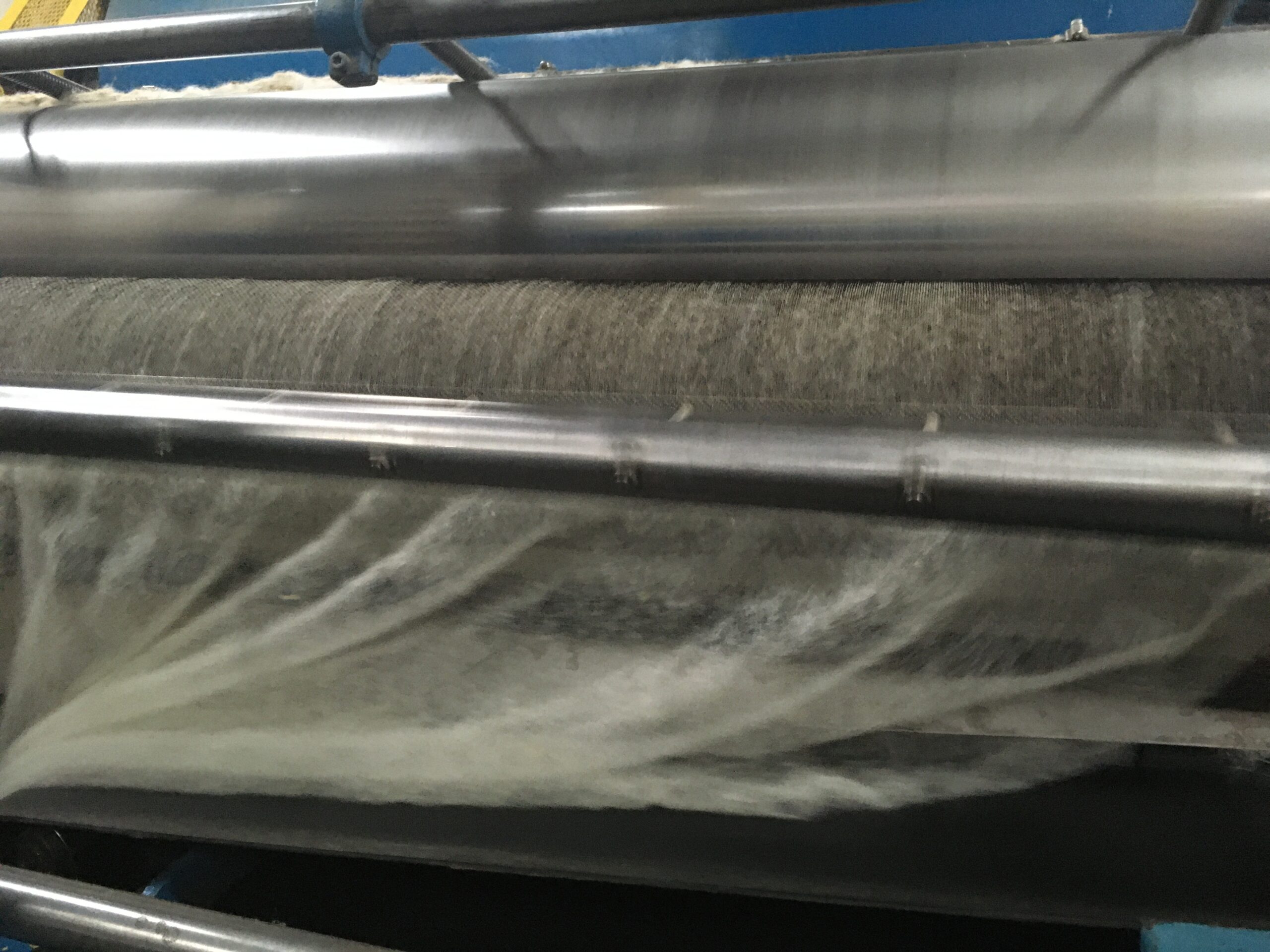
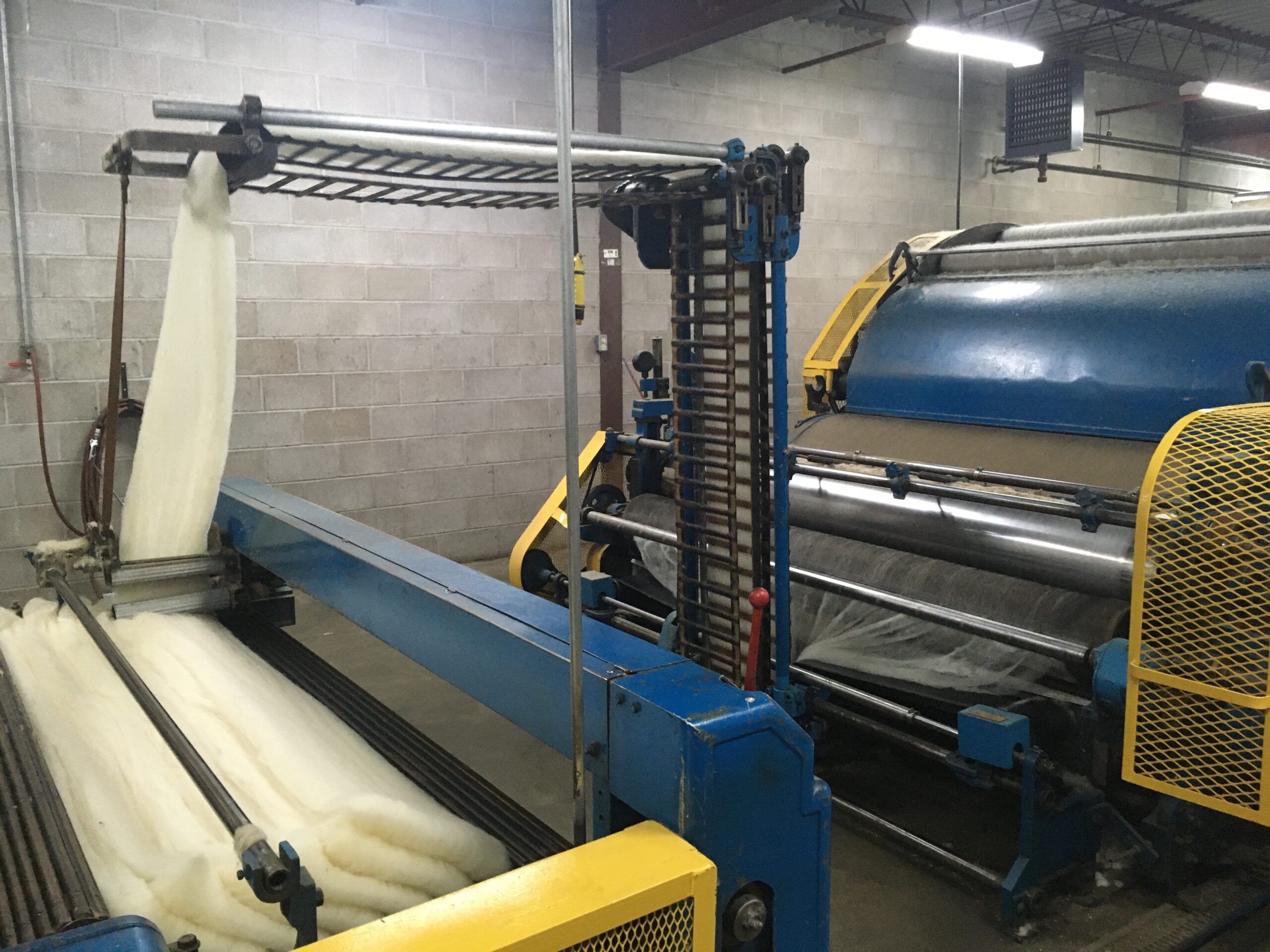
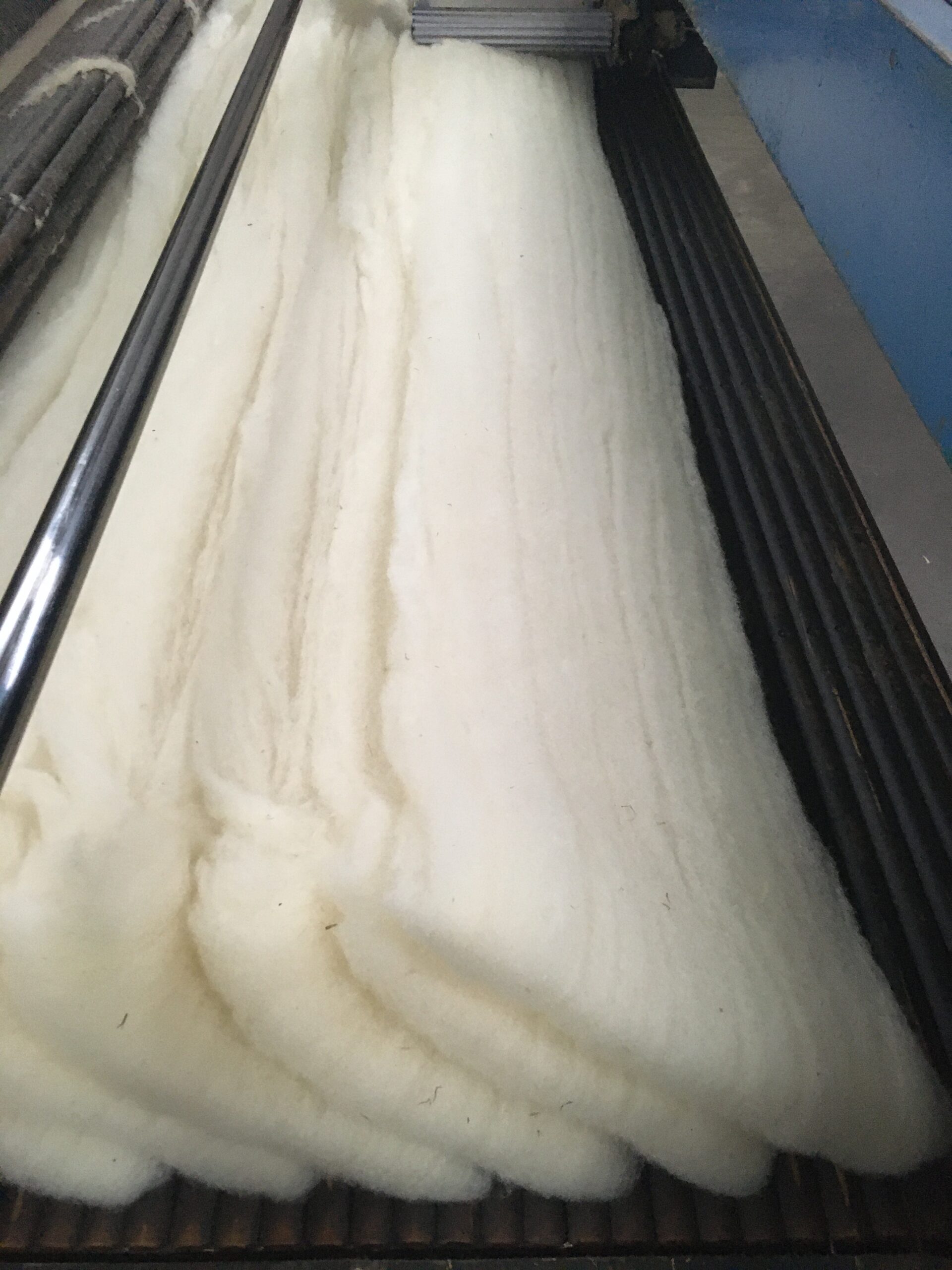
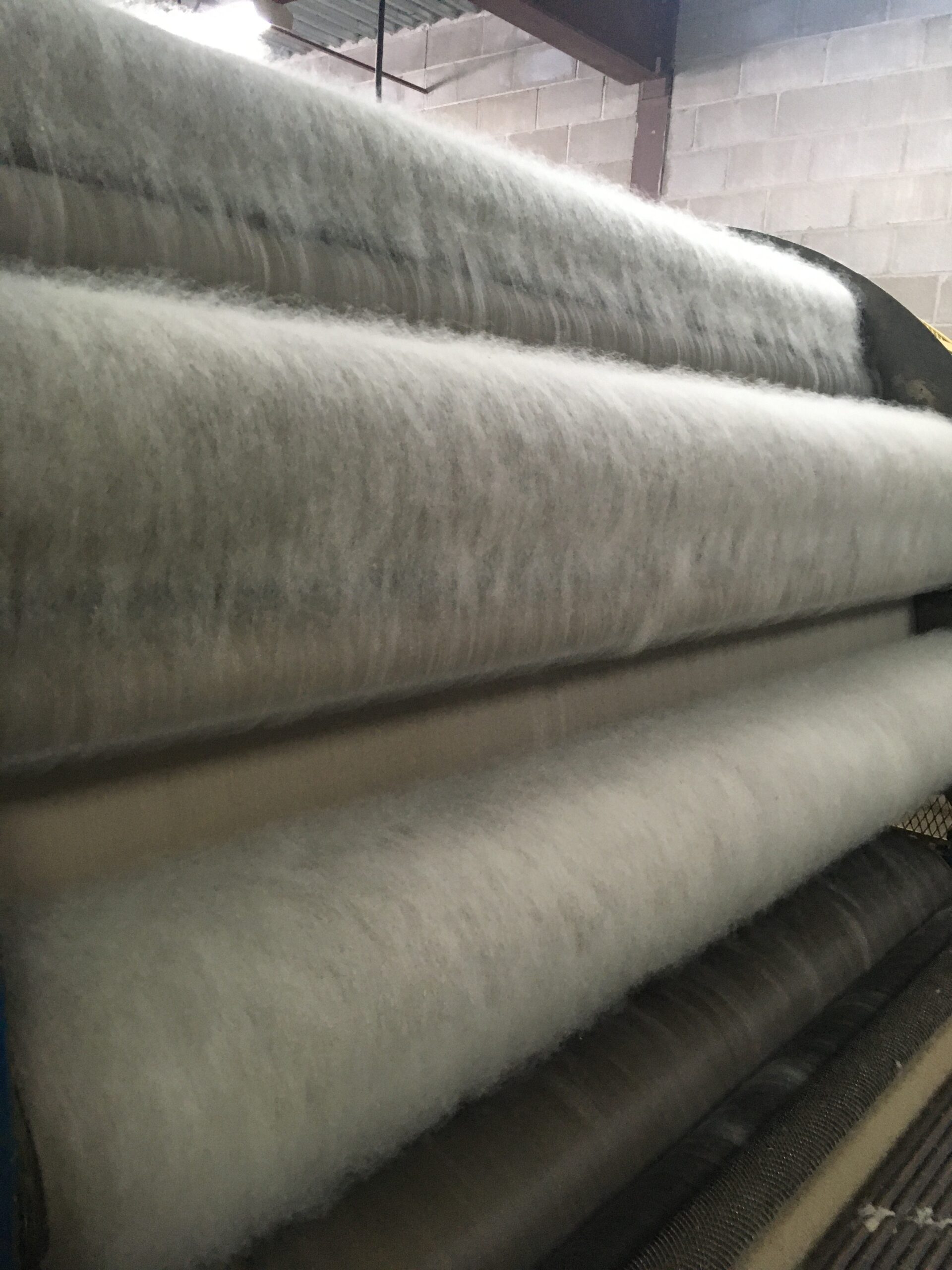
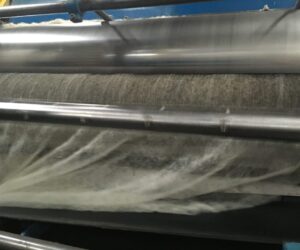
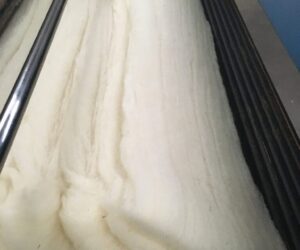
- A web of wool coming off the ladder to go through another series of rollers, in the opposite direction. It is here, at the ladder that we remove the wool for our carded wool
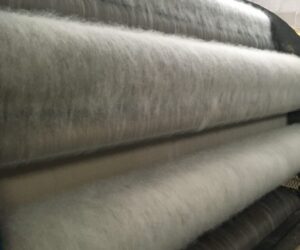
- Another view of wool going through the carding machine
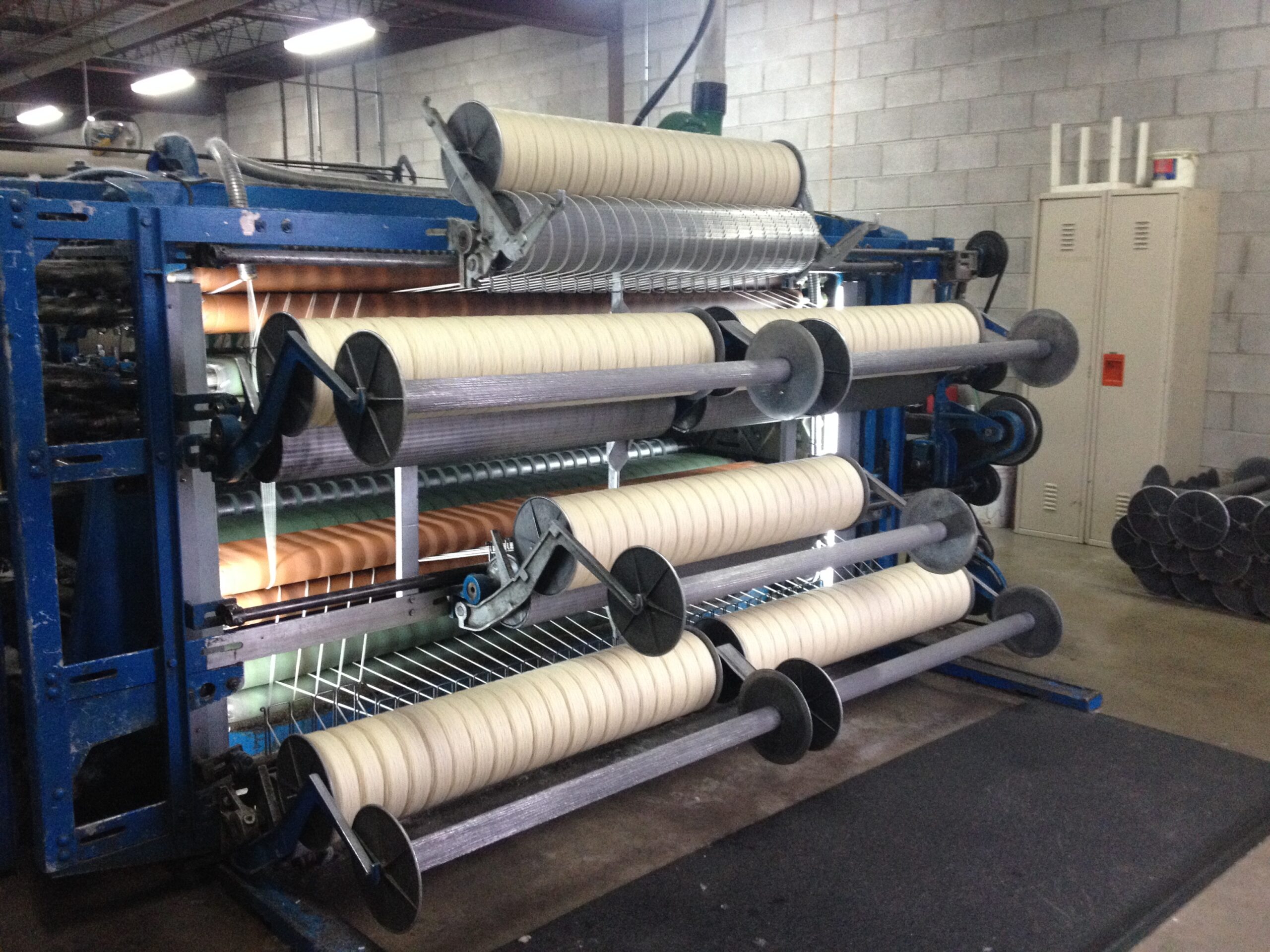
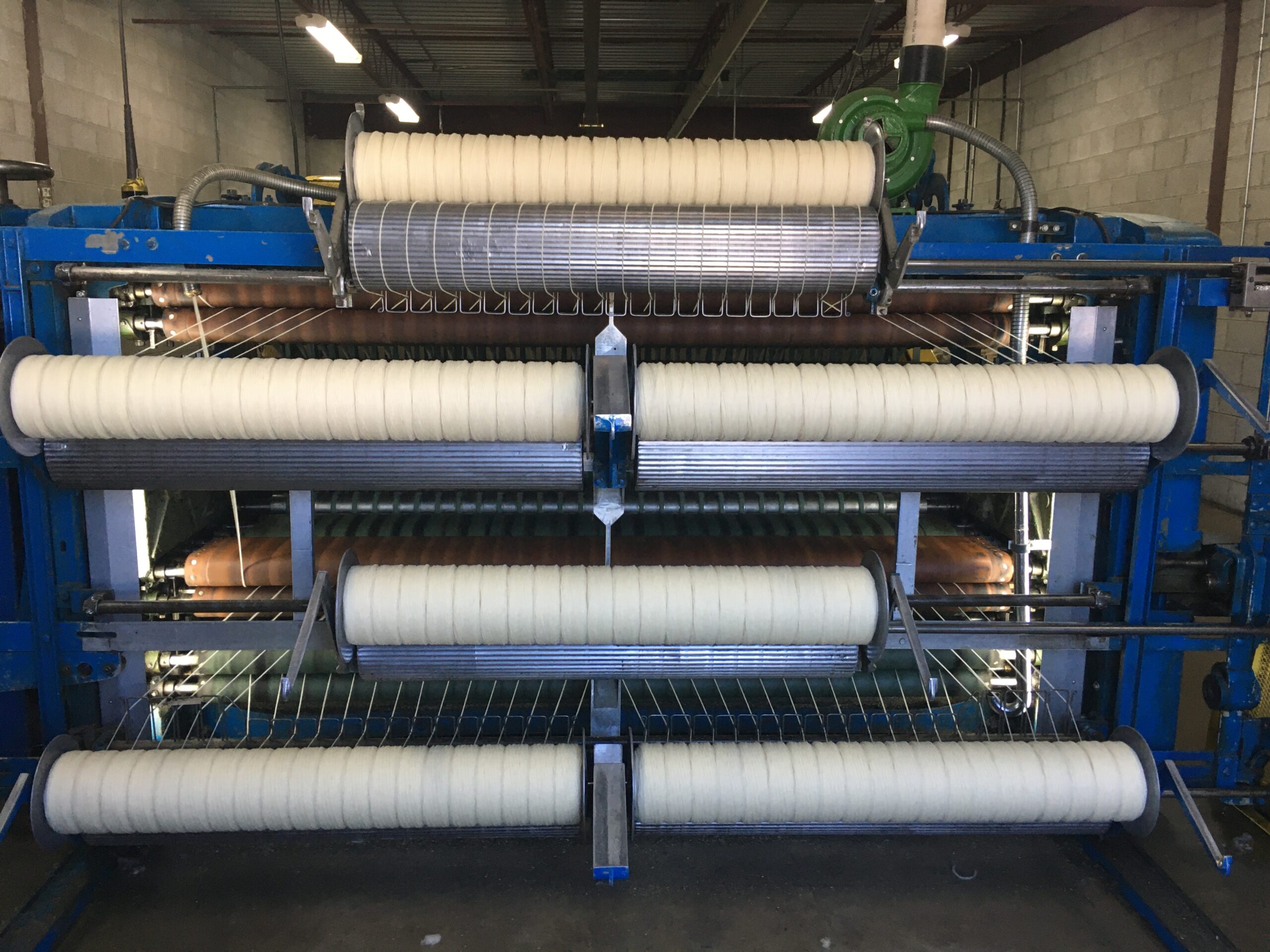
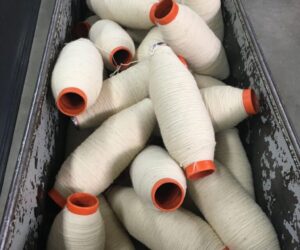
- Spools at the end of the carder. This can now be measured off the spool to create Country Roving or be further processed to create yarn.
Spinning and Twisting
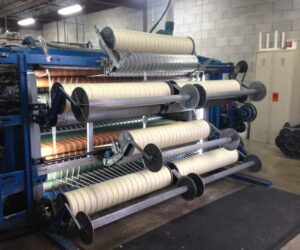
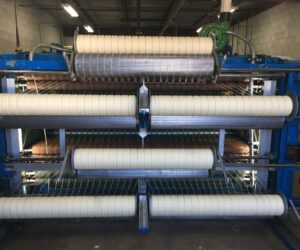
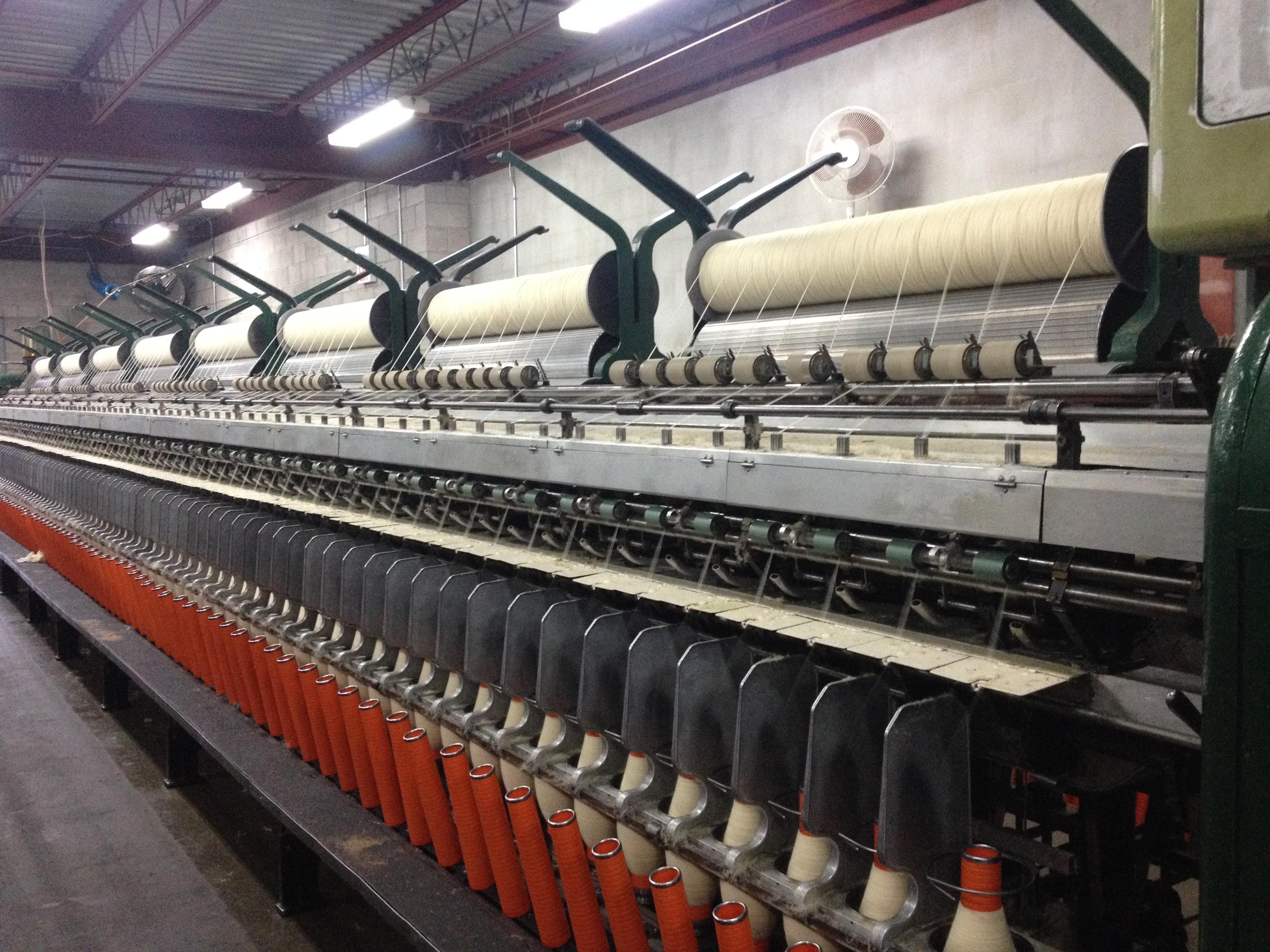
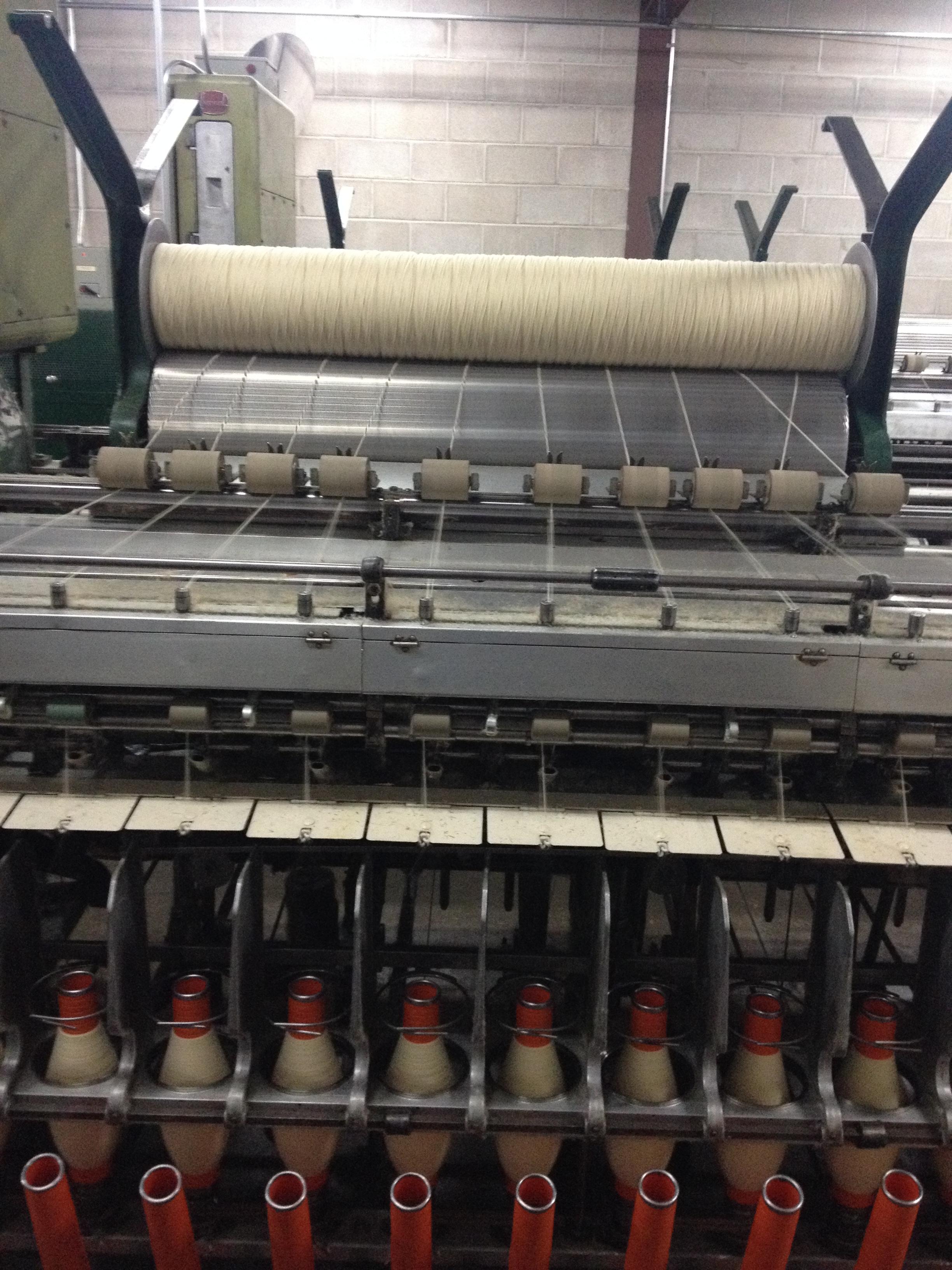
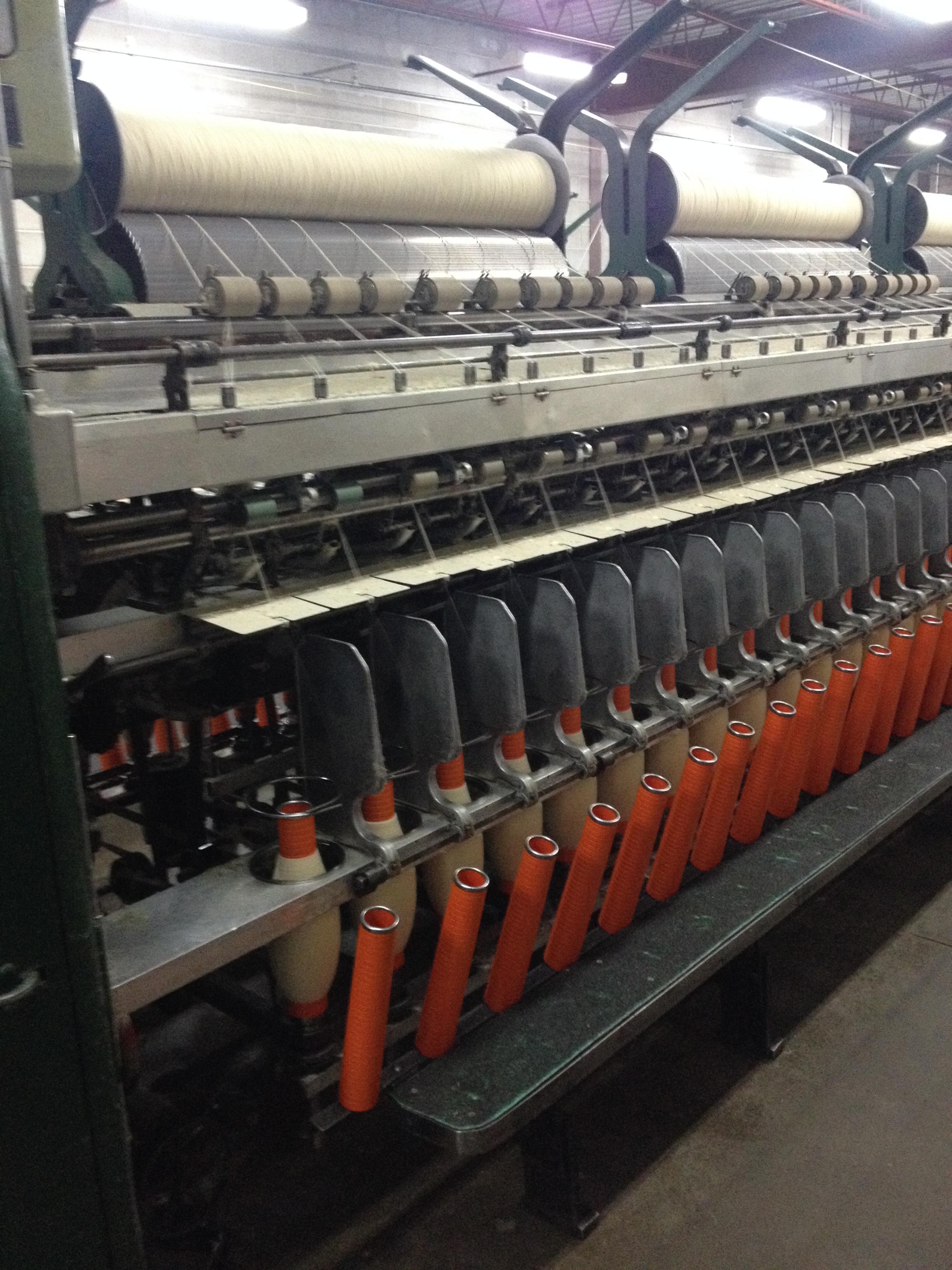
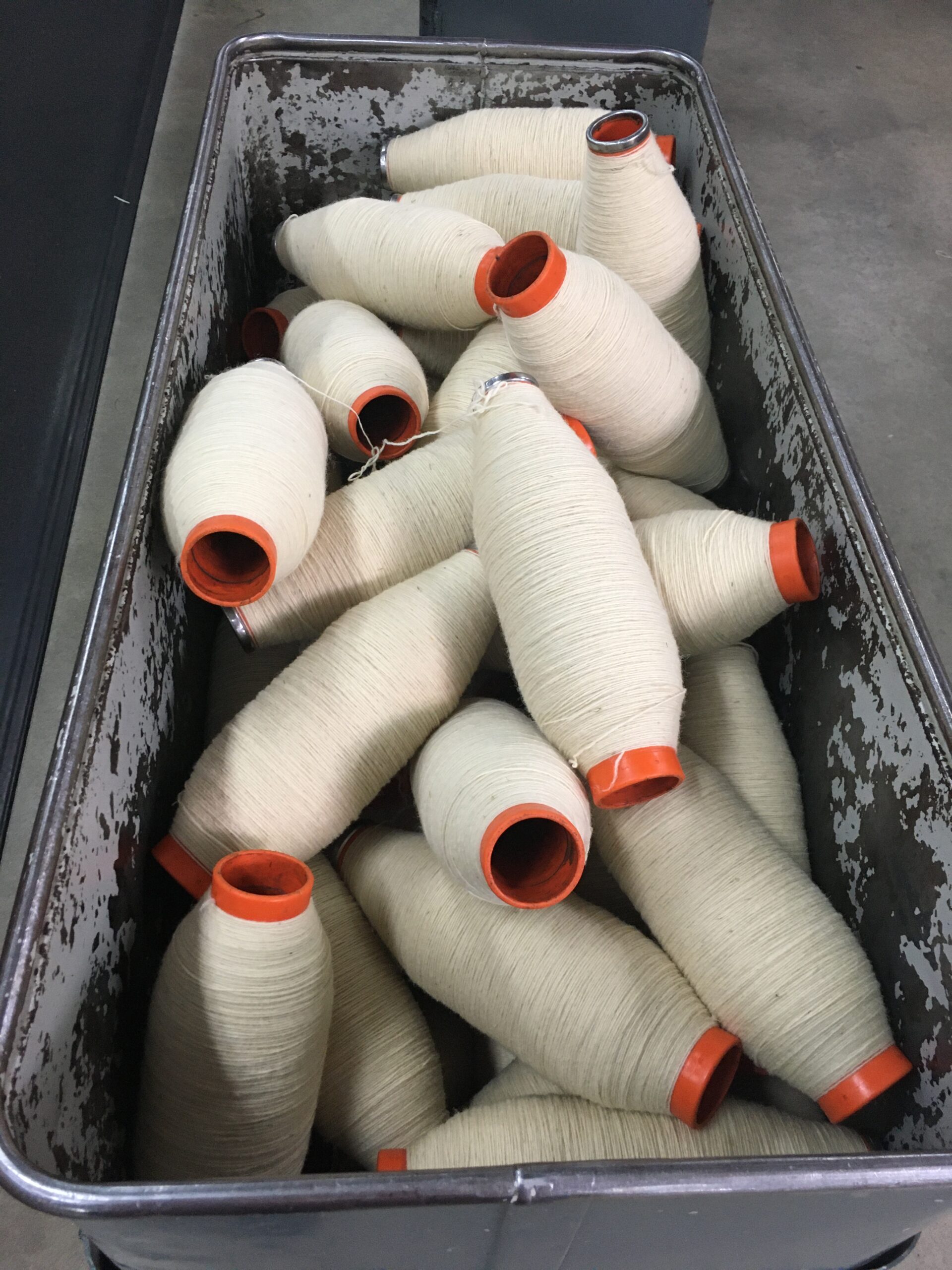
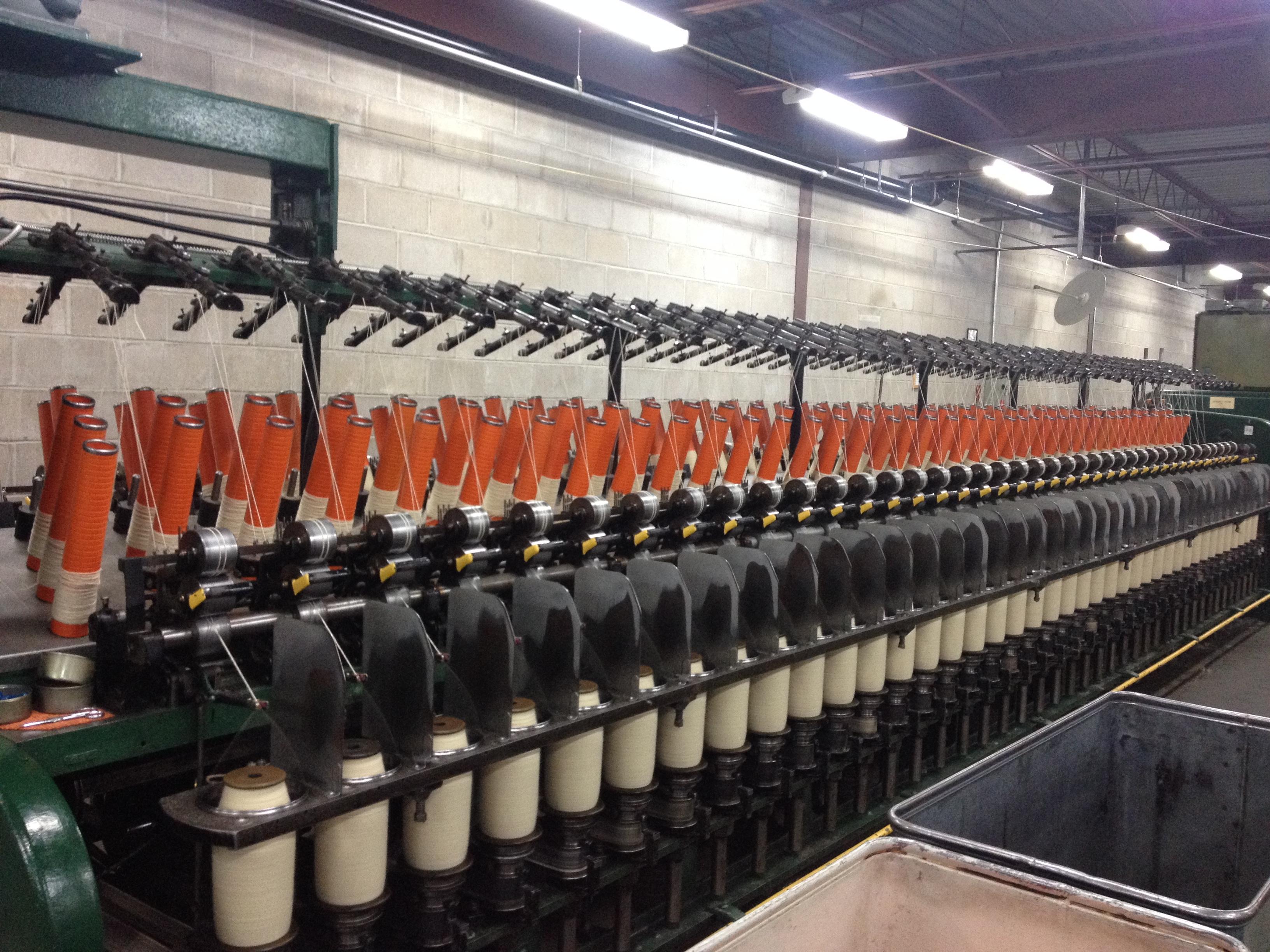
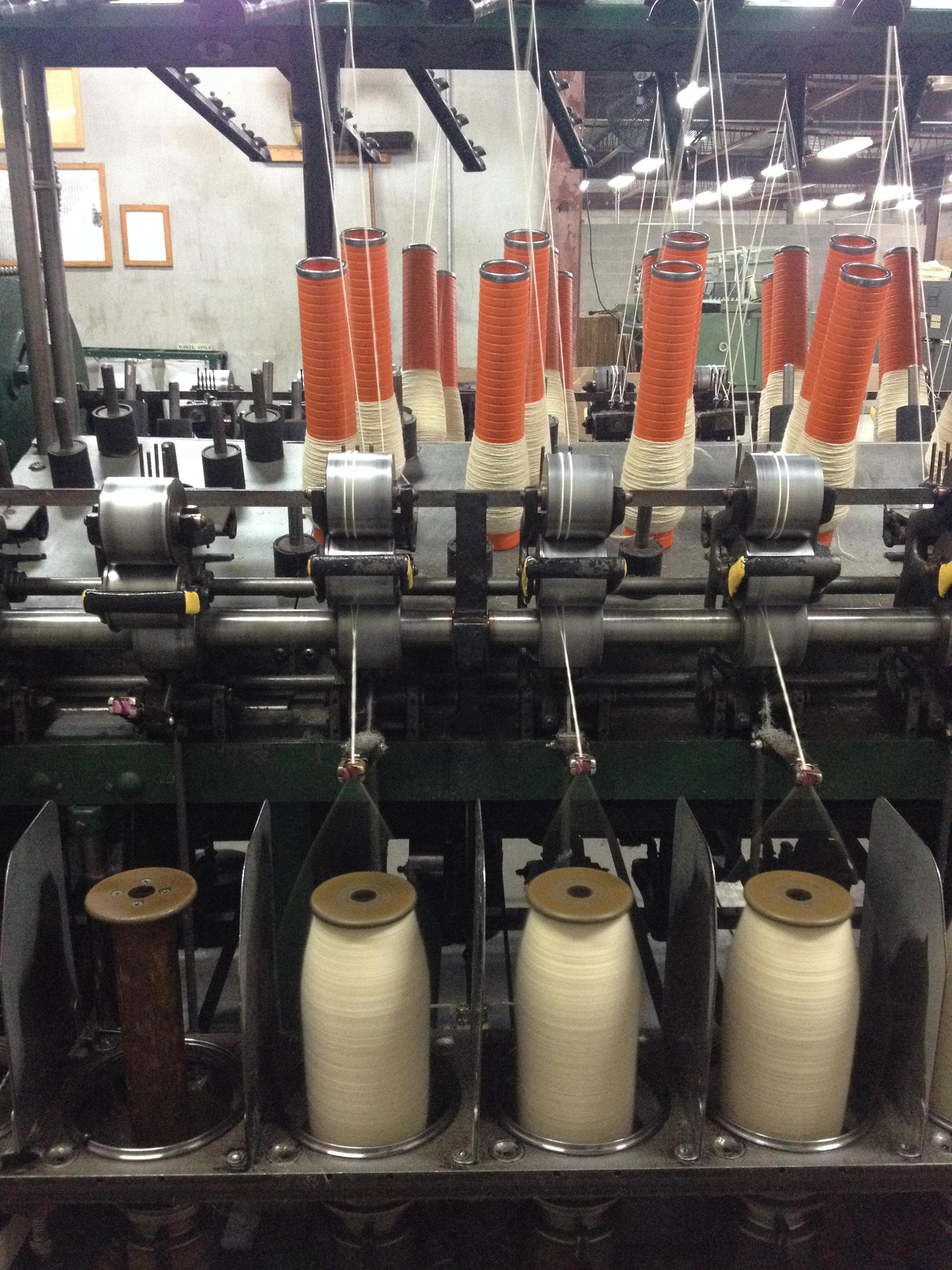
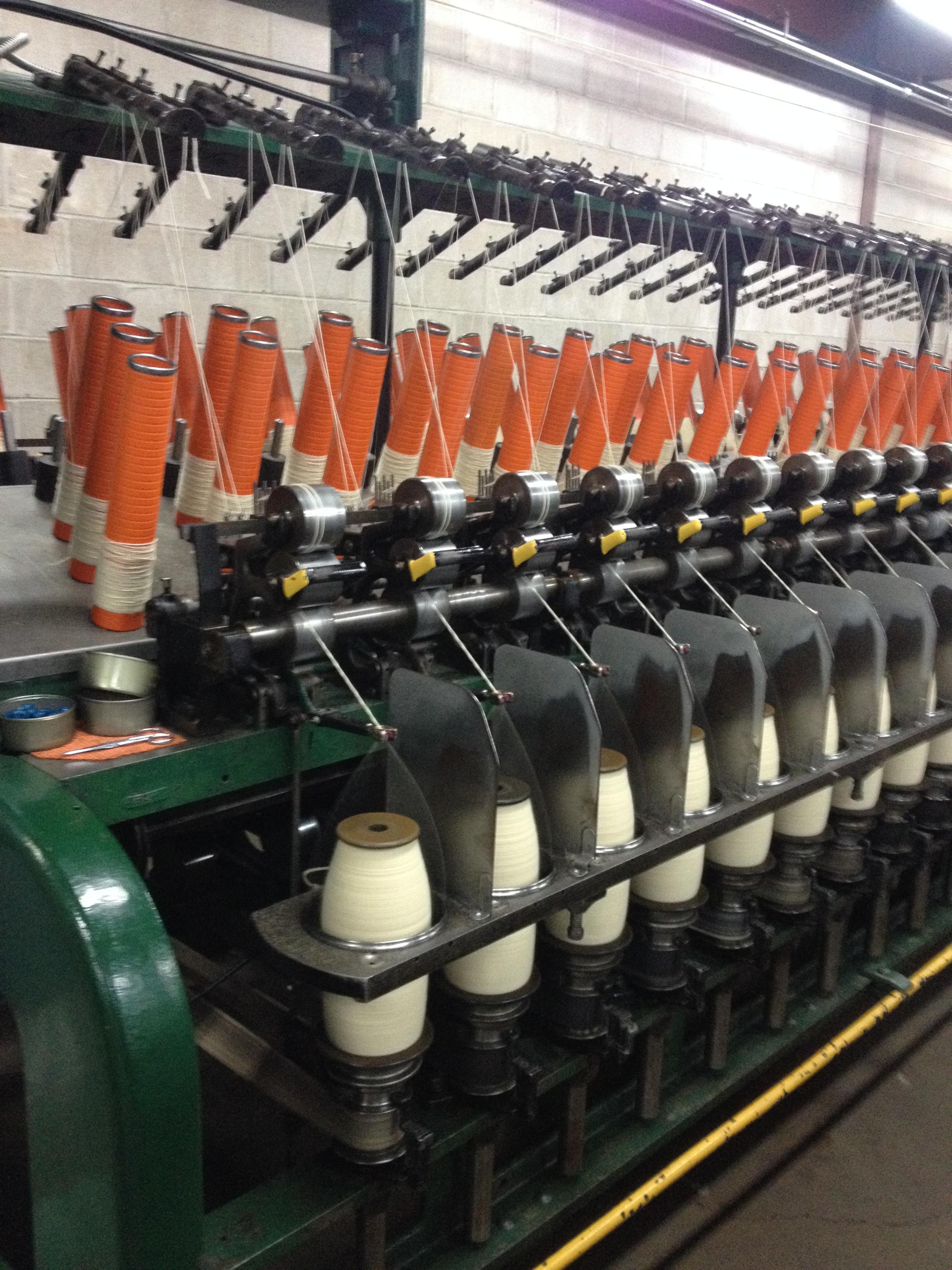
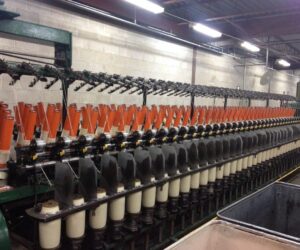
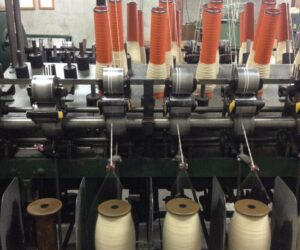
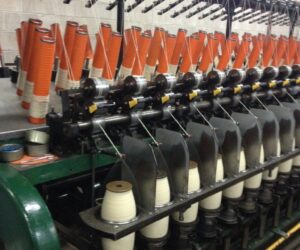
Spinning frames take the primary strands of wool and spin them into a strong, smooth and uniform yarn.
It is single ply and can be spun to our specification.
The turning of the bobbins does the main spin.
Spinning frames does the same work as the old spinning wheel.
Twisting
- After the yarn is spun it heads for the twister machine. Here the yarn is plied together by twisting the multiple strands of yarn together
- We ply our yarn in two, three or four strands
- If we spin in one direction we always twist in the opposite direction. This gives the yarn more strength and durability.
- Our yarns have an “S” twist, meaning when you look at the yarn the twist goes from upper left to lower right.
Reeling
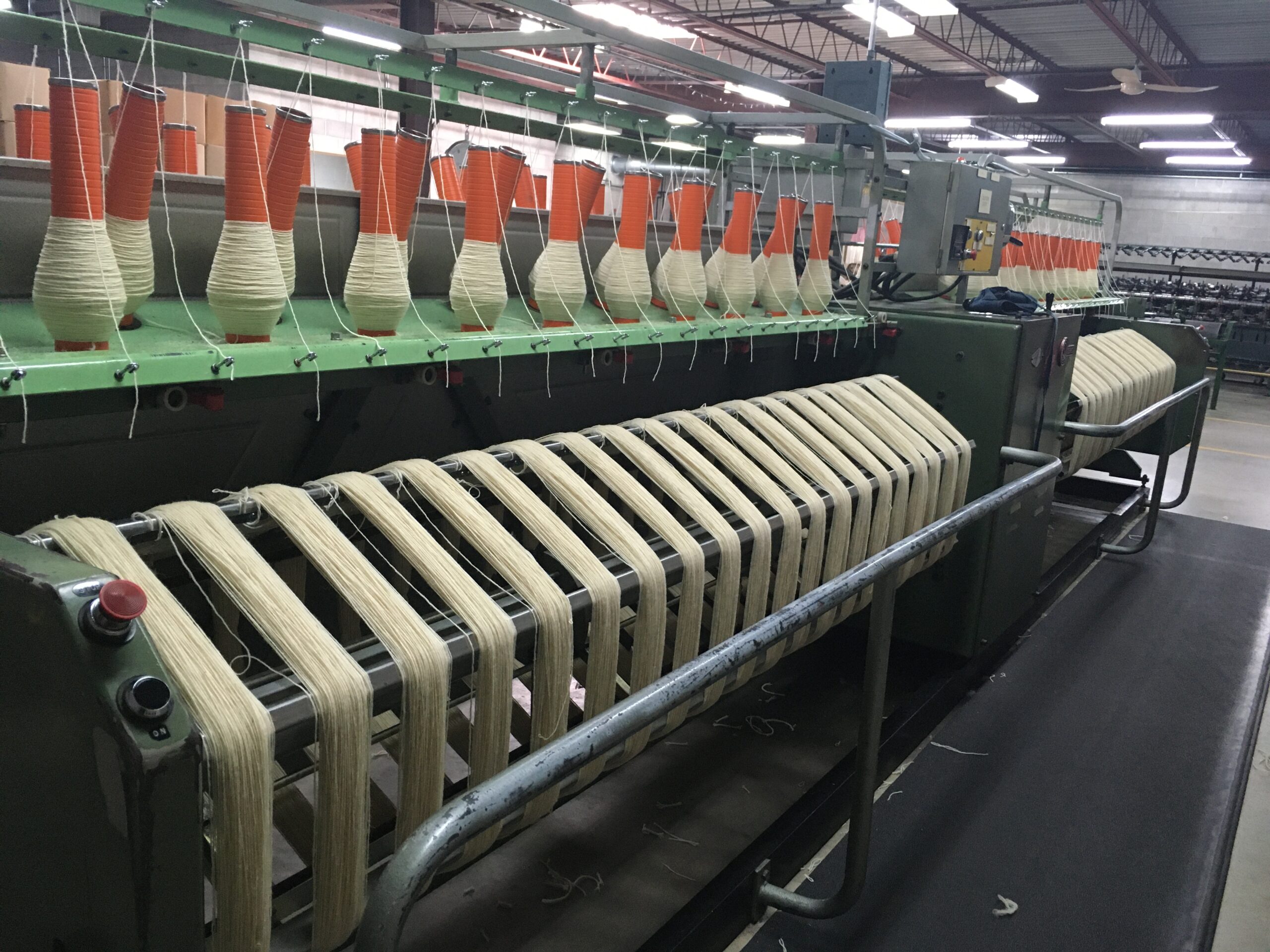
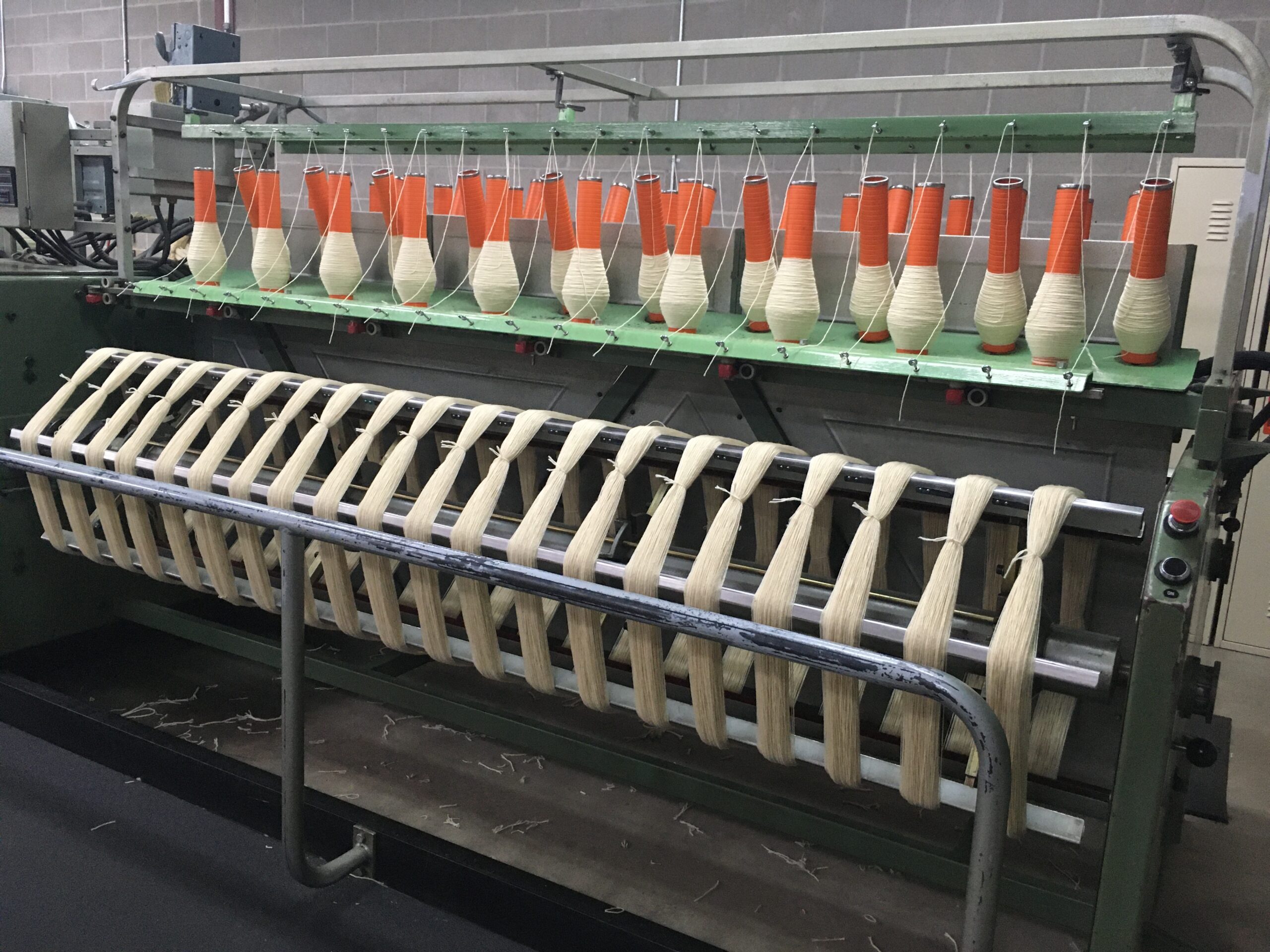
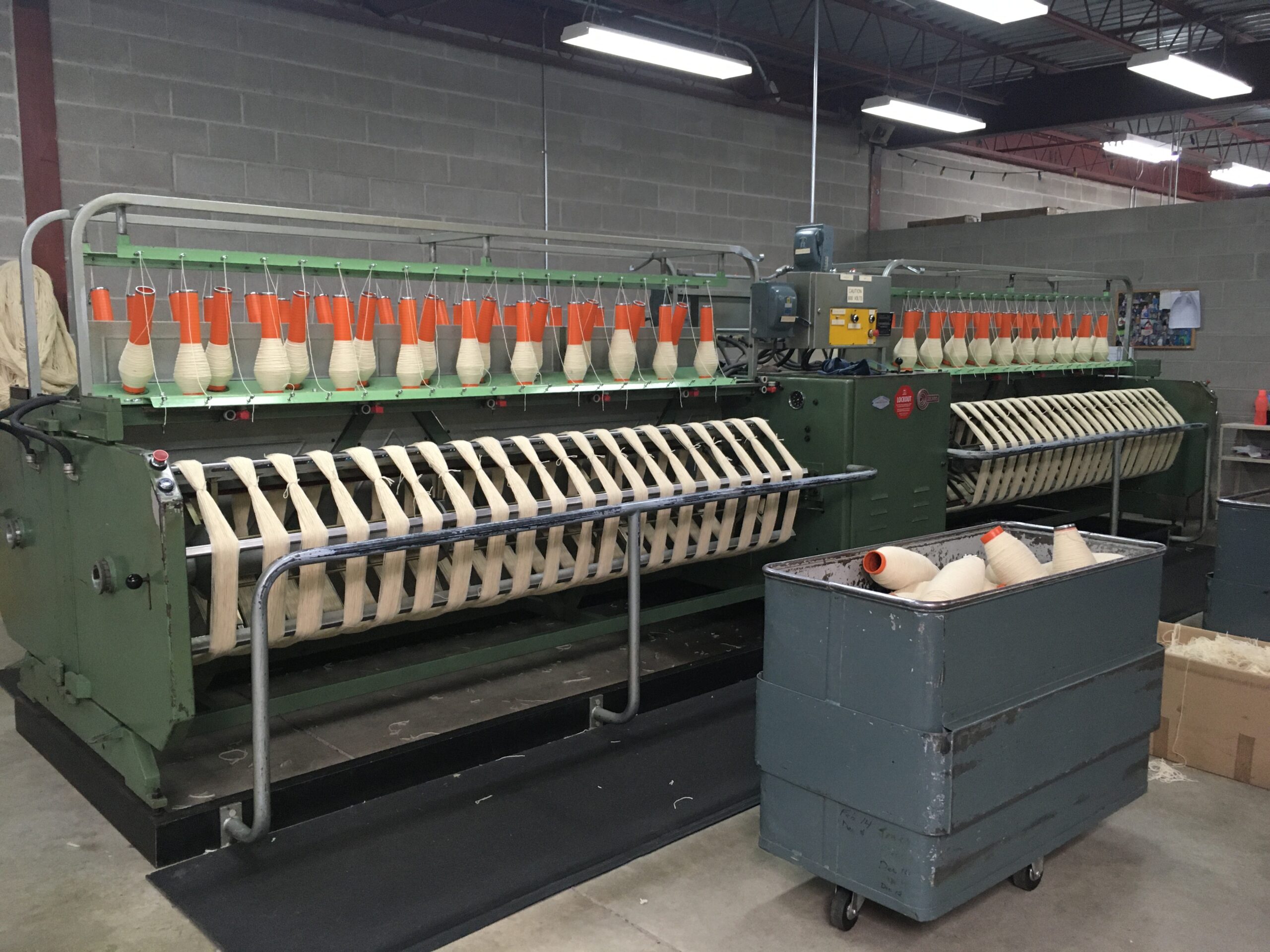
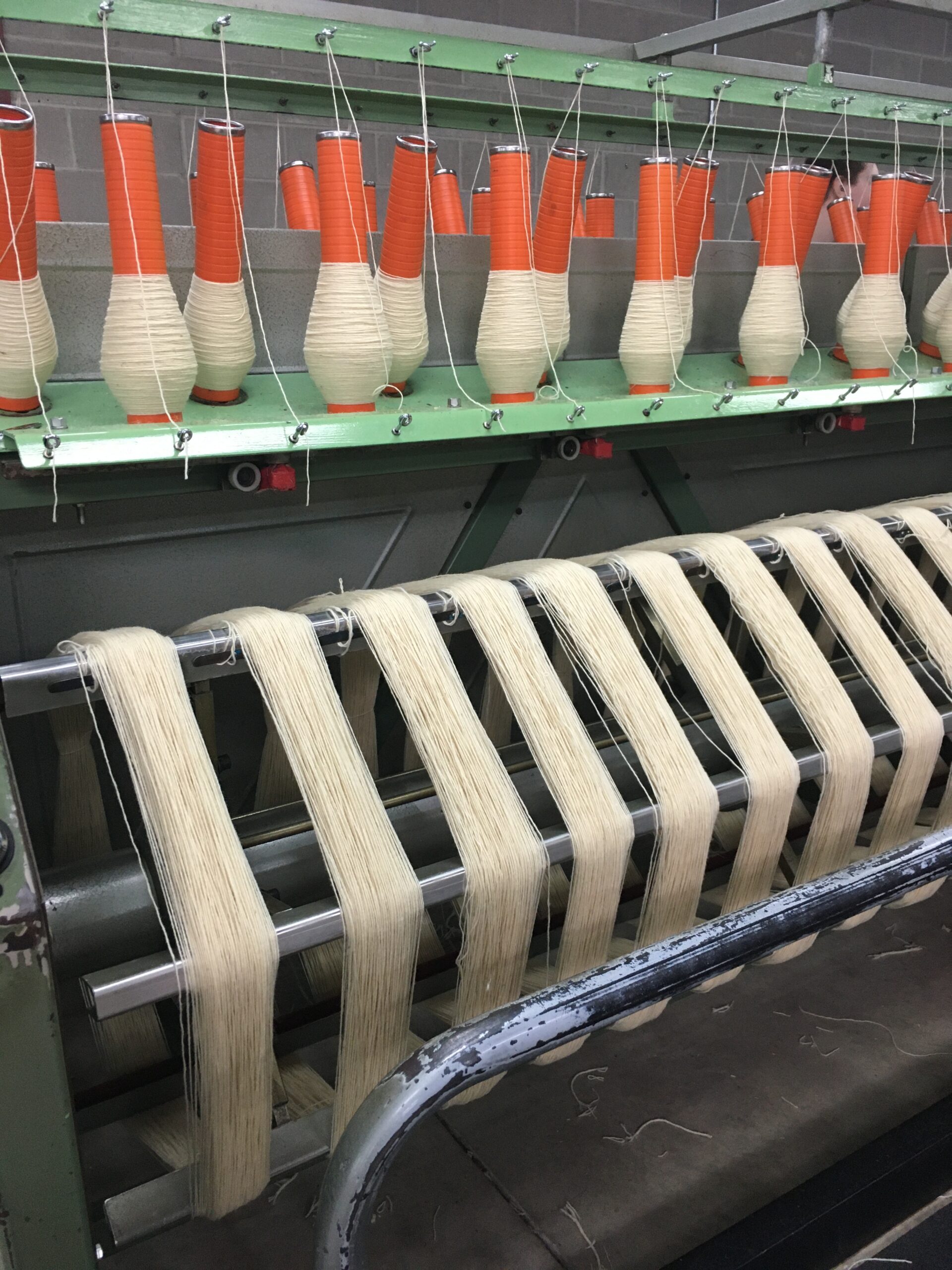
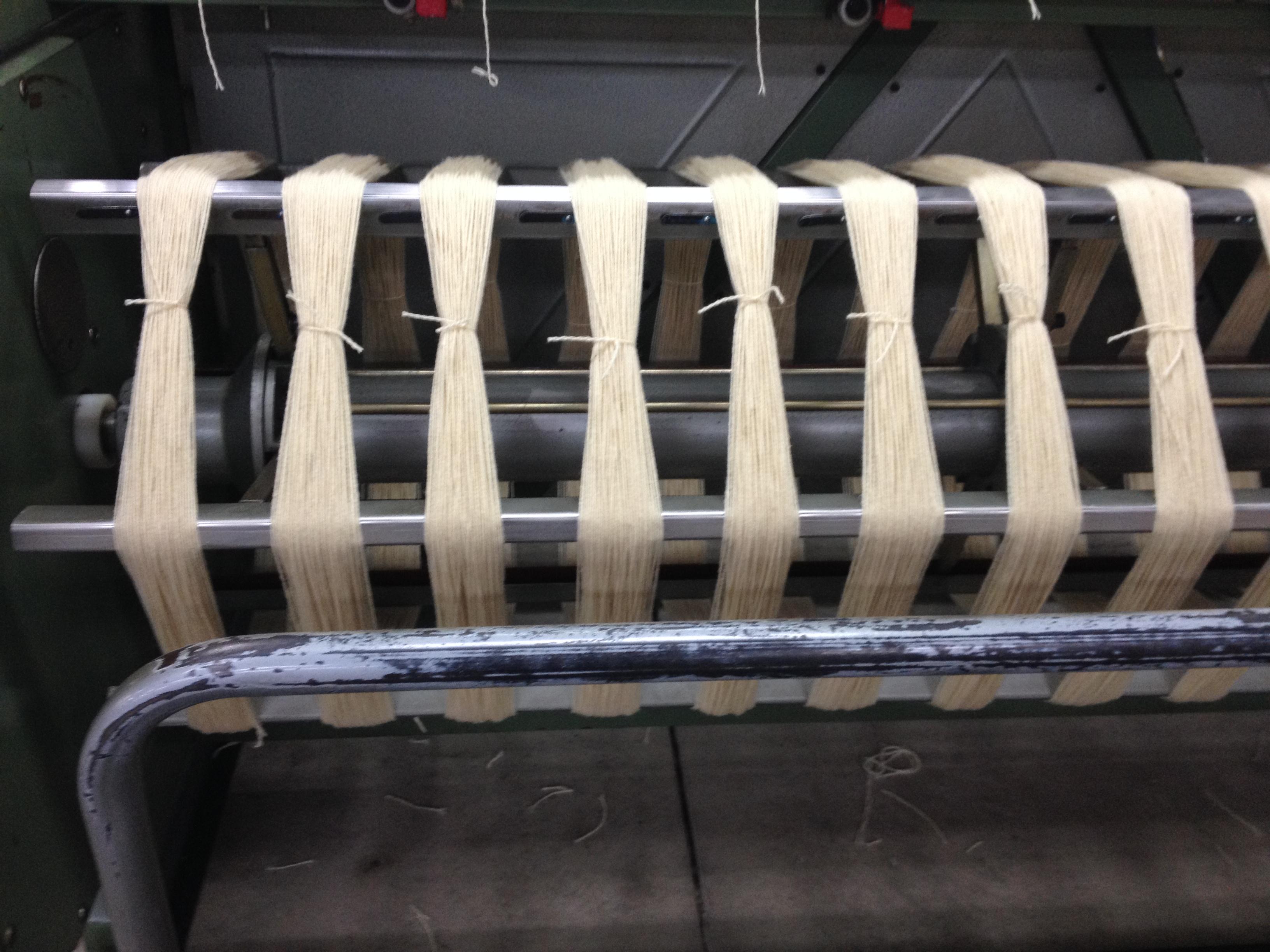
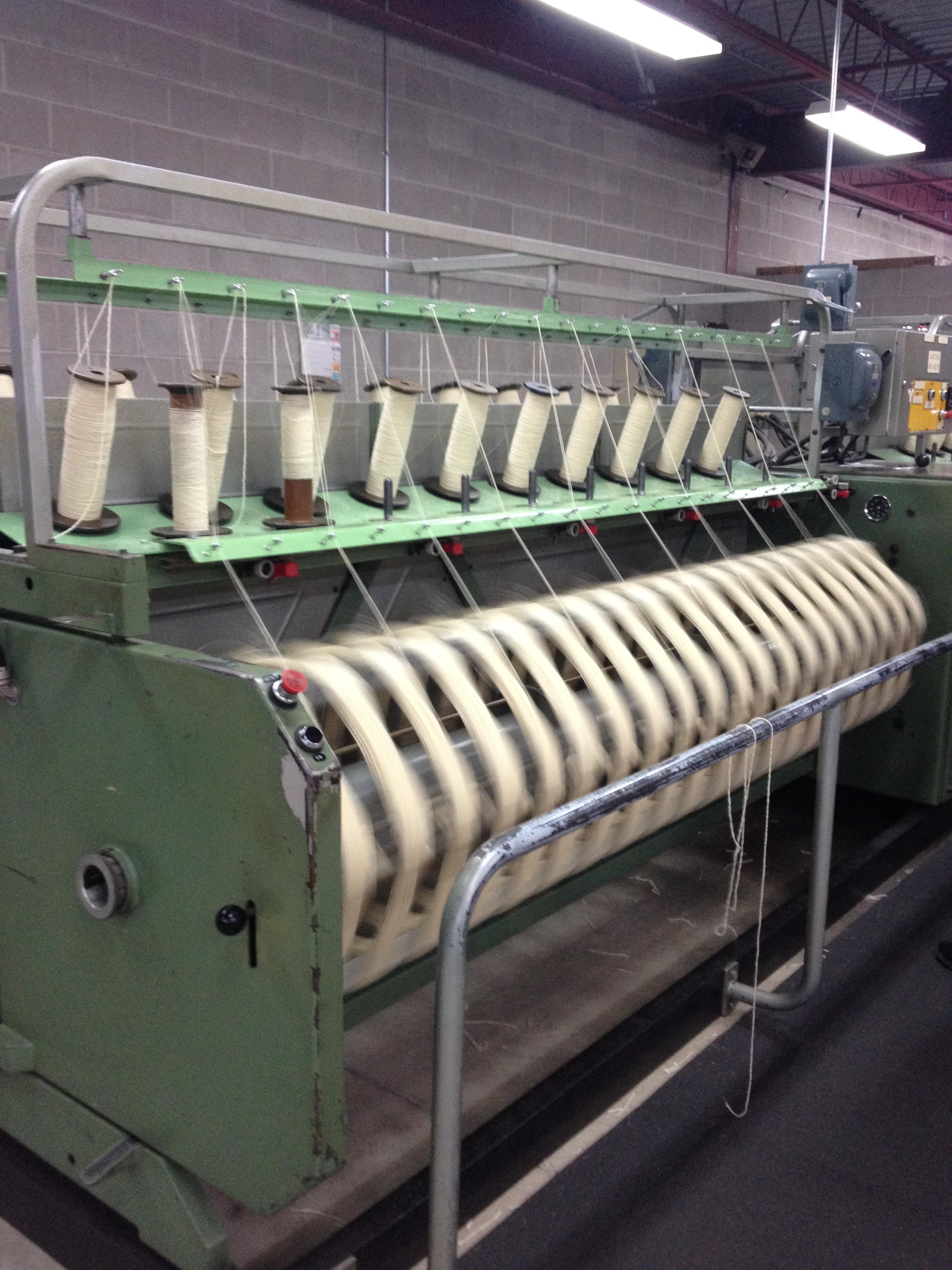
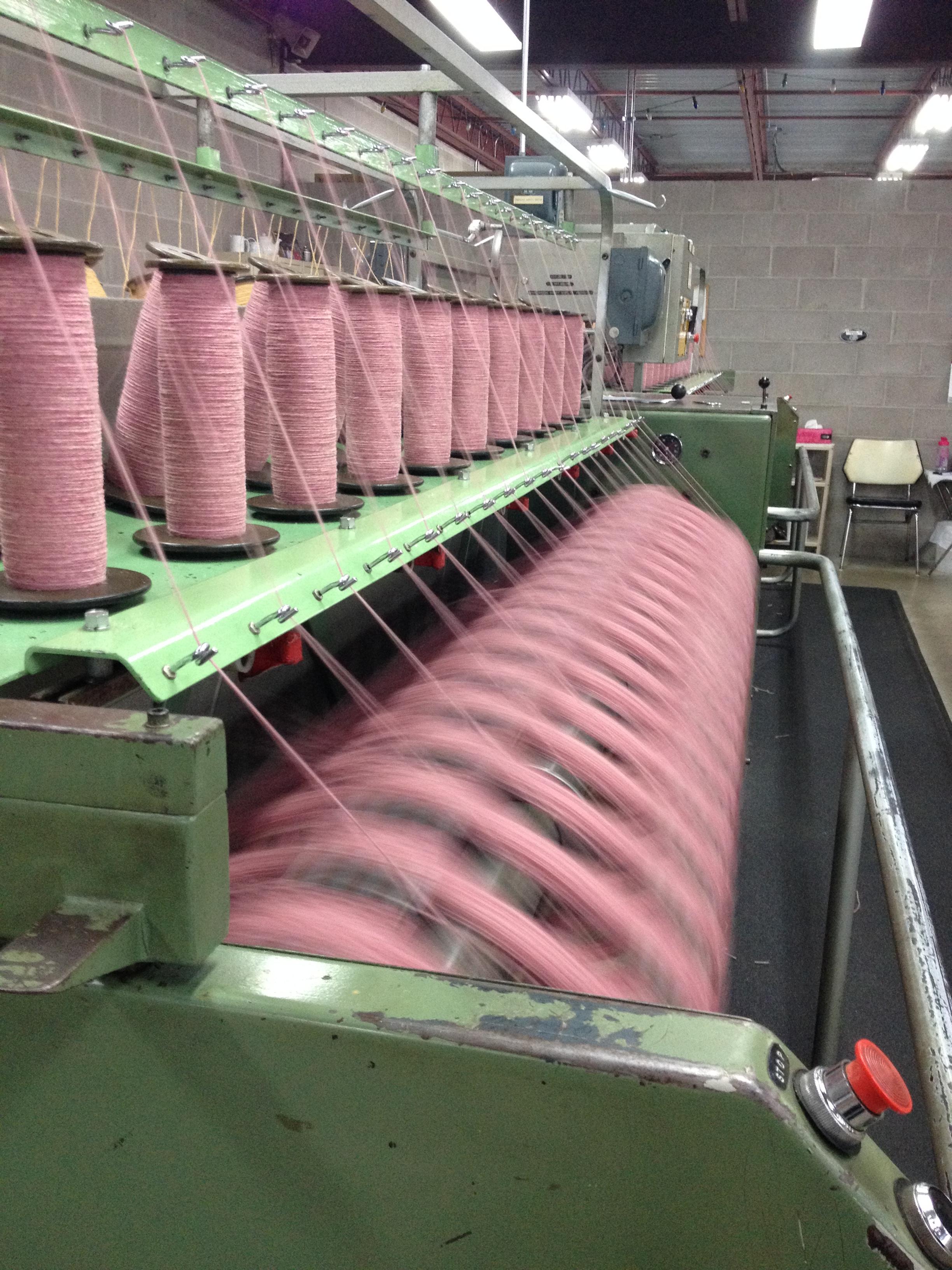
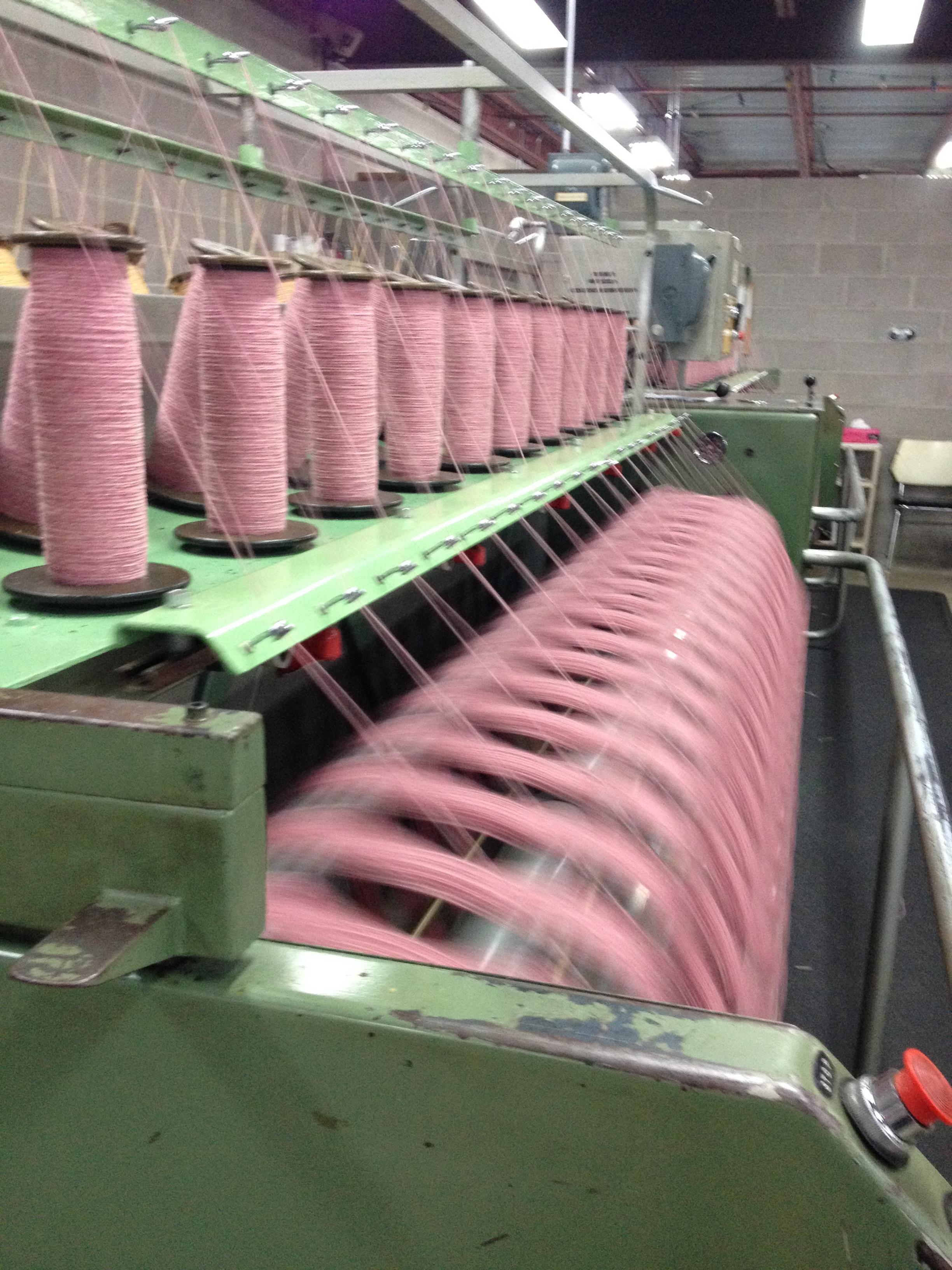
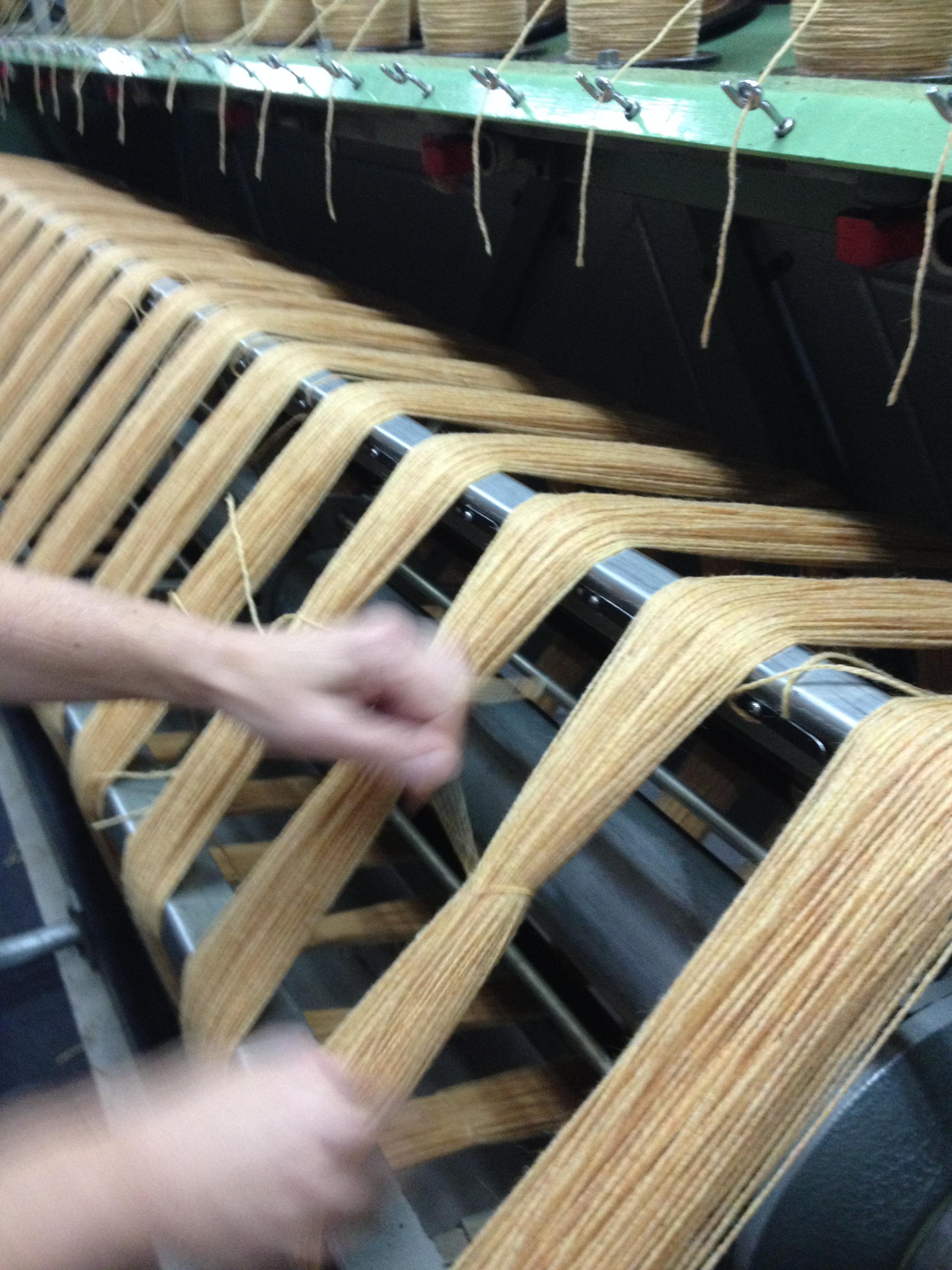
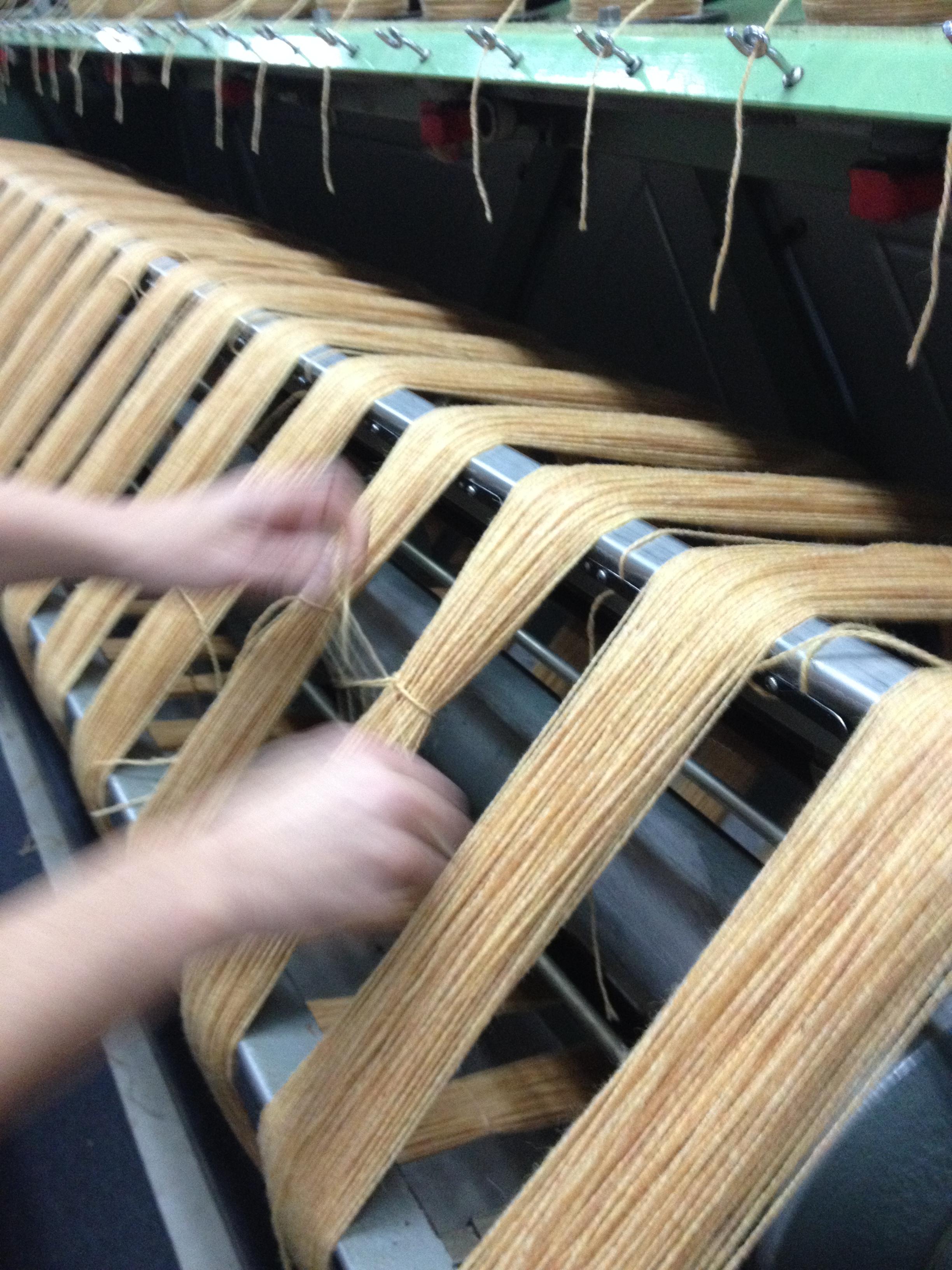
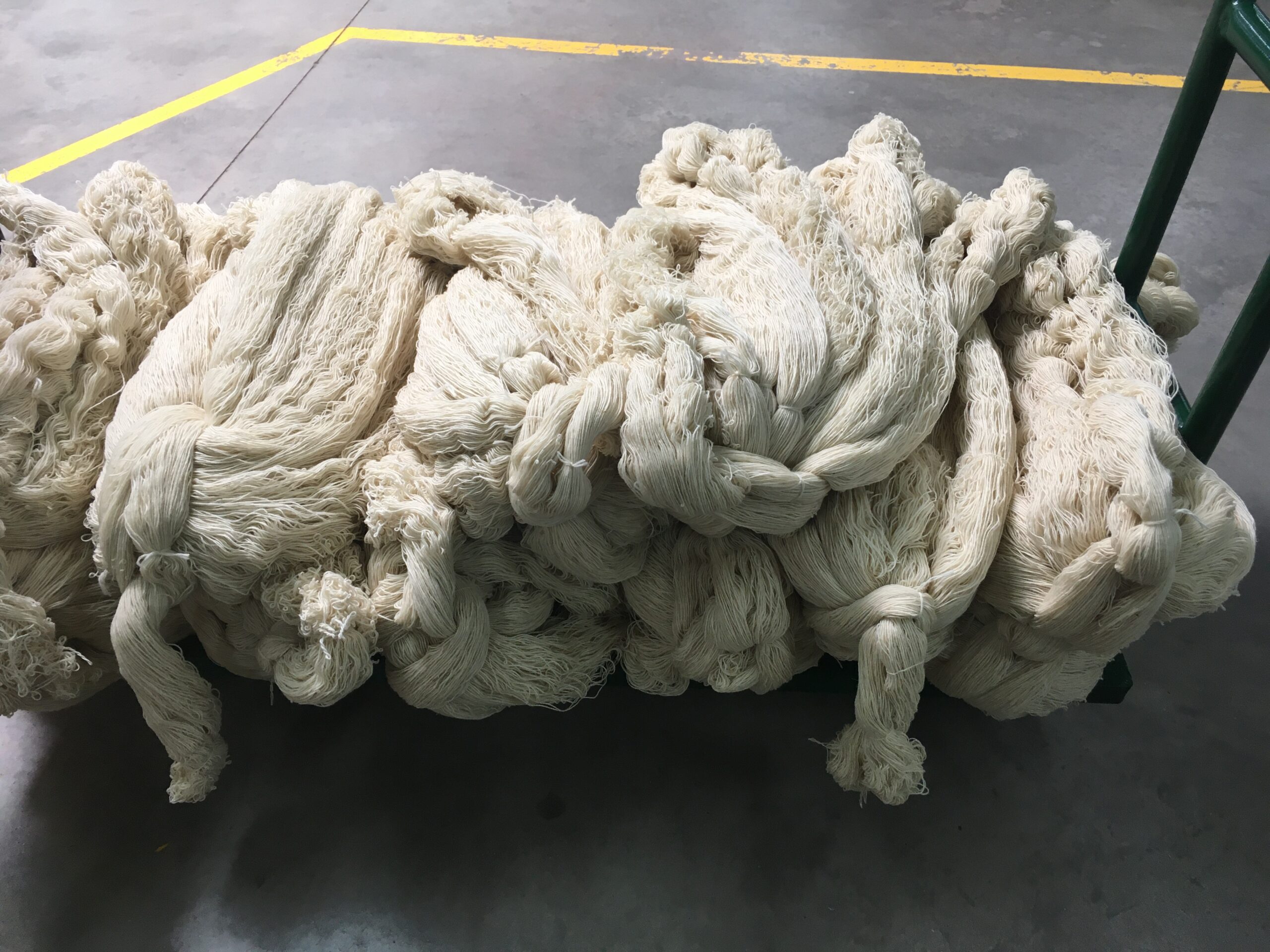
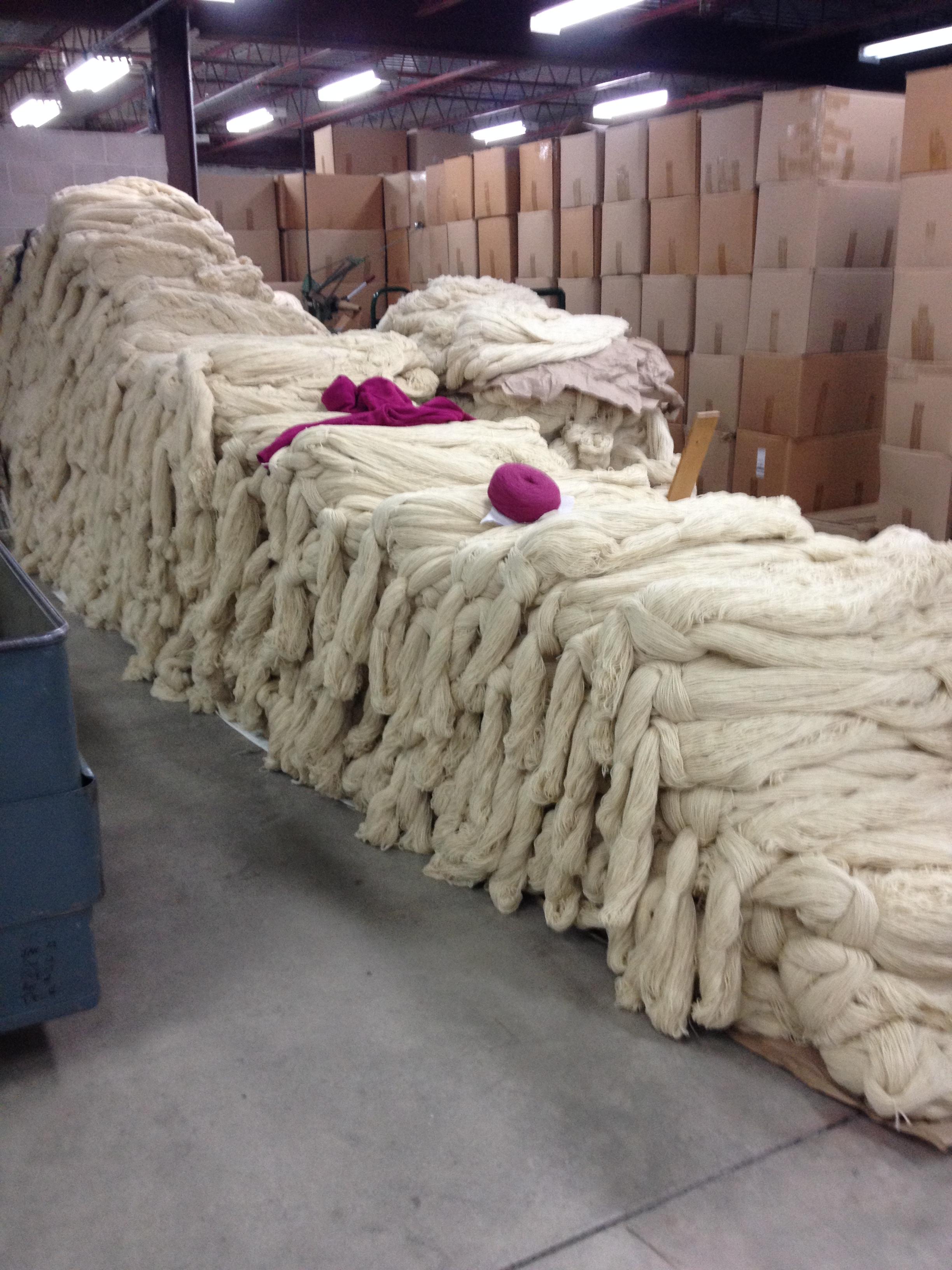
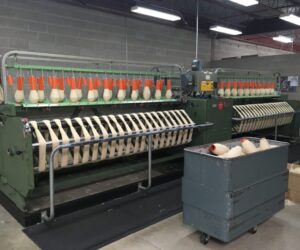
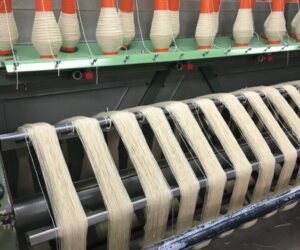
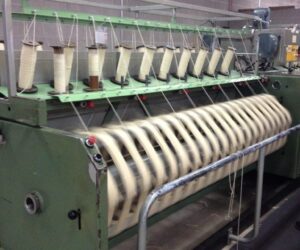
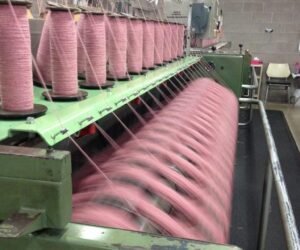
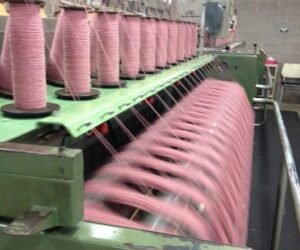
One ply yarn comes from the spinning frames to the reeling machine and multi-plied yarn comes from the twister. The reeler winds the yarn off the spinning frame or twister bobbins onto the reel.
We wind the yarn off until we have the correct yardage for the type of yarn being made. The reeler is pre-programmed for the correct amount of rotations to create the yardage needed. Our normal skein weight is 4 ounces per skein/hank but we also create custom 2 oz. skeins for a few of our wholesale customers.
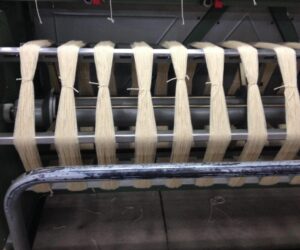
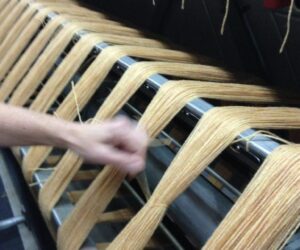
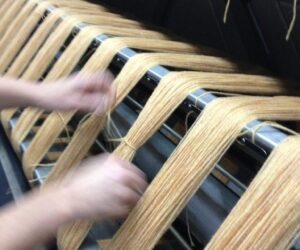
After the reeler has wound the correct yardage for the type of yarn being created, the yarn is cut and each skein is tied in three places around itself with the ends tied together by hand.
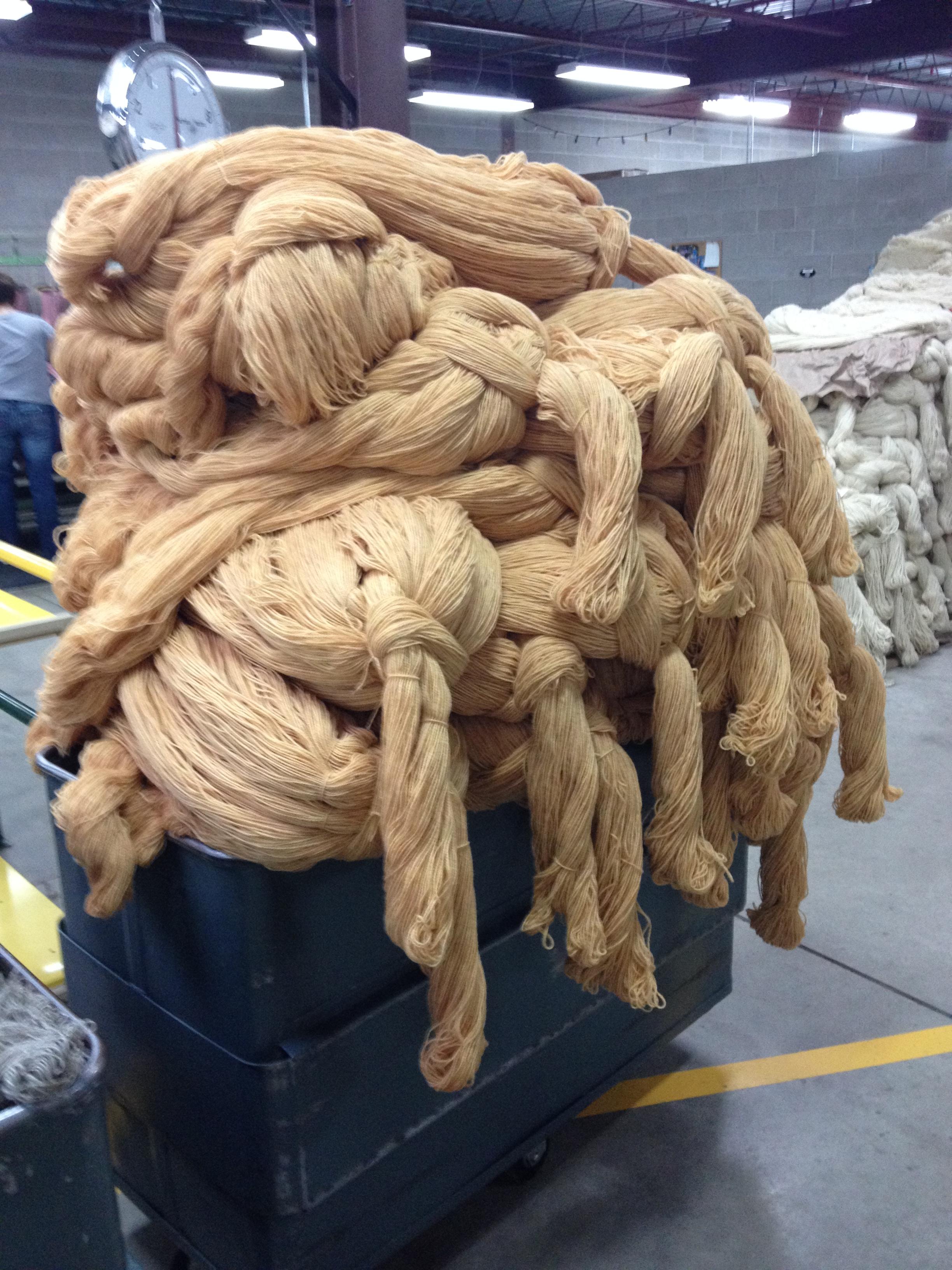
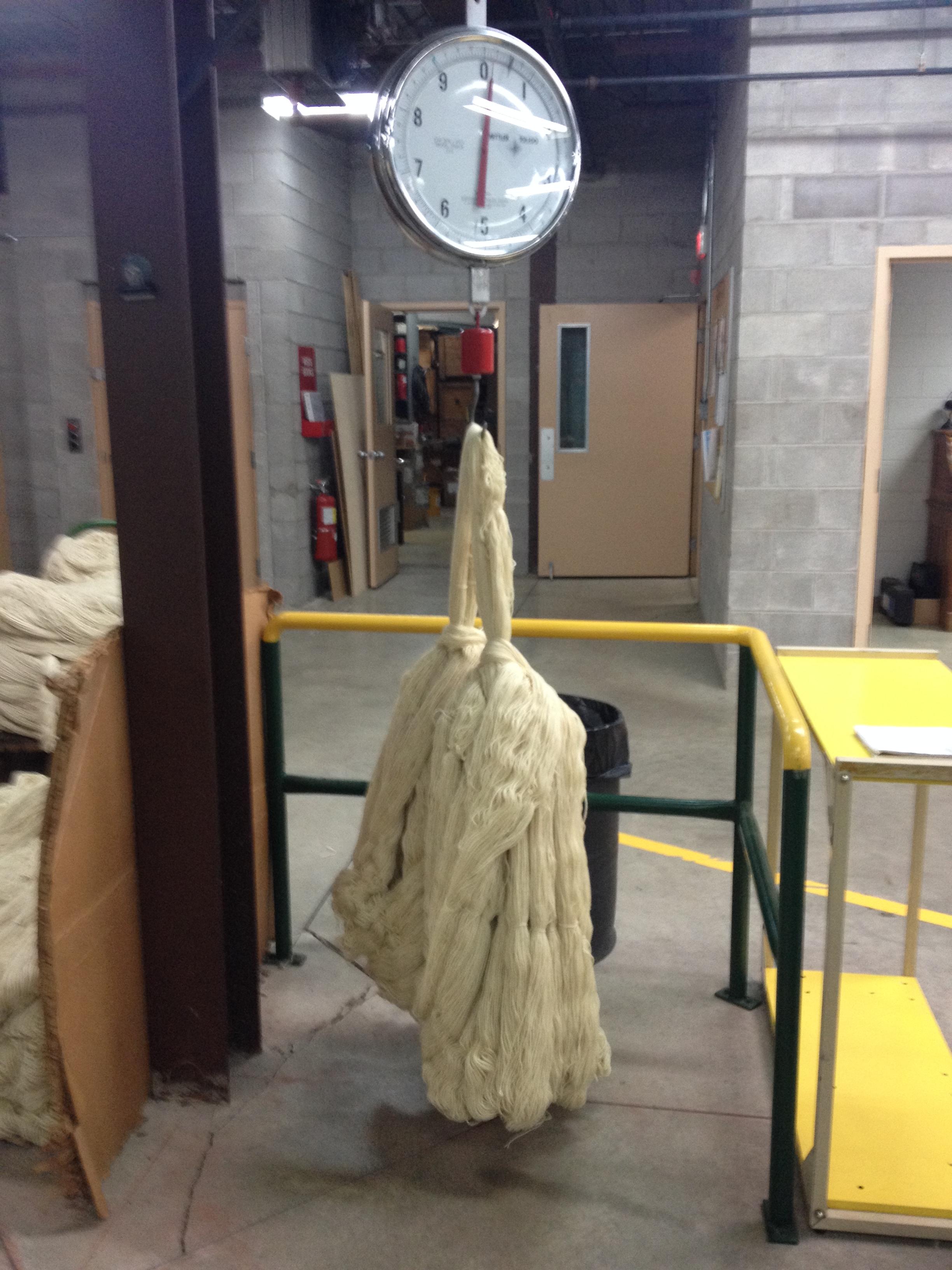
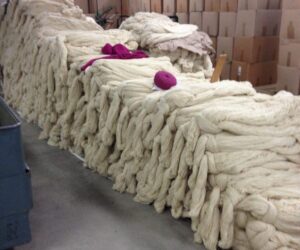
Once taken off the reel, the reeler bunches are weighed and ready for the next process.
Washing, Drying and Dying
Yarn Washer –
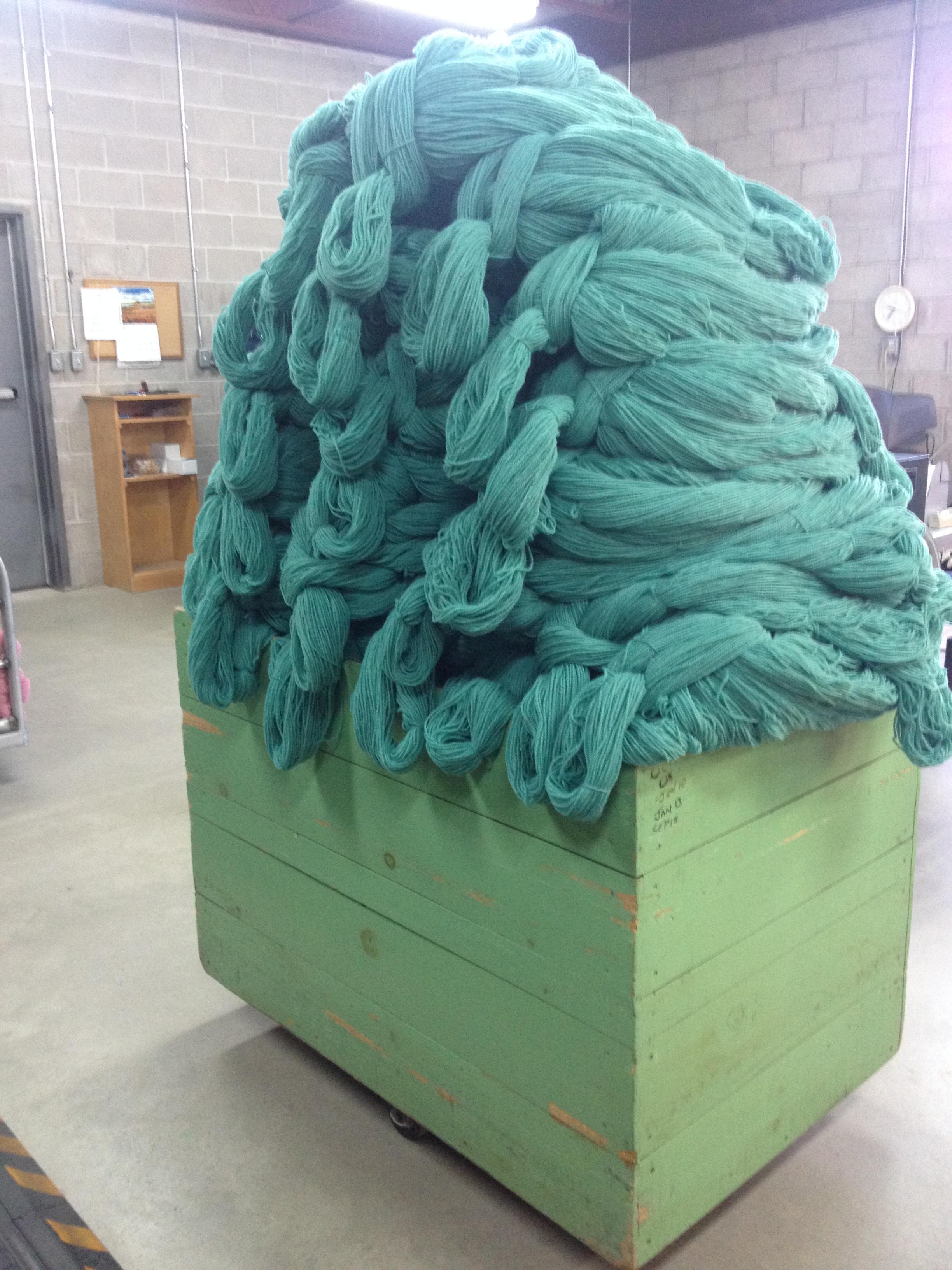
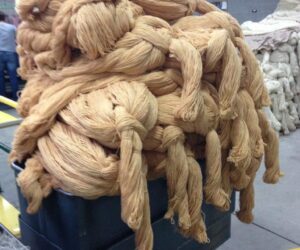
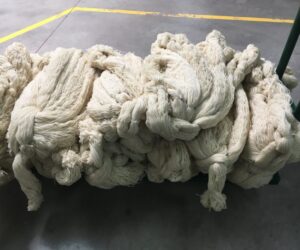
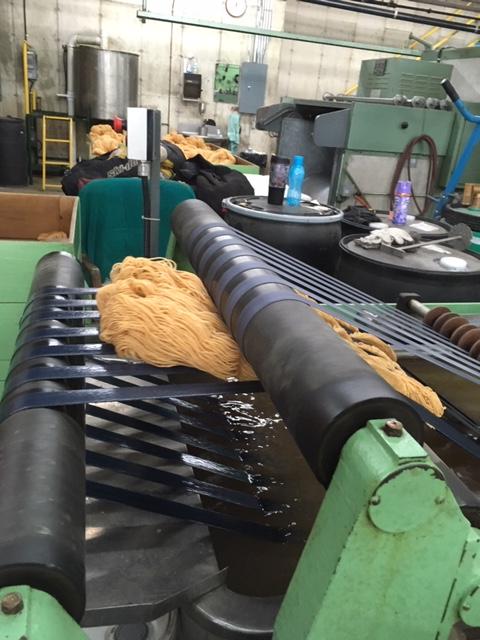
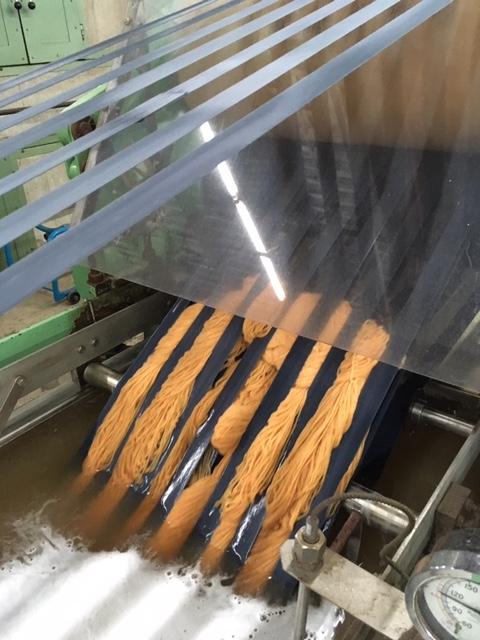
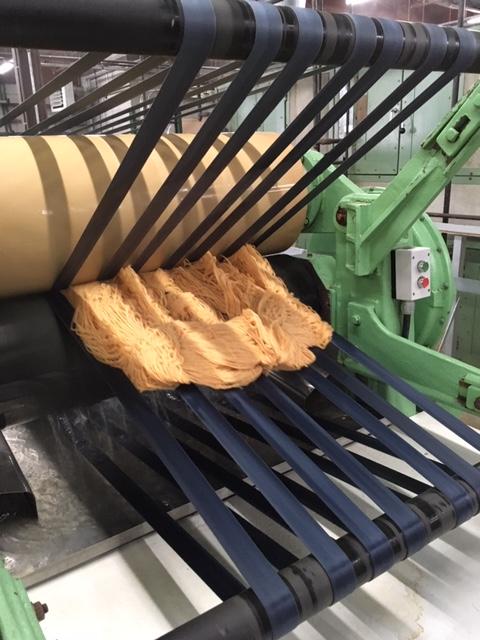
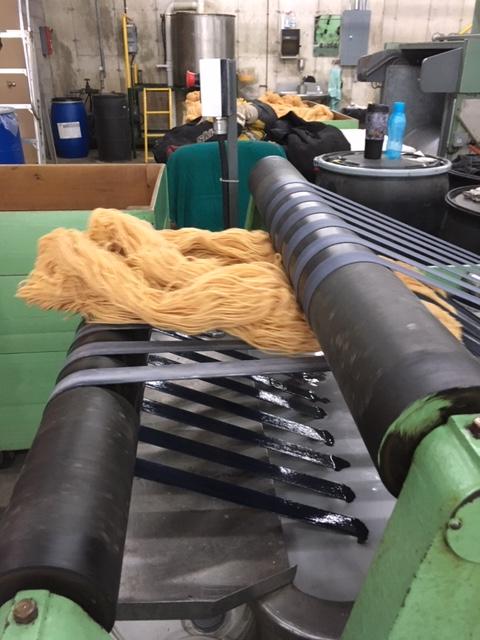
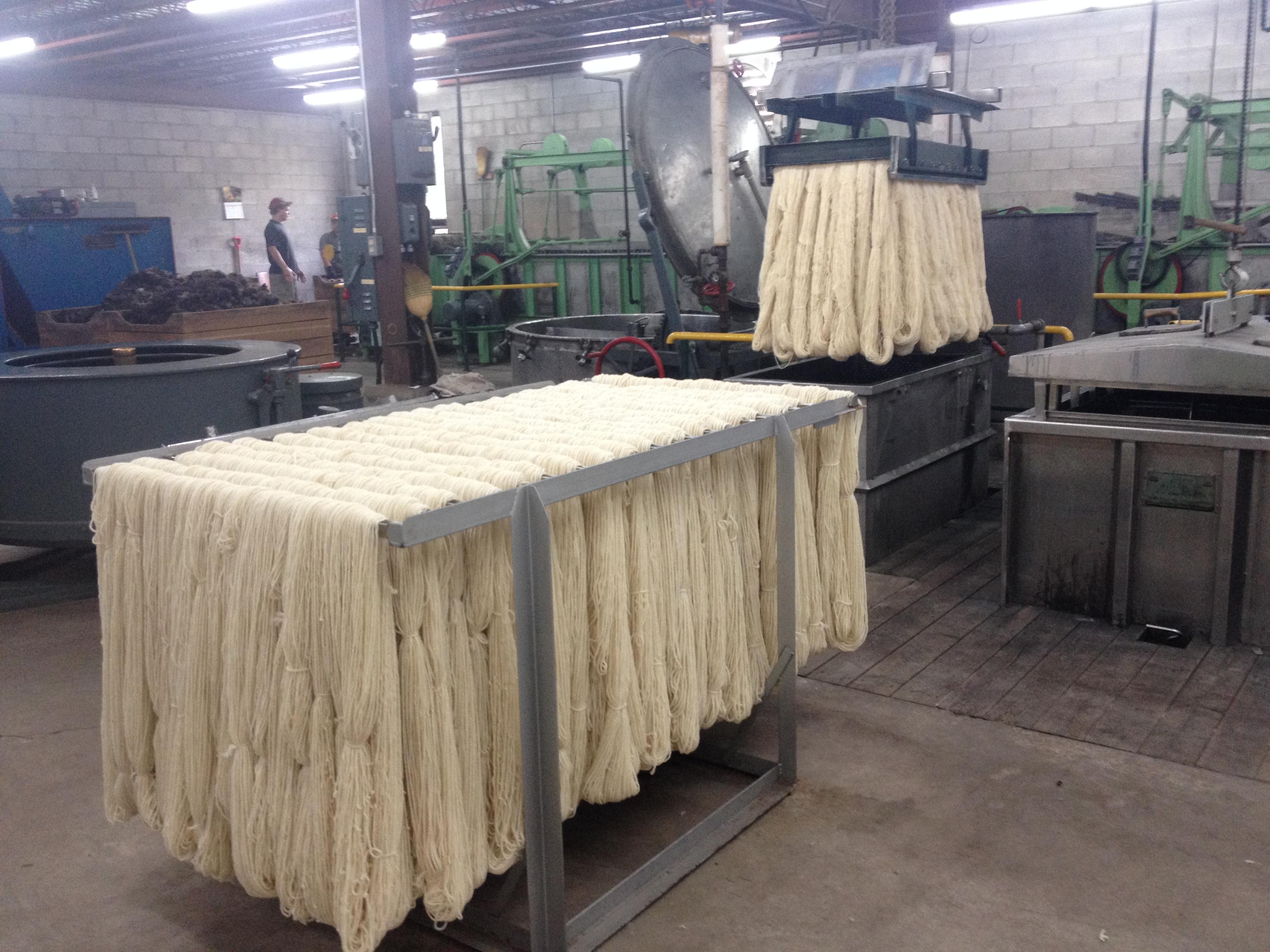
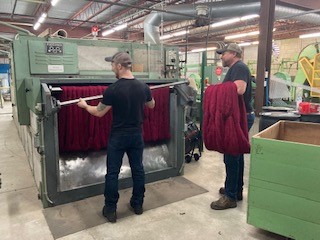
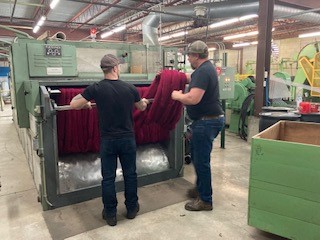
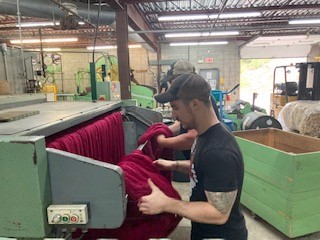
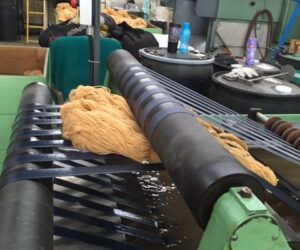
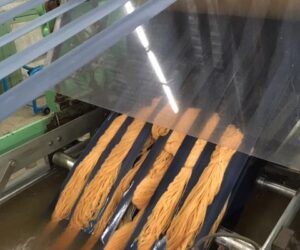
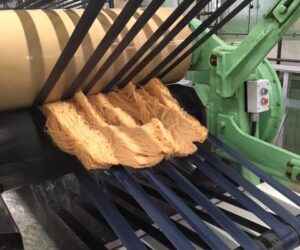
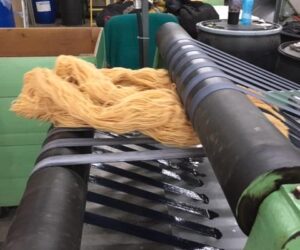
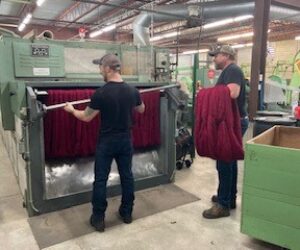
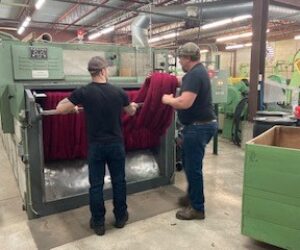
- Our REGAL line of yarn is washed in skein form to remove spinning oils and dirt, making the yarn bloom into a softer texture. The yarn goes through a series of belts and squeeze rollers in the washing process. At the end of the washer the yarn is taken out and put in a cart to go to the yarn dryer.
Dyed yarn –
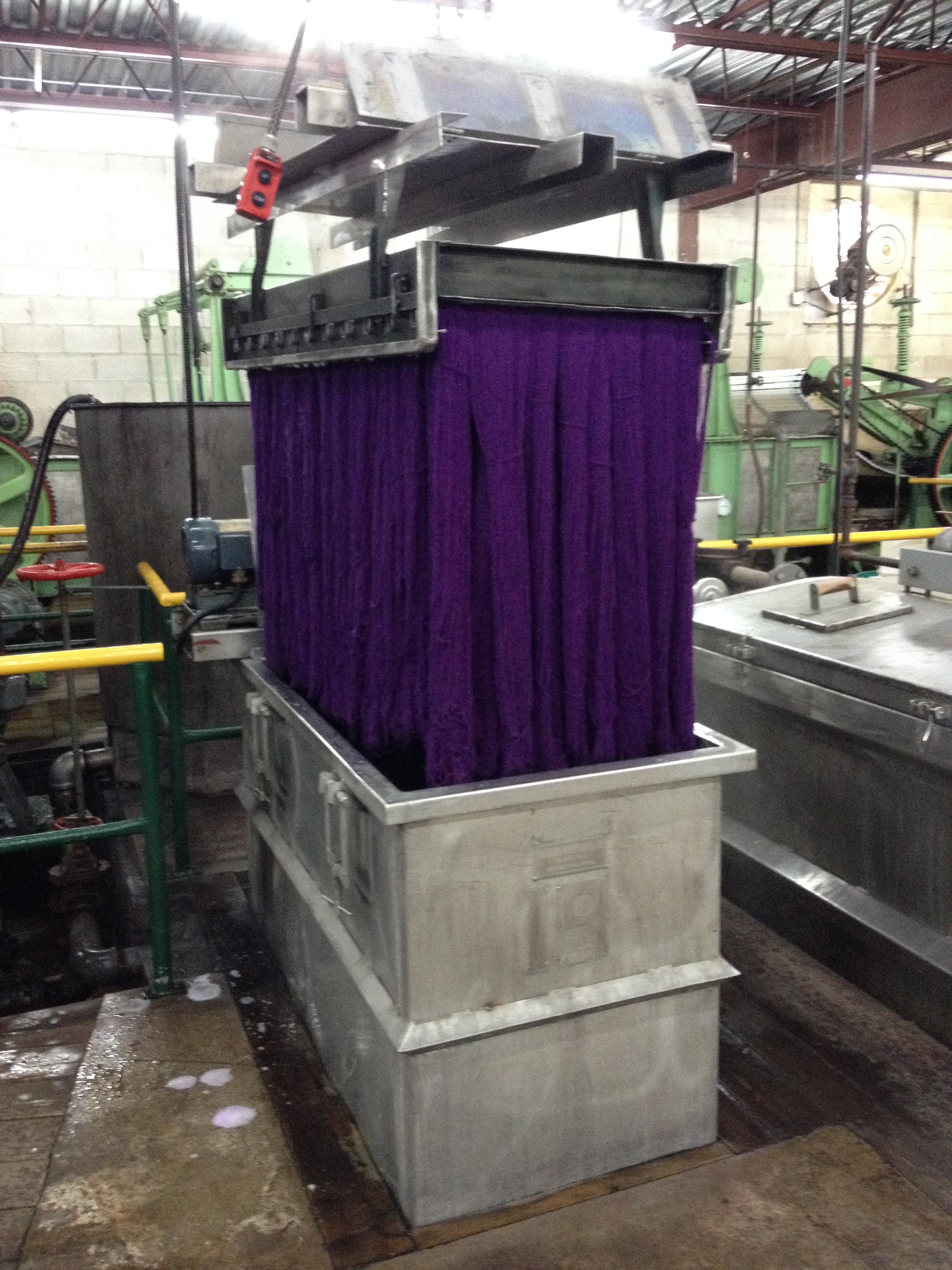
- Our dye house is located in the basement. We use the water from the pond across the road and it is gravity fed into the basement for all our washing & dying needs.
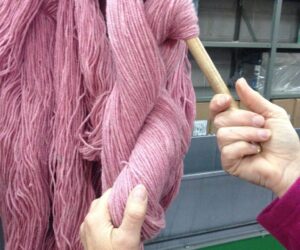
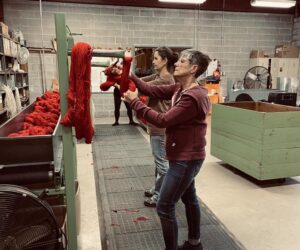
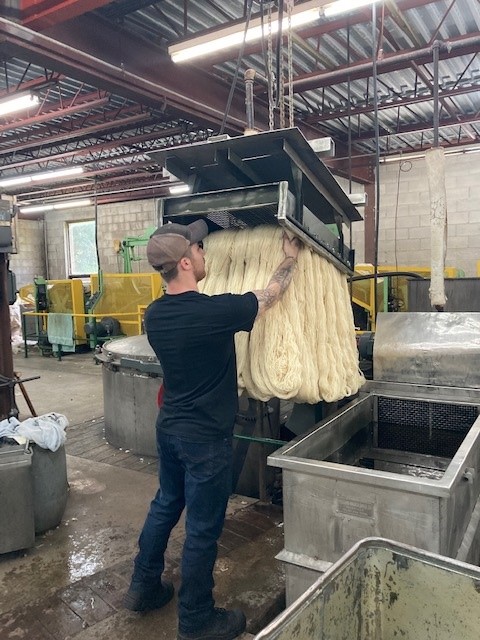
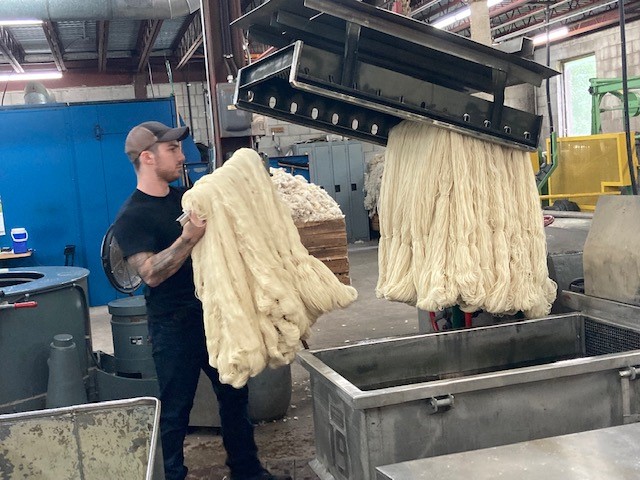
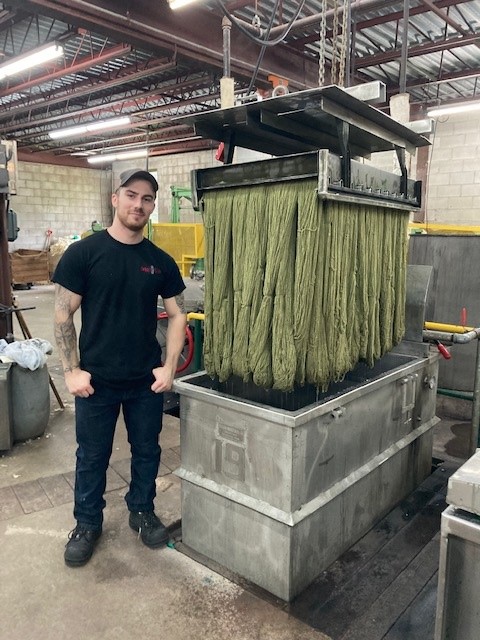
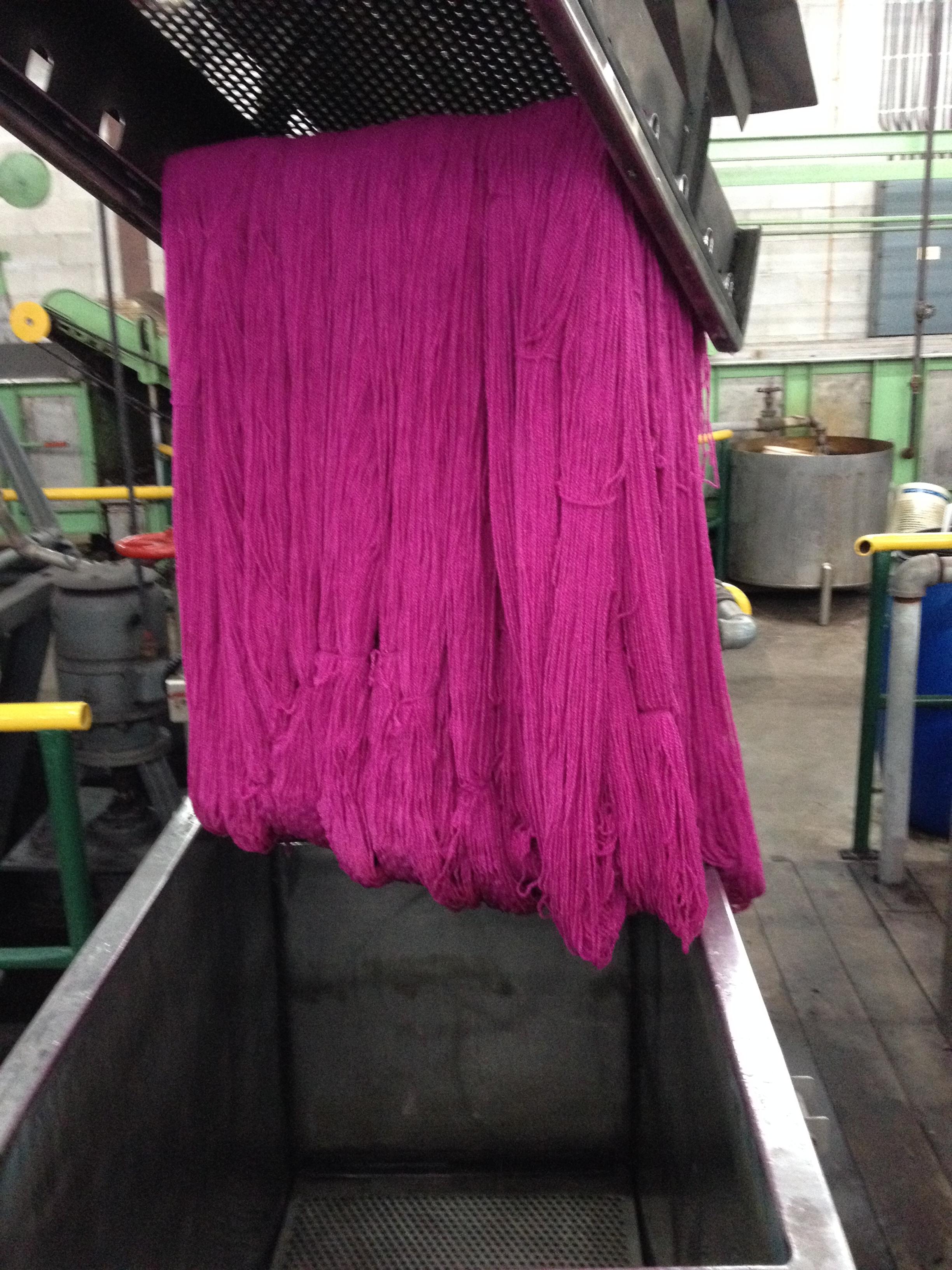
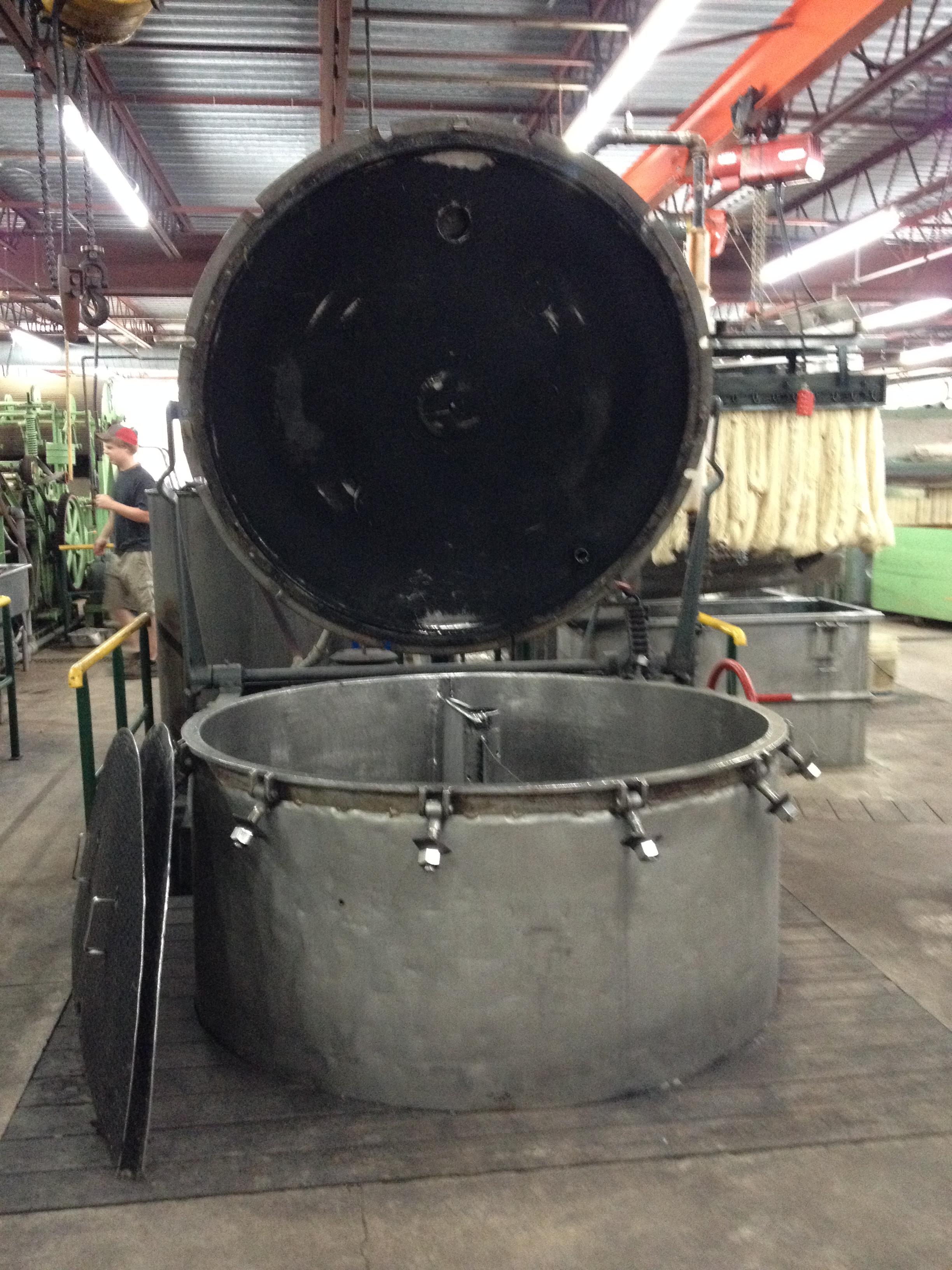
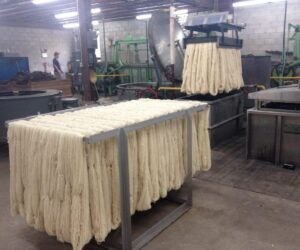
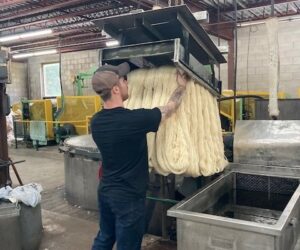
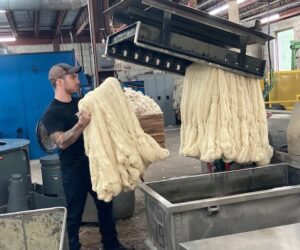
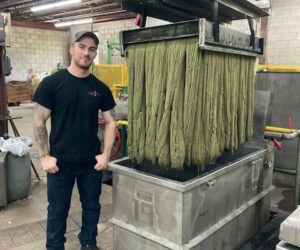
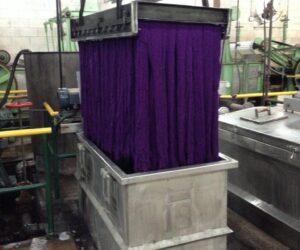
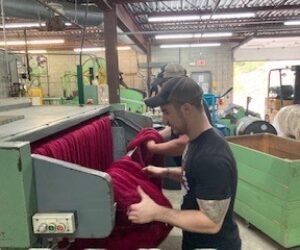
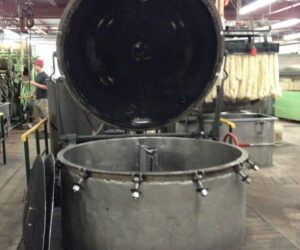
- There are three dye kettles for yarn, 50lbs, 100lbs and 260lbs. Yarn is placed on poles (20 skeins per pole), lowered into the dye bath and processed
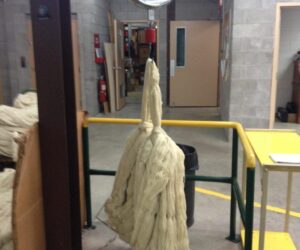
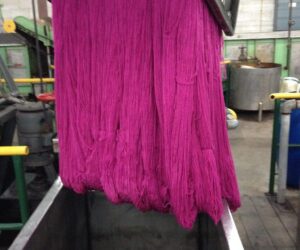
- After the yarn has been processed it is then hoisted up to allow to drain prior to going into the extractor to spin the water out. Then it will be put into the extractor.
All of our beautiful colours are dyed with environmentally friendly dyes to help reduce our carbon footprint. We are unwilling to treat our yarns to the harsh chemicals (superwash) necessary to burn out all the remaining vegetable matter.
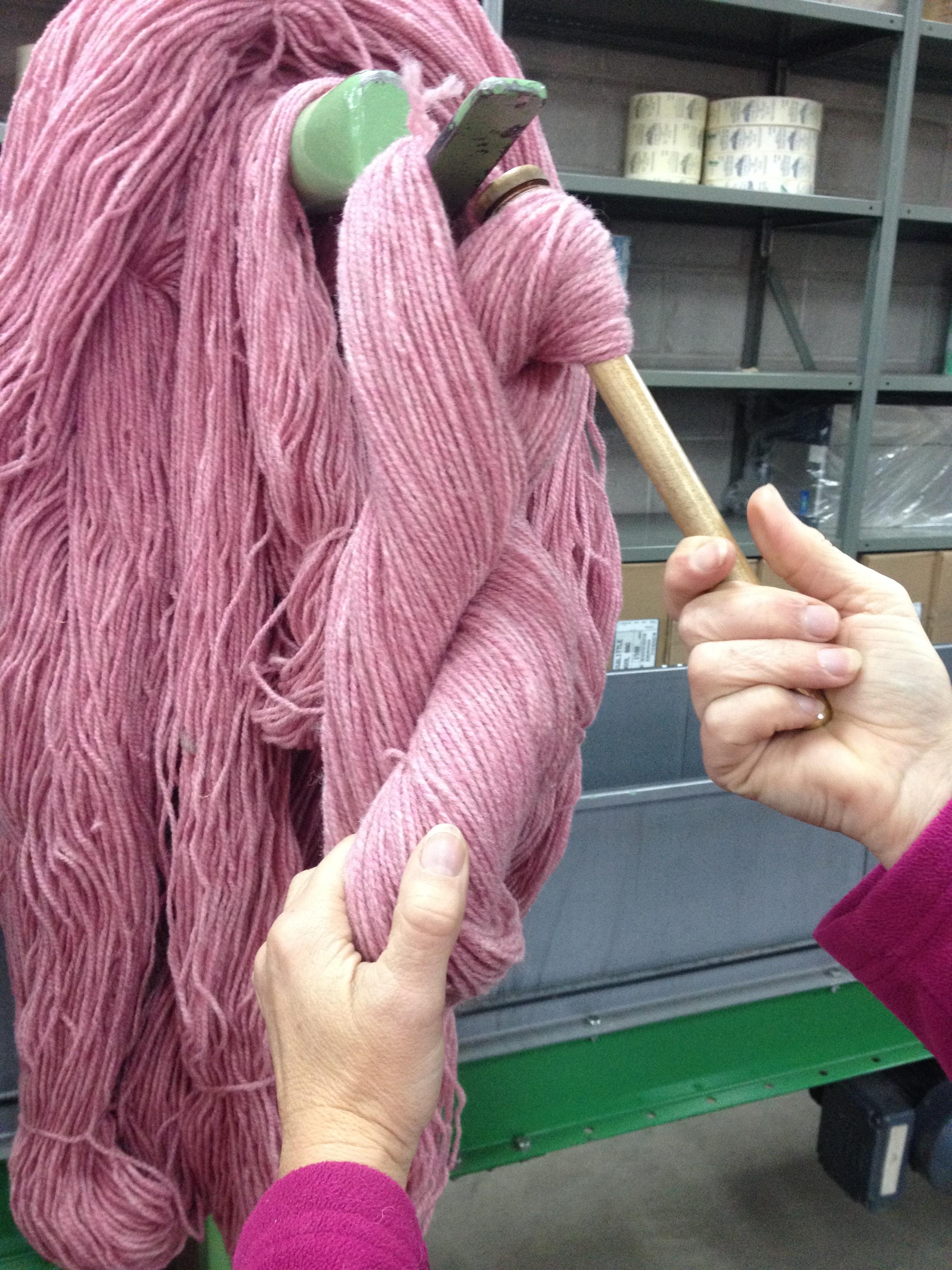
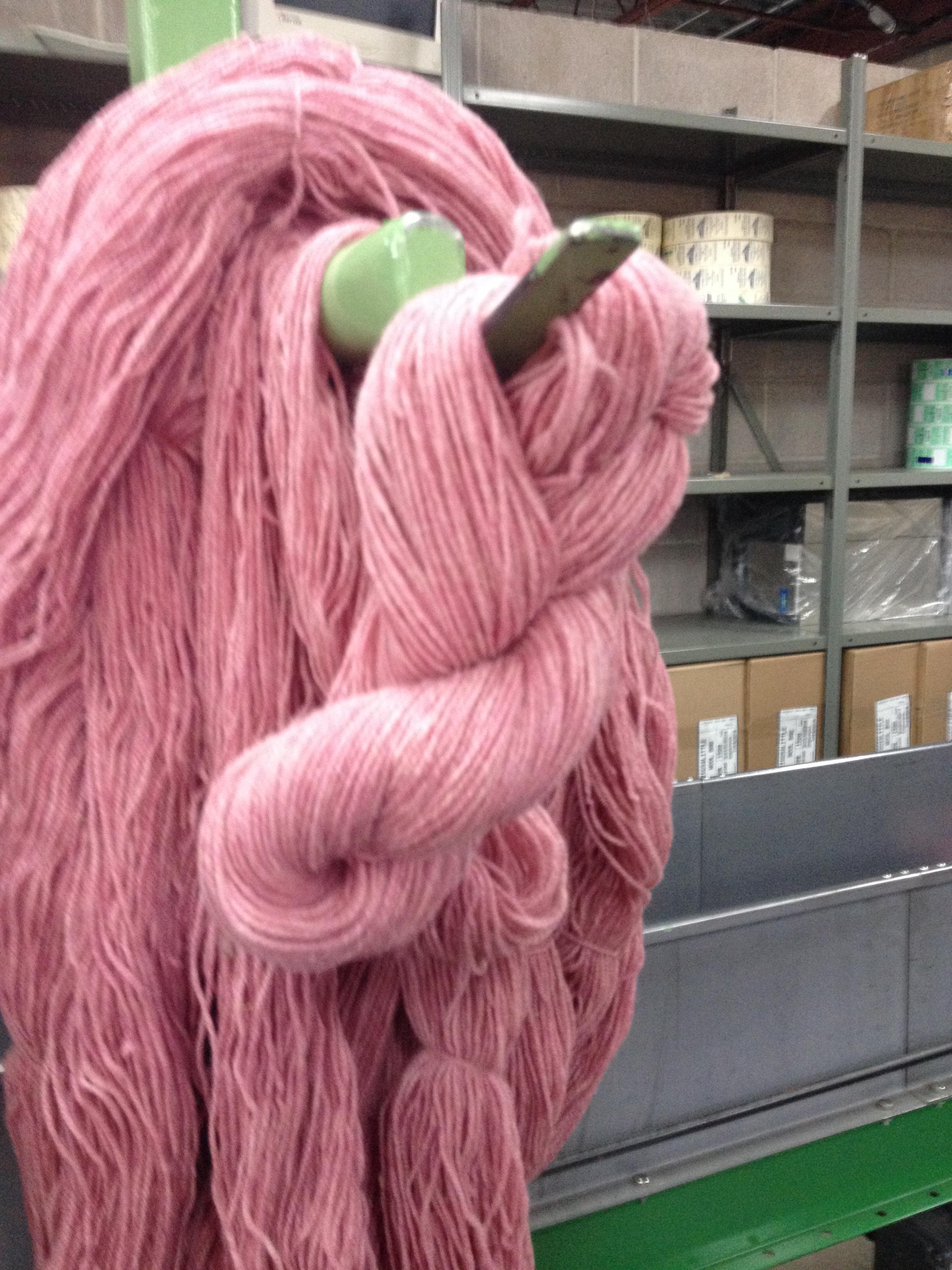
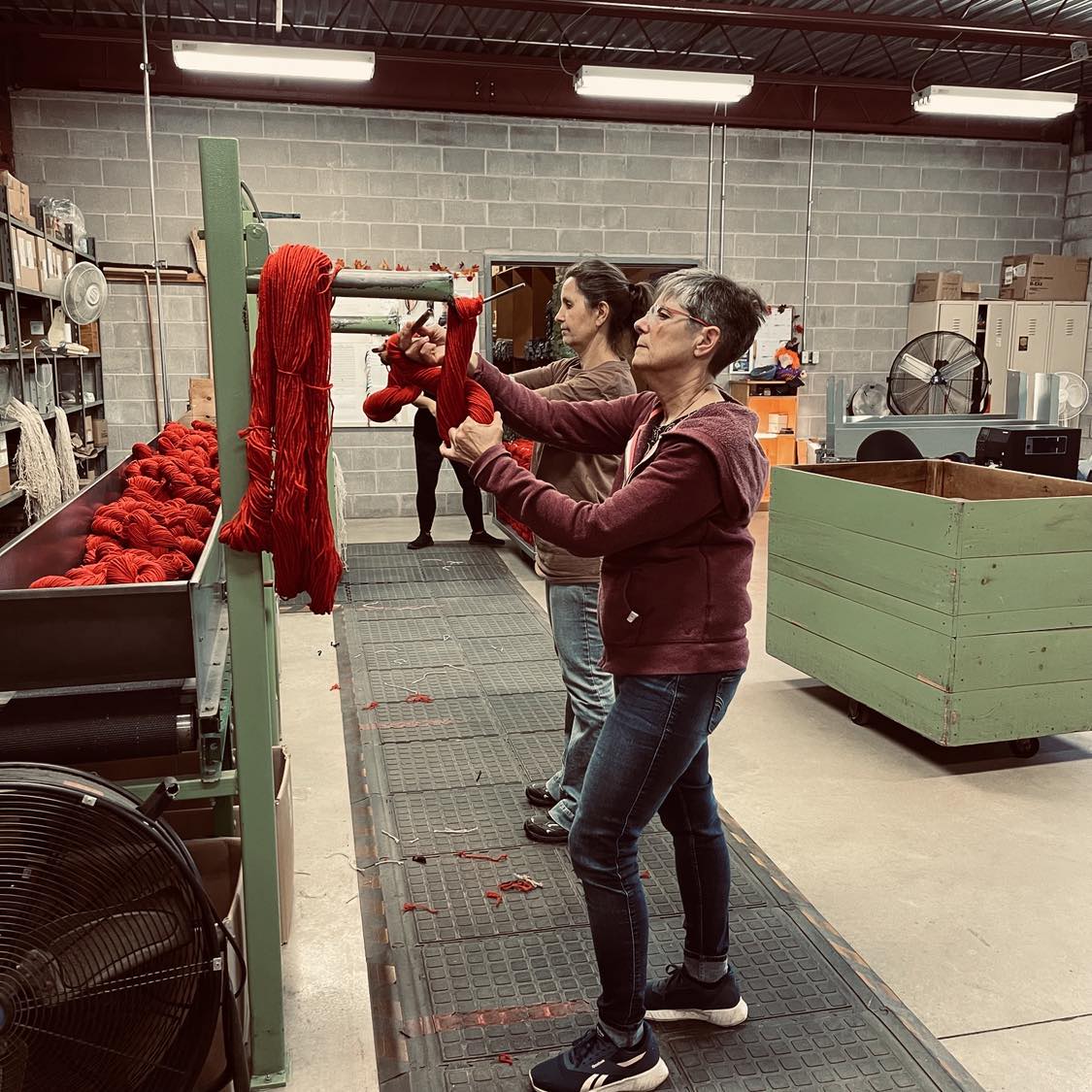
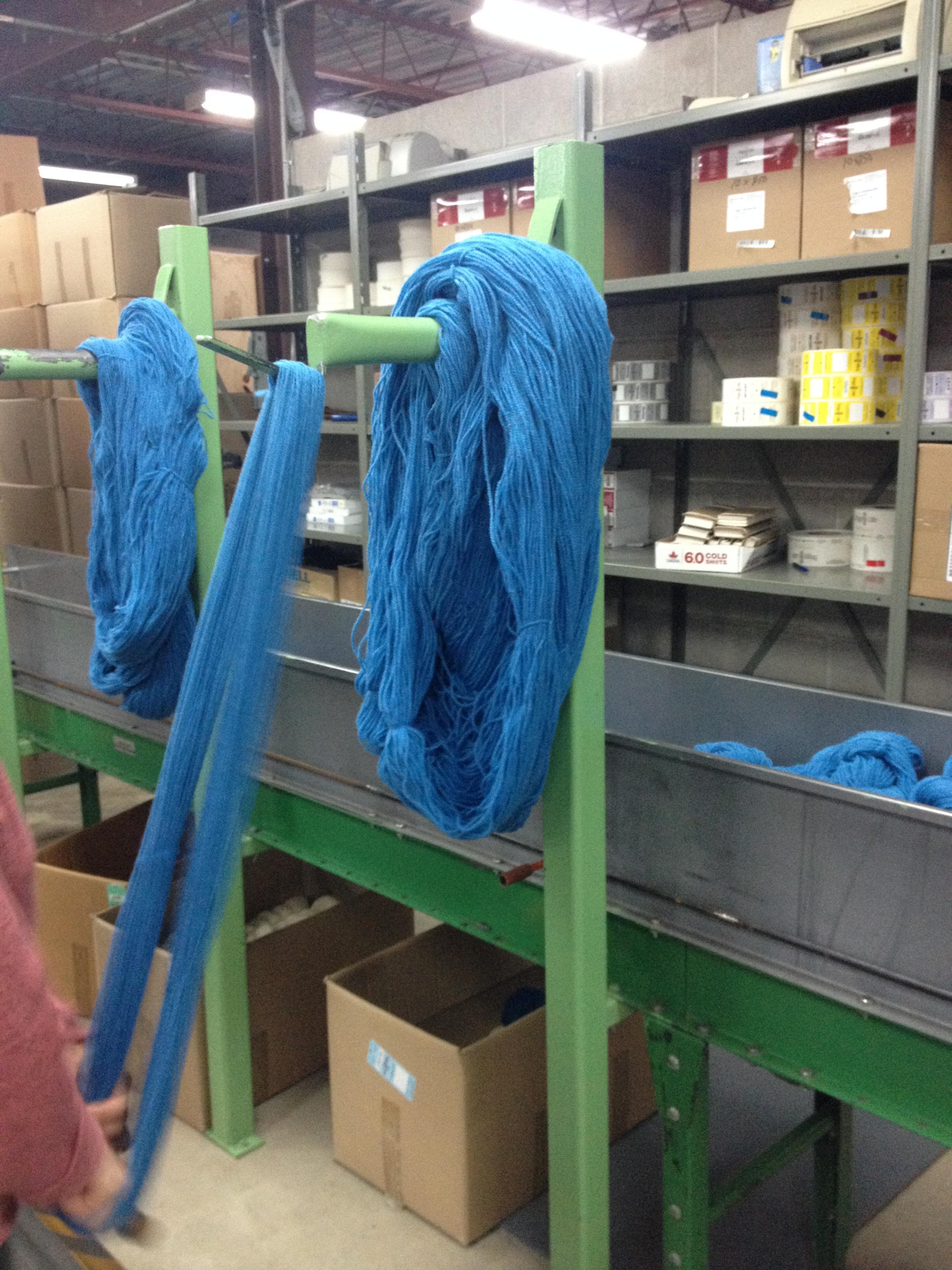
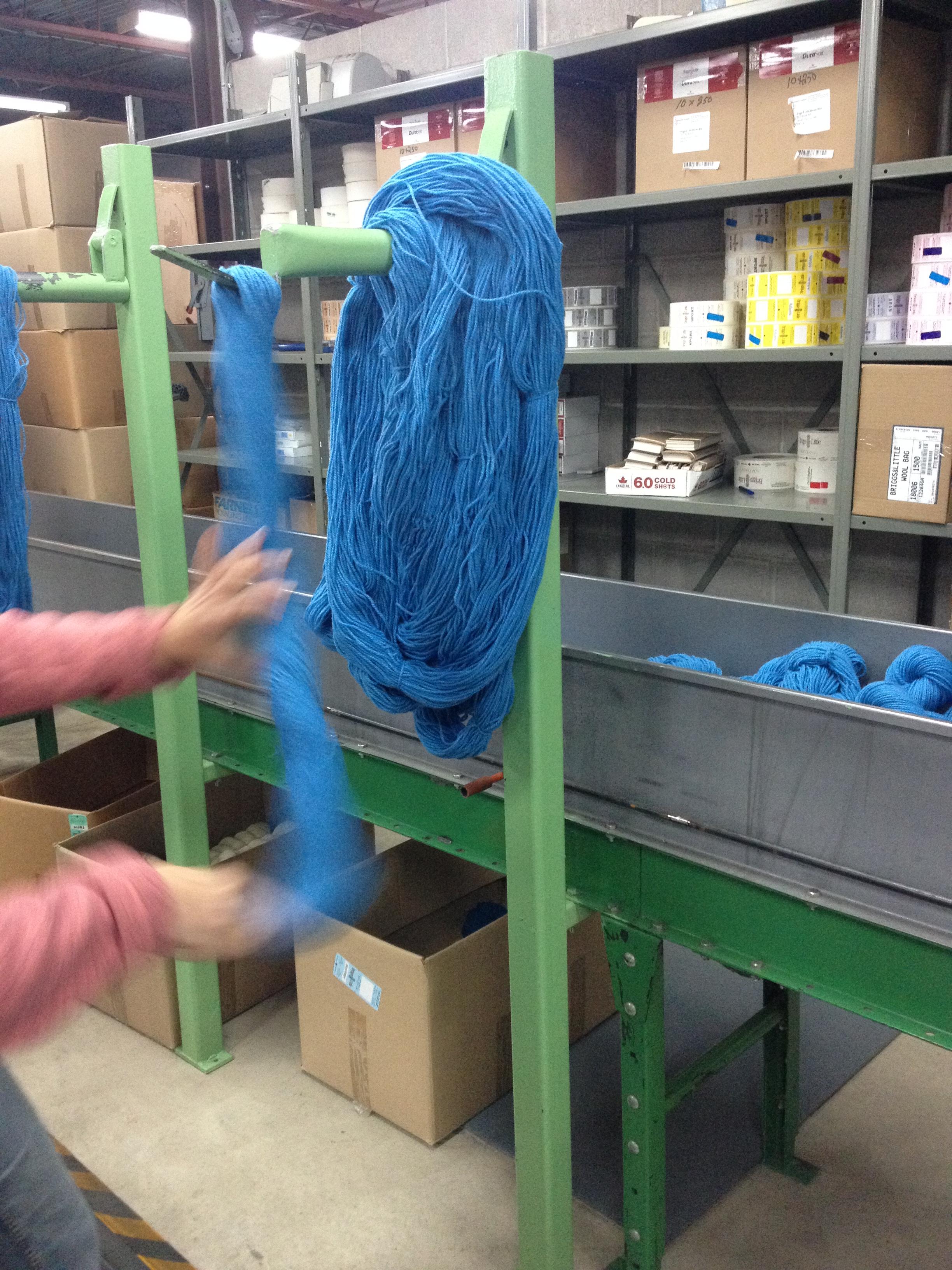
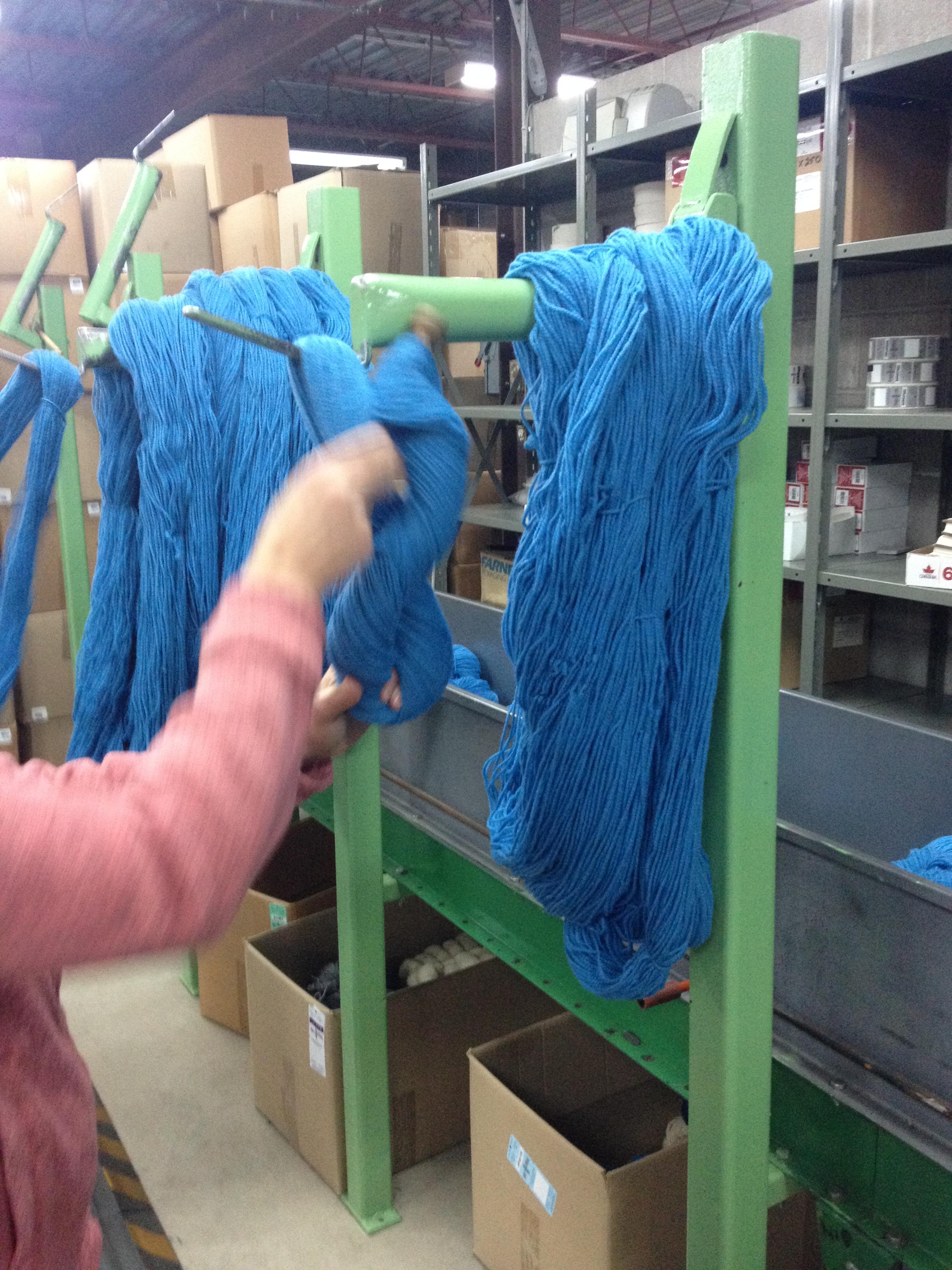
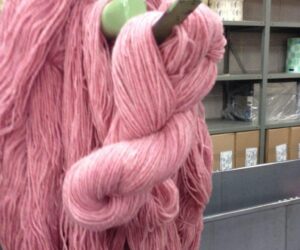
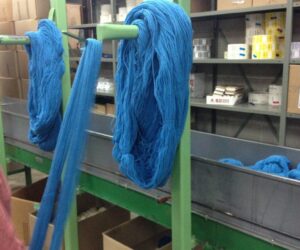
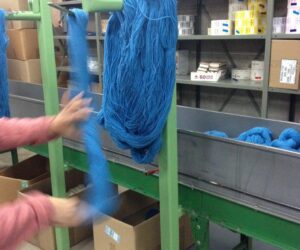
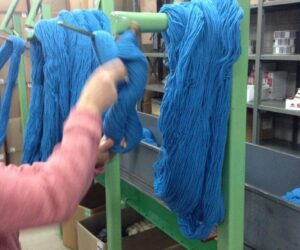
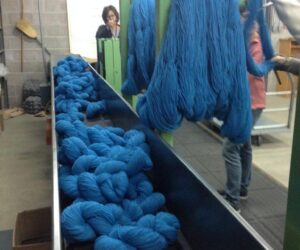
- Once the wet yarn has been removed from the extractor it goes to the yarn dryer, where it is hung on the poles and moves through the dryer on a conveyor.
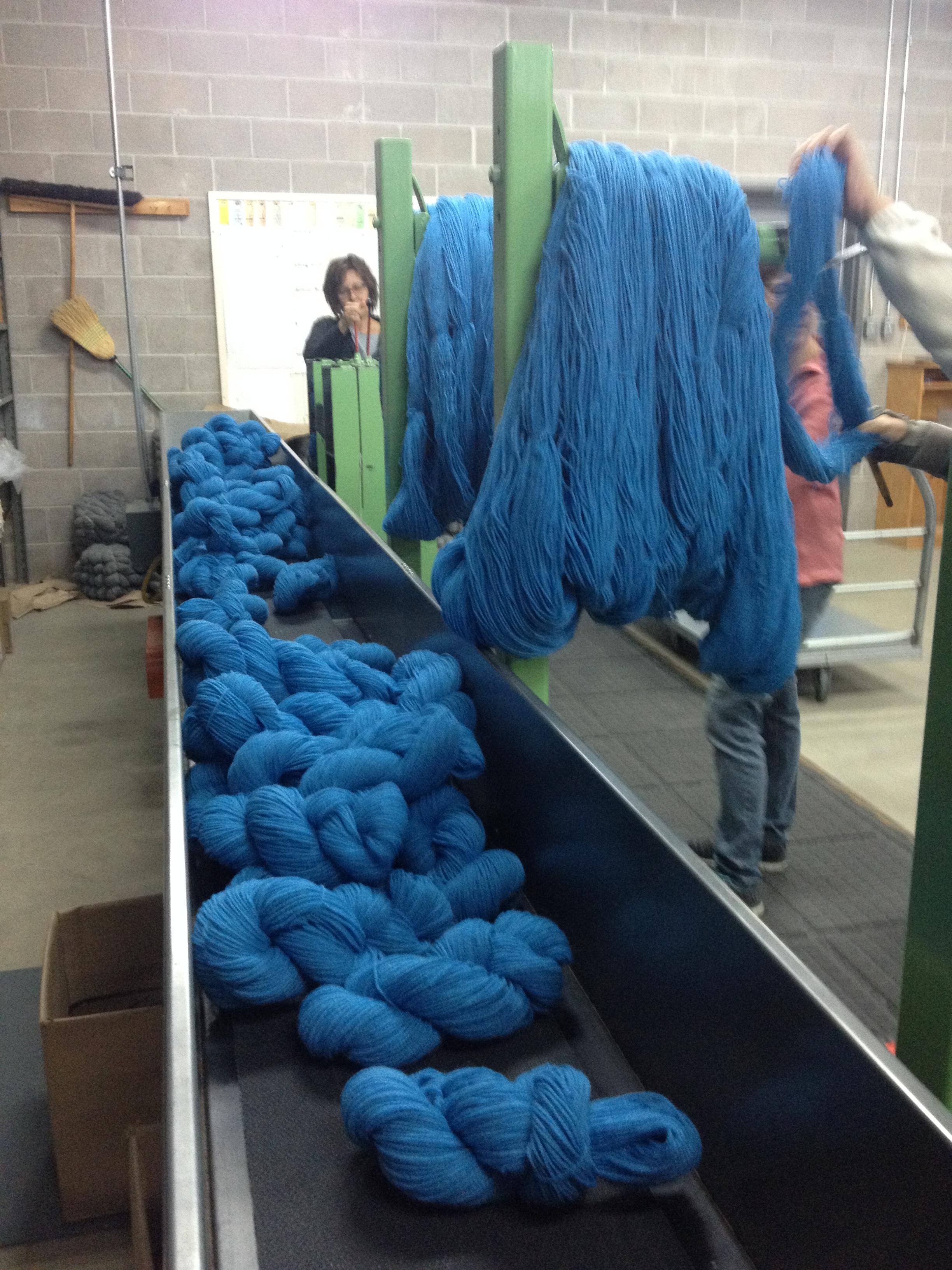
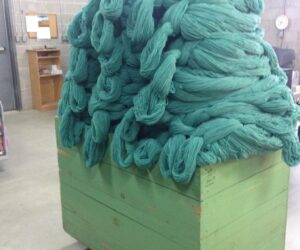
- Yarn is all dried and ready to be removed from the poles, bundled up to go back upstairs to be made into a butterfly skein and tagged for sale.
All wool and yarn that has been dyed or scoured is wet, therefore it needs to be dried.
Dyed Wool –
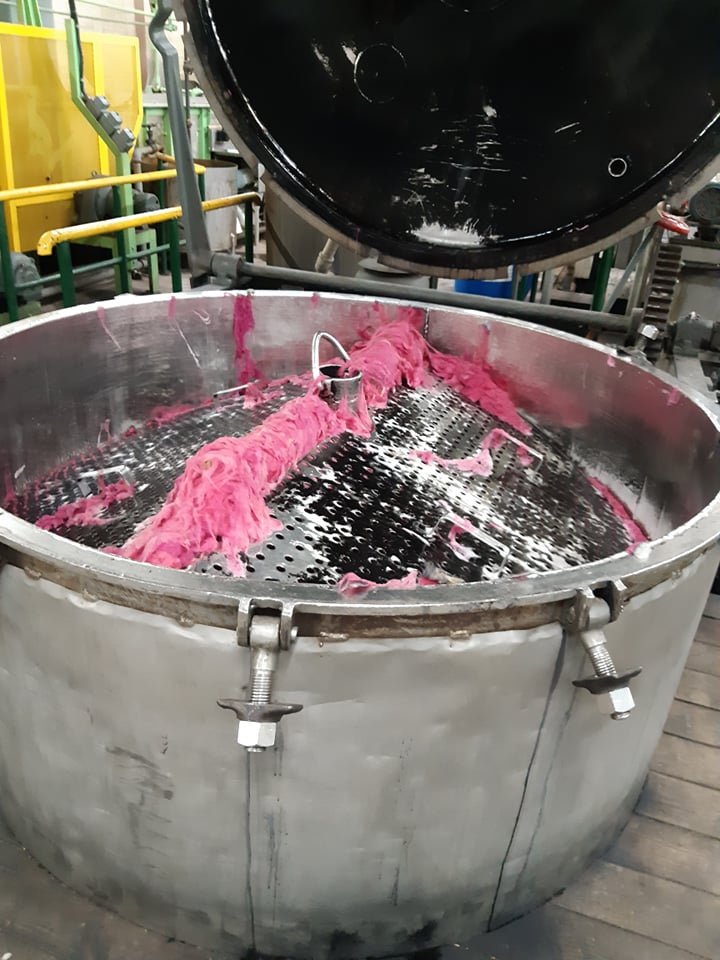
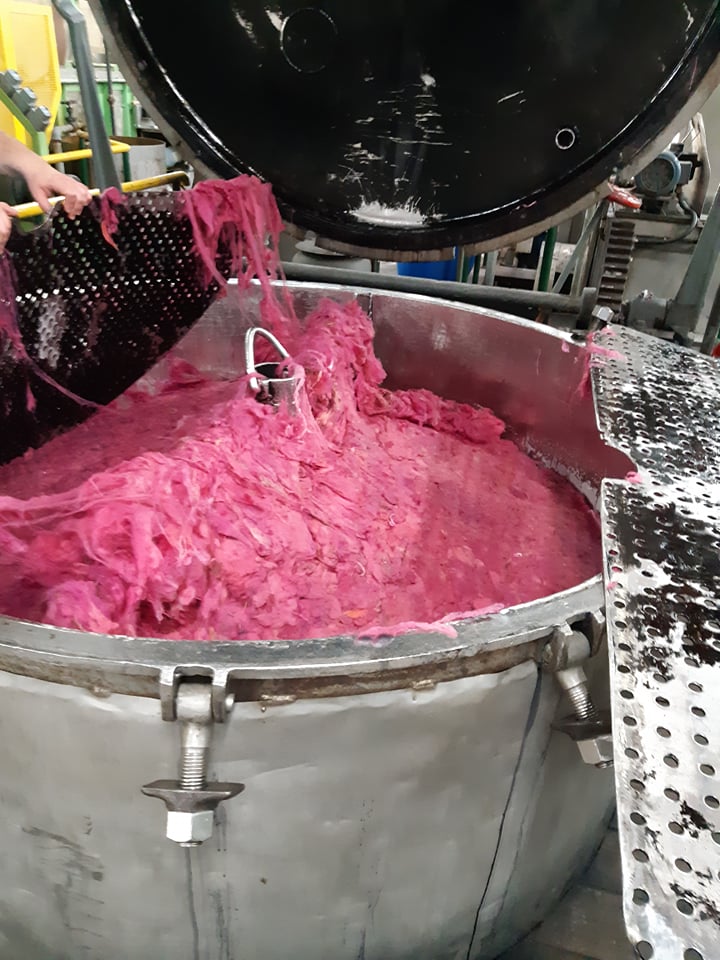
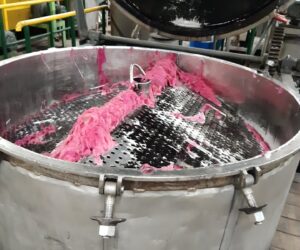
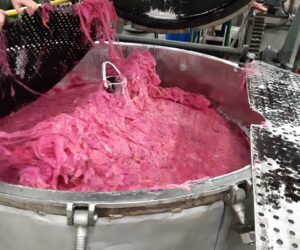
- Wool is dyed in order to create our blended/heathered coloured yarns.
- Our raw stock wool dye kettle holds 500lbs
- After the wool is dyed, it will go into the wool dryer, just like the washed wool does.
Skeining & Pressing
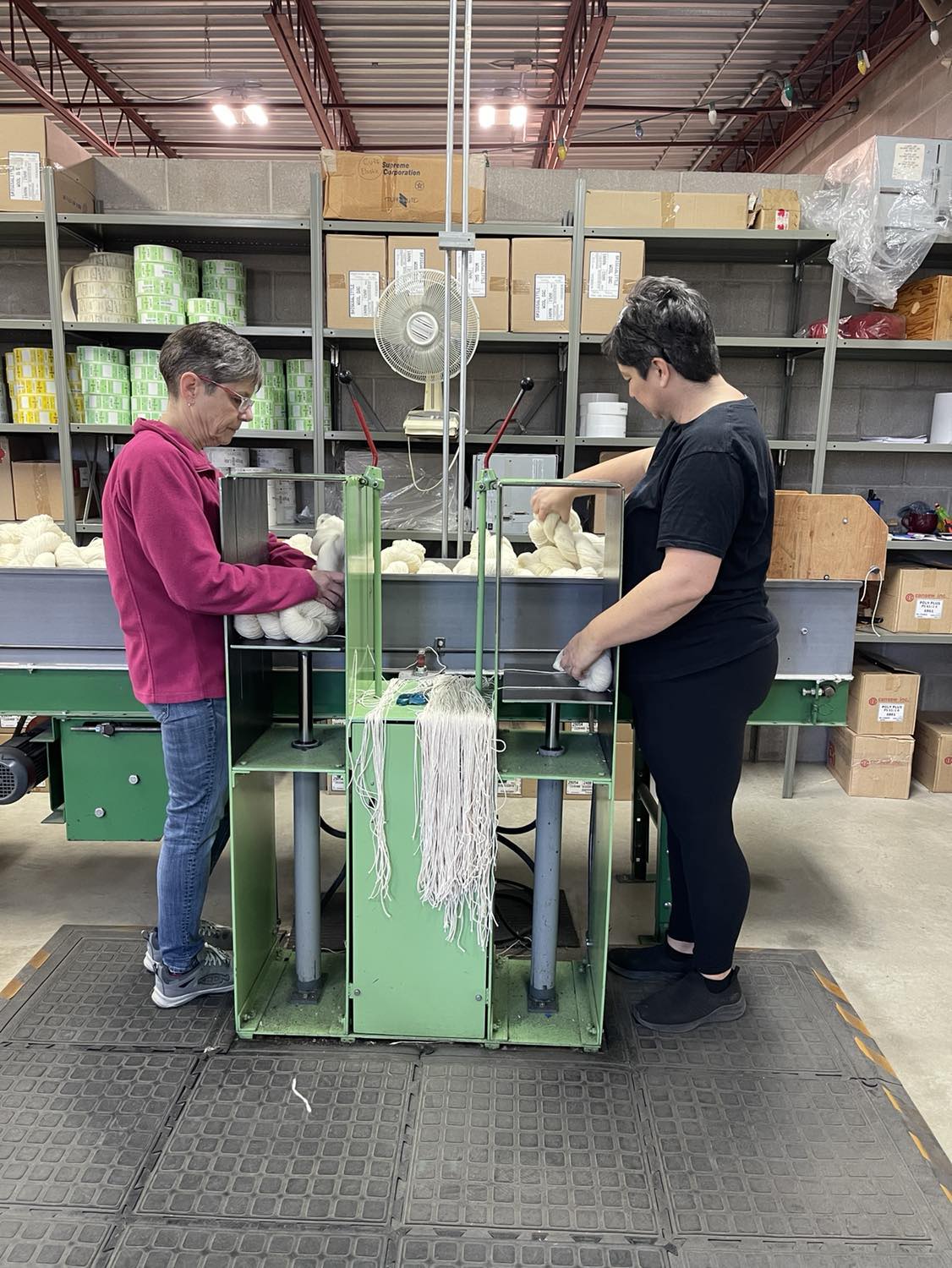
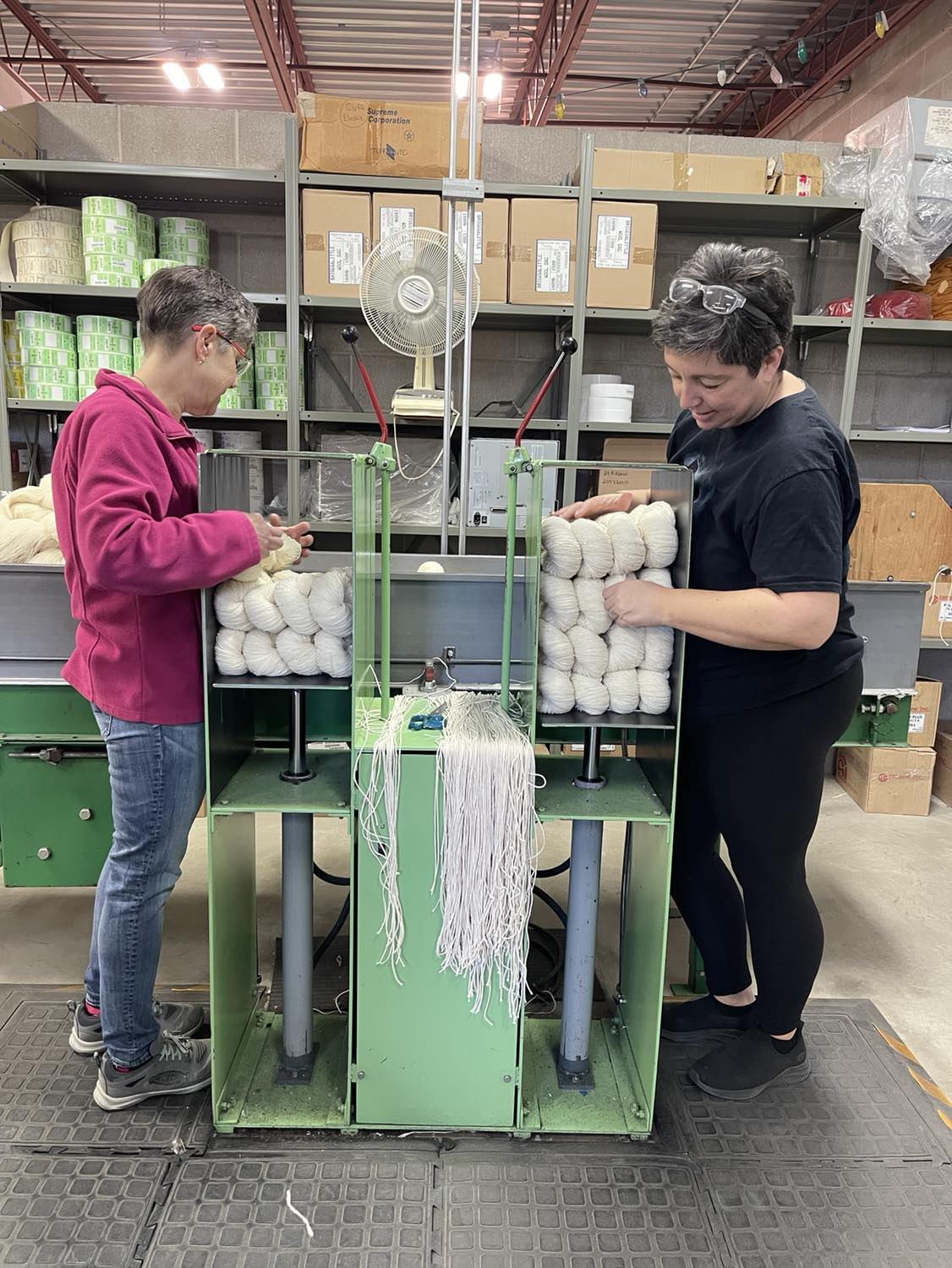
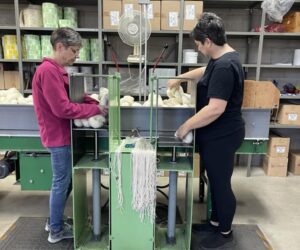
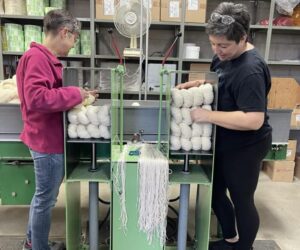
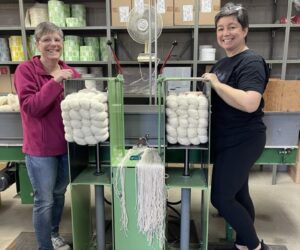
Skeining & Pressing is the final step of our quality and control and the last stop before storage & shipping.
- Every skein is inspected for irregularities of any kind, prior to being wound into a butterfly skein.
If you wonder why our skeins are done up in butterfly skeins it is create less tension on the yarn. Wool has a memory and it is better for your yarn to be in this relaxed state rather than having tension on it.
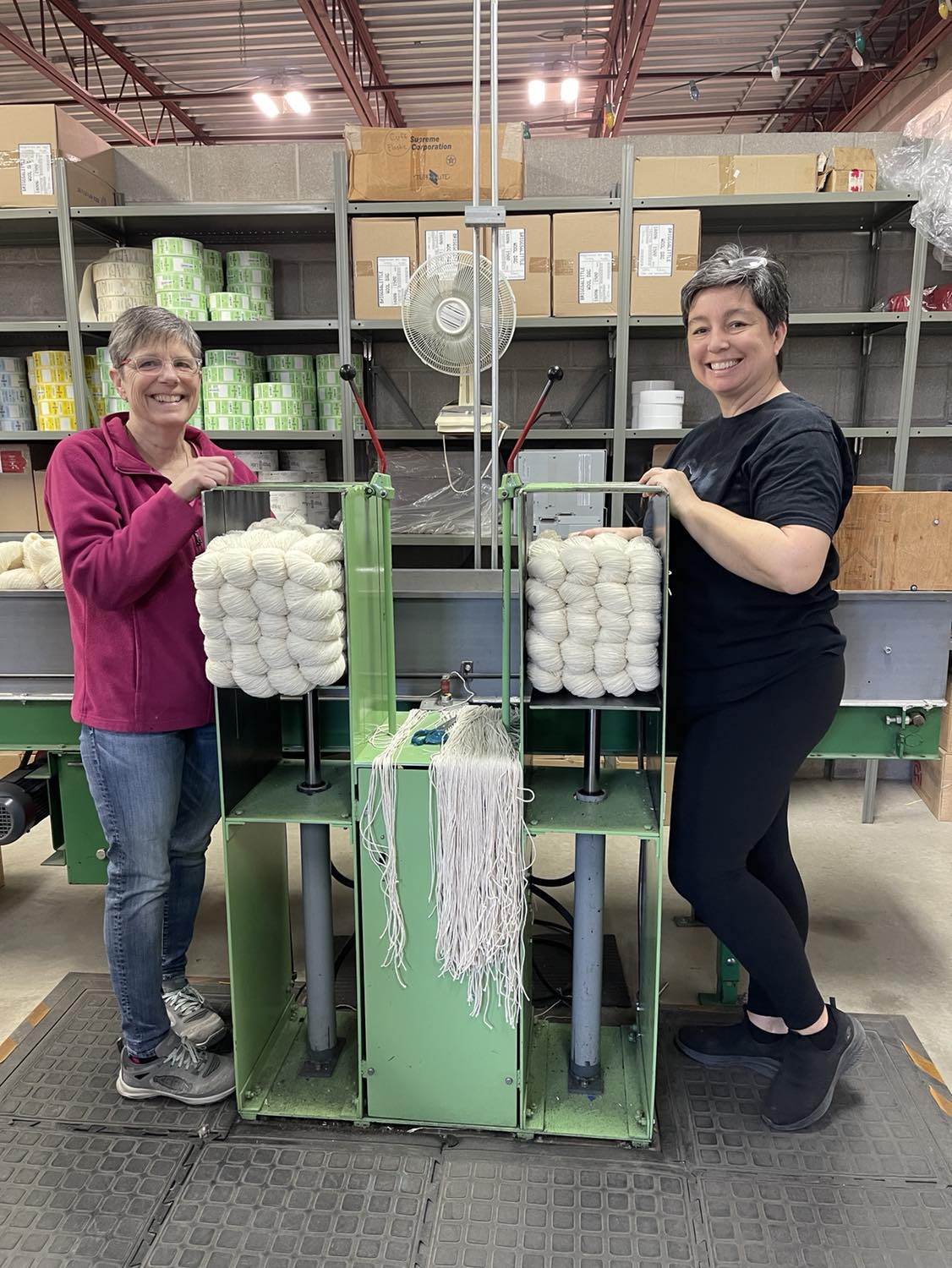
- Skeins are tossed onto the conveyer belt and then lined up in the press, four across and five high (20 skeins = 5lbs). Then they are compressed and tied into bundles ready to be tagged.
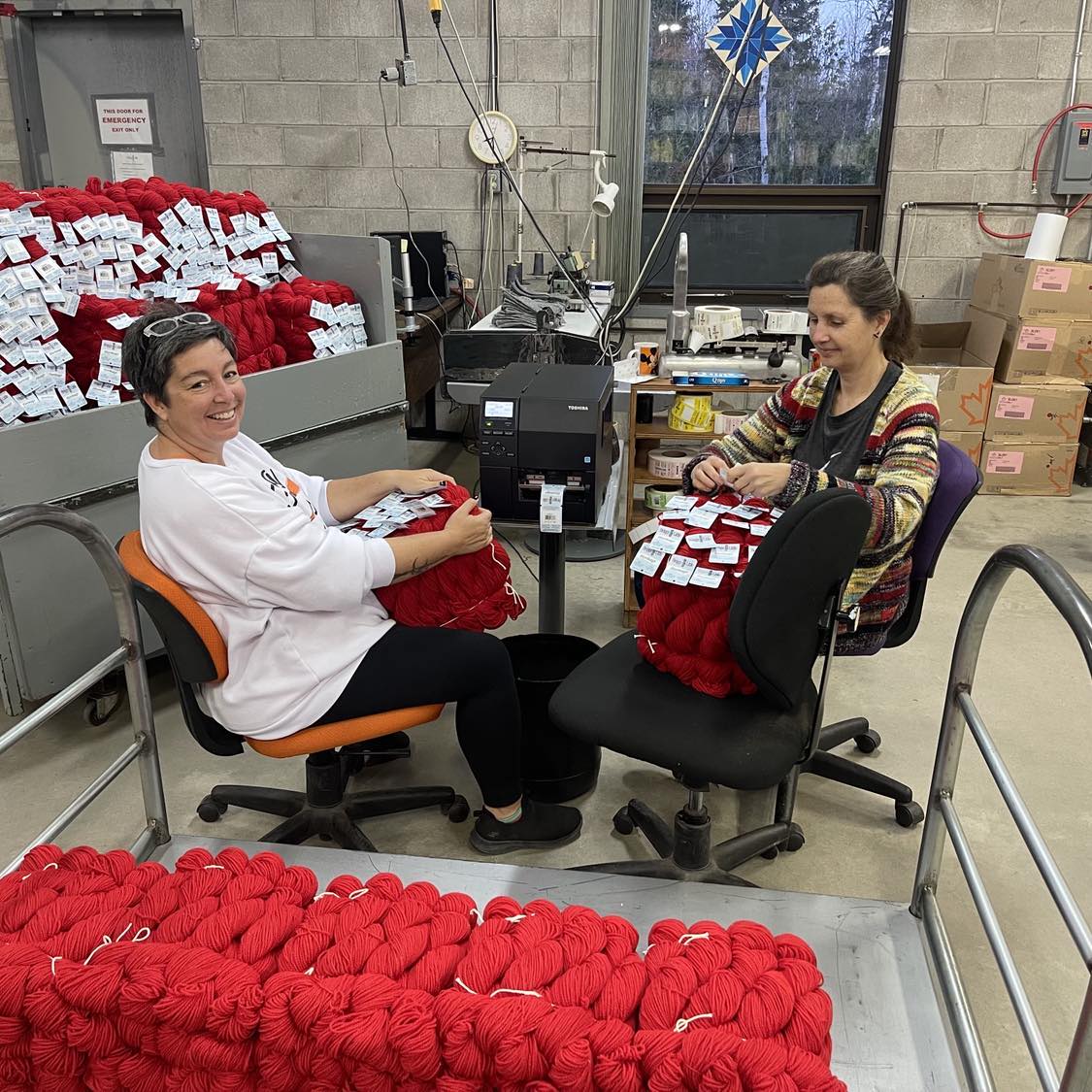
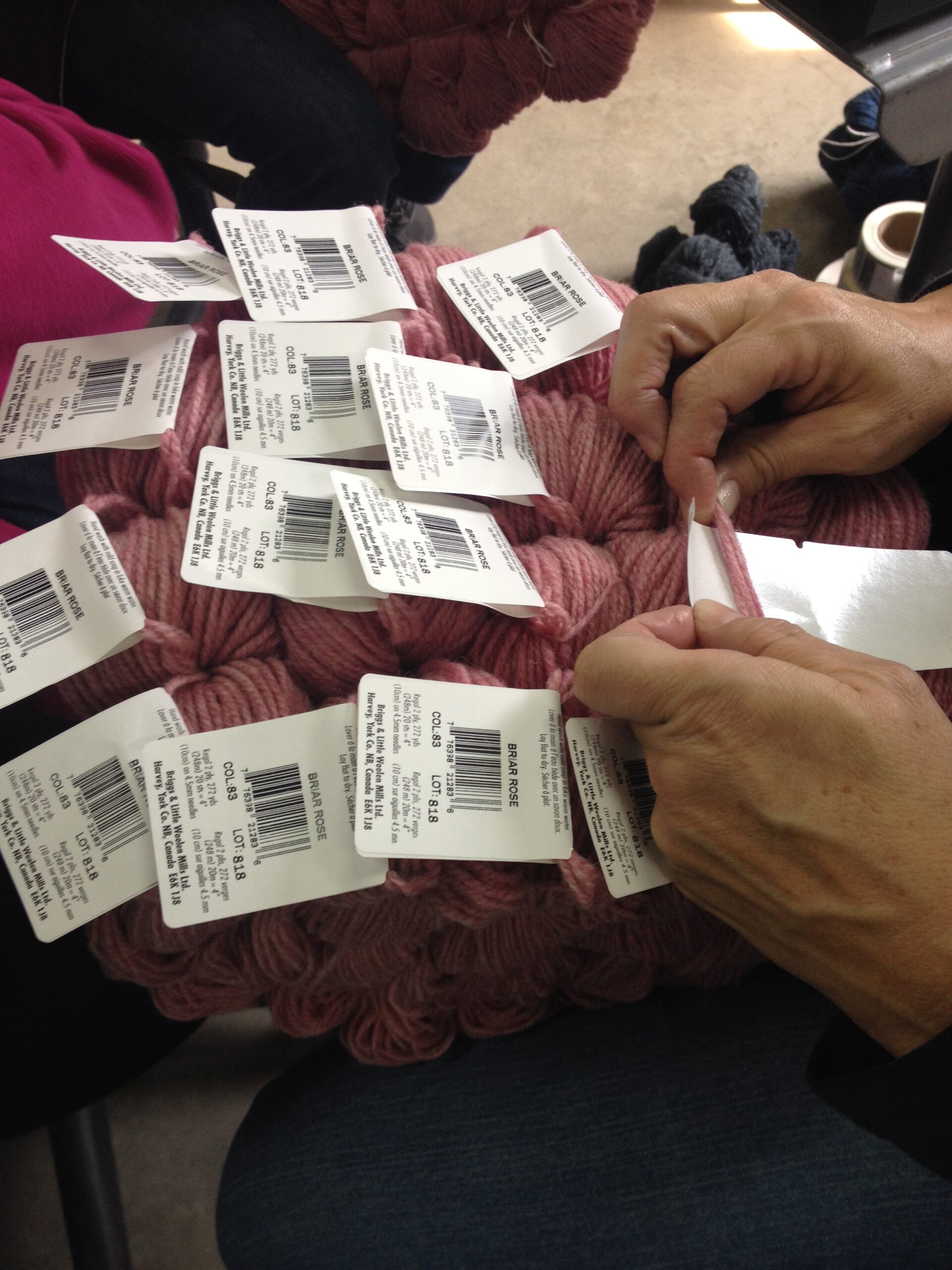
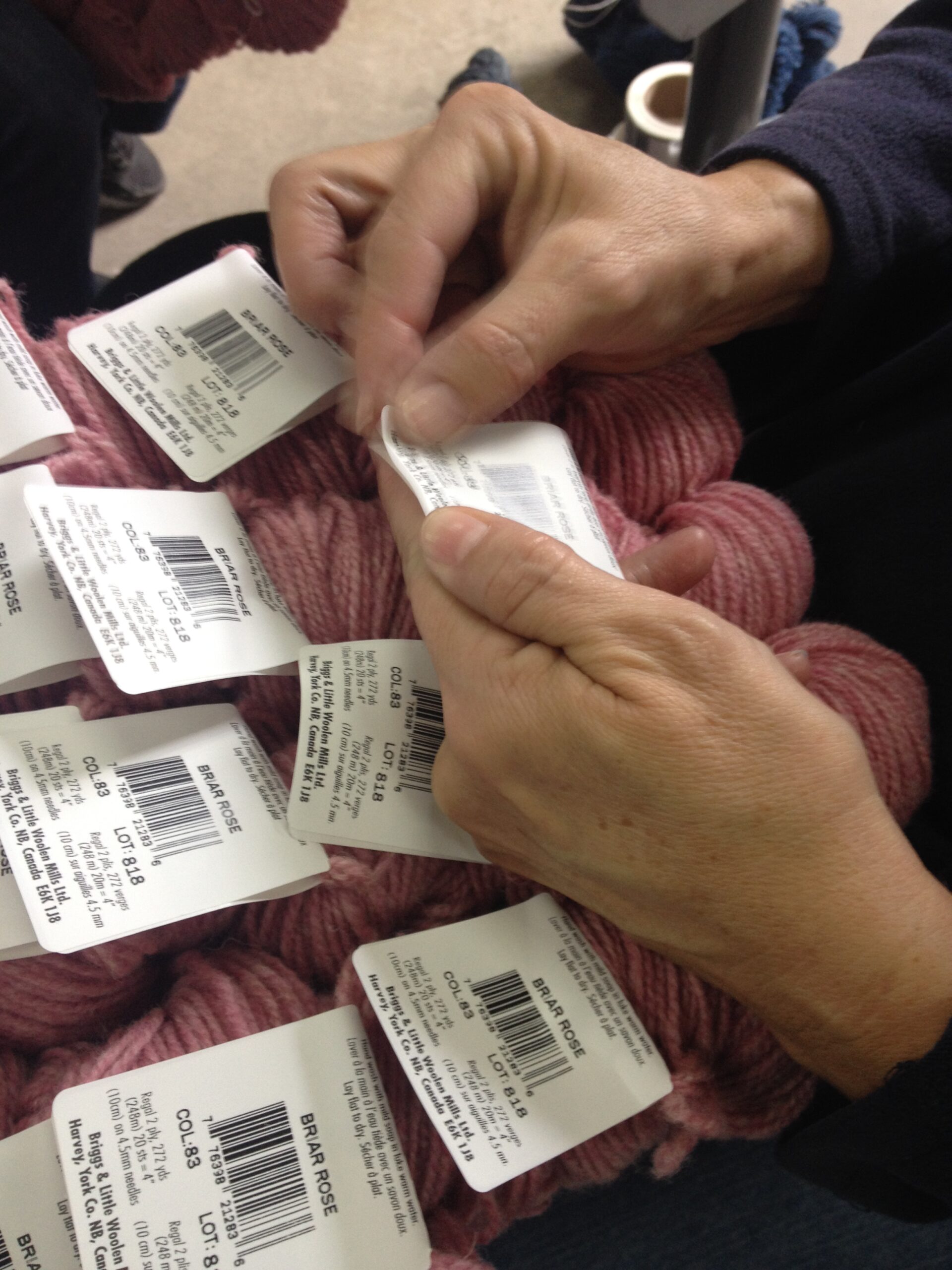
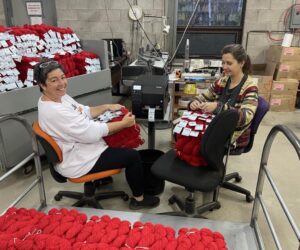
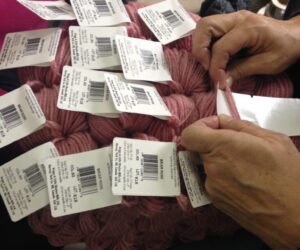
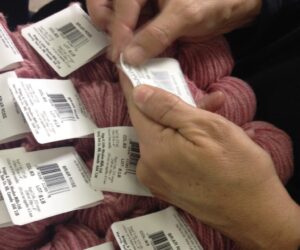
- Tagging the yarn. Every batch has a lot #. This is very important information to have if you ever run out of yarn when working on a project. Always keep your tag!
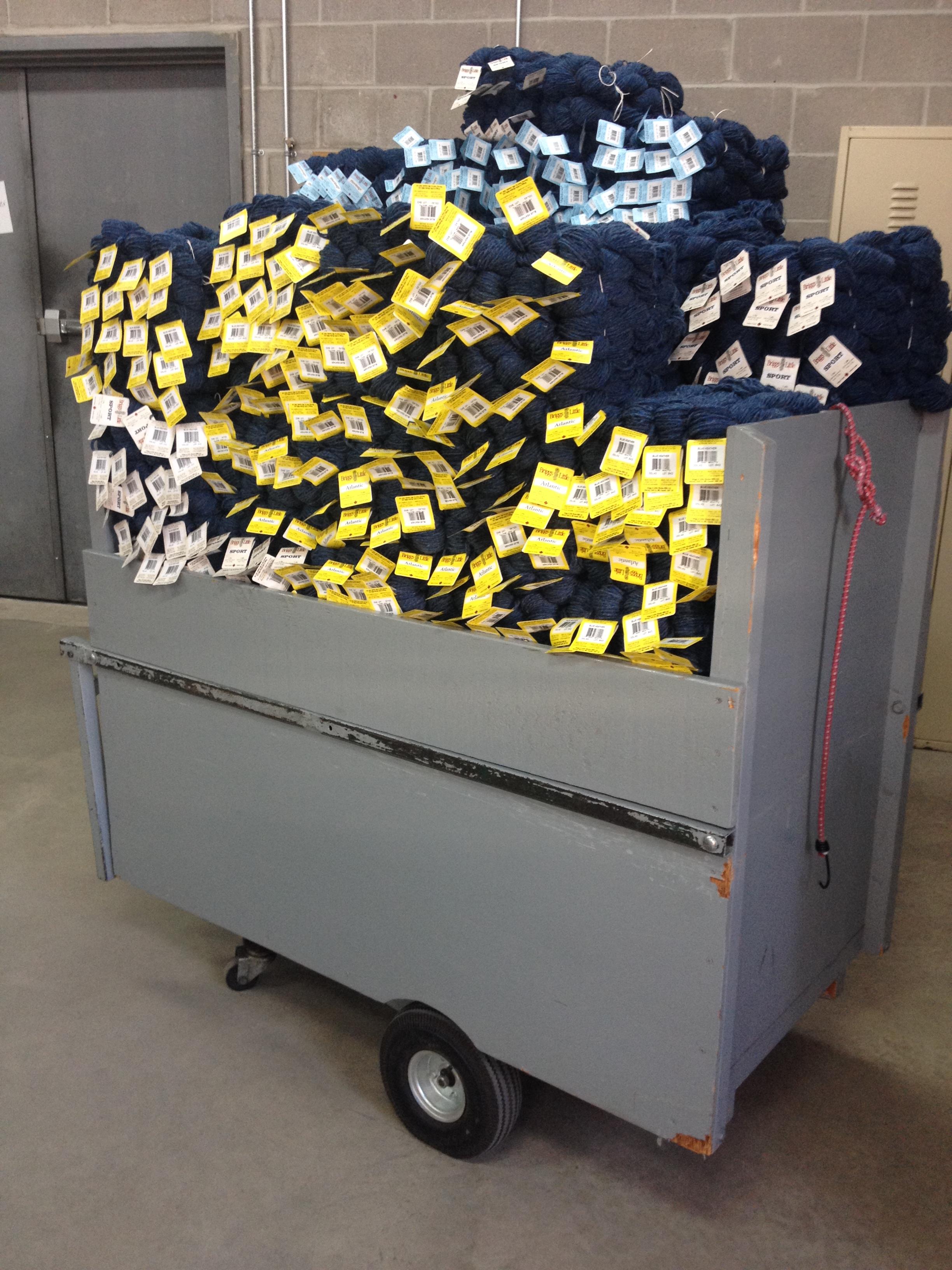
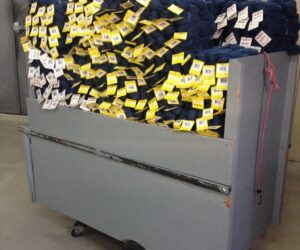
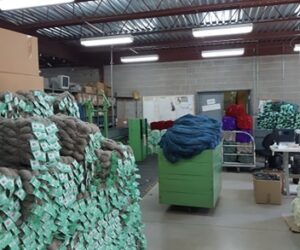
- After the skeins have been wound up and pressed into 5lbs (20 skein) bundles, they are tagged by hand, place into a cart and sent to storage or shipping.